Private equity 2026 - a simple, clear guide

Are you looking to invest beyond the beaten path of the stock market, by directly supporting the economy and innovation? Private equity, or private equity, represents this alternative route—an universe where financing meets strategy to turn companies’ potential into tangible success. Far from the day-to-day volatility of public markets, it is a long-term commitment that shapes tomorrow’s champions.
Private equity is an investment approach where capital is injected directly into companies that are not listed on the stock exchange. Unlike buying shares on the public market (public equity), where transactions are standardized and fast, these deals are carried out over the counter.
This approach makes it possible to finance key stages in a company’s life, from its birth to its transfer, by providing the equity capital needed for growth.
What is private equity?
Private equity involves an investment fund taking an equity stake in an unlisted company. This equity injection, often combined with some debt, aims to finance the company’s development, optimize its management and, ultimately, realize a capital gain when the stake is sold.
The duration of such an investment is generally between 3 and 10 years, the time needed for the company to implement its growth strategy and reach its objectives.
More than just a financial contribution
A private equity investor is not merely a lender. Their role is active: they bring not only capital, but also a business network, strategic advice and operational support to management. By often sitting on the board of directors, they take part in major decisions and help the company become more structured.
This involvement is fundamental to maximizing the company’s future value and, therefore, the return on investment.
The difference vs. a bank loan
Unlike a bank loan, which creates debt to be repaid on a regular schedule, private equity strengthens the company’s equity base. It does not weigh on short-term cash flow, leaving the company with the breathing room it needs to invest and grow.
A driver of the real economy
By financing start-ups, SMEs and mid-sized companies (ETI, Entreprises de Taille Intermédiaire), private equity plays a key role in economic momentum. It supports innovation, job creation and the emergence of leaders in national and international markets. It is an essential link in the financing chain that complements more traditional sources.
The different facets of private equity
Private equity is not a monolithic block. It comes in several strategies, tailored to the maturity and specific needs of the target company.
Venture capital: betting on innovation
Venture capital (venture capital) finances companies at the very beginning, when they offer high growth potential but also high risk. Two sub-stages are commonly distinguished:
- Seed capital (Seed Capital) : It comes in very early, sometimes even before the product’s commercial launch, to finance research, prototyping or the first market studies.
- Start-up capital (Start-up Capital) : It finances the actual start of the business and its first commercial development.
At this stage, wealthy individual investors—business angels—also play a crucial role by providing, in addition to their money, their entrepreneurial experience.
Growth capital: accelerating growth
Growth capital (growth capital) is aimed at companies that are already established and profitable, and that need funds to move to the next stage. This may involve financing:
- The launch of a new product range.
- Expansion into new geographic markets.
- Modernization of the production base.
- A strategic acquisition.
The company has already proven itself, so the risk is considered more moderate than in venture capital.
Buyout capital: supporting a change of ownership
Buyout capital comes into play when a company is sold. The best-known transaction is an LBO (Leverage Buy-Out), or leveraged buyout.
The principle is to acquire a company using a significant share of debt. The cash flows generated by the acquired business are then used to gradually repay that borrowing. Once the debt is repaid, the value of the investor’s equity is substantially increased.
How a private equity fund works
Private equity transactions are carried out by specialized asset management firms that run investment funds. The process follows a well-defined cycle.
- Fundraising : The management company raises capital from investors, mainly institutional investors (pension funds, insurers, banks) and high-net-worth individuals.
- Sourcing and investing : Managers analyze hundreds of opportunities to identify the most promising companies. Once a target is identified, an in-depth analysis (due diligence) is conducted to assess its potential, its risks and the fair acquisition price. Complex financial models, such as the LBO model, are used to structure the transaction.
- Value creation : For several years, the fund actively supports the company. The goal is to improve its operational performance, profitability and strategic positioning.
- Exit : This is the final step, when the fund sells its stake to realize its capital gain. The exit can happen in several ways:
- Sale to an industrial group.
- Sale to another private equity fund.
- Initial public offering (IPO).
Investing in private equity: an opportunity for individuals?
Historically reserved for large institutional investors, private equity has gradually become more accessible to sophisticated savers, offering an interesting portfolio diversification alternative.
Advantages and expected returns
For savers, investing in private equity has several strengths:
- High performance potential : In exchange for higher risk and low liquidity, private equity targets returns above those of listed equity markets over the long term.
- Financing the real economy : It is a concrete way to support the growth of SMEs and ETIs, often local or innovative.
- Diversification : This is an asset class whose performance is partly uncorrelated with traditional financial markets.
Risks not to underestimate
Private equity is an investment that involves significant risks, which it is essential to understand before starting to invest.
- Risk of capital loss : The investment is not guaranteed. The growth prospects of the financed companies are uncertain and may not materialize.
- Illiquidity risk : Capital is locked up for a long period (generally between 5 and 10 years). It is very difficult—if not impossible—to get your money back before the fund’s term.
A suitable time horizon
Illiquidity is the main constraint of private equity. Only invest sums you are certain you will not need in the short or medium term. Consider this investment as a long-term building block in creating your wealth, not as a cash-management product.
How to access this asset class
For individuals, access to private equity is mainly through specialized funds that benefit from an attractive regulatory and tax framework.
Here are the main investment vehicles available in France:
FCPI (Fonds Communs de Placement dans l’Innovation) and FIP (Fonds d’Investissement de Proximité) offer personal income tax reductions in exchange for the risk taken and a required holding period for units.
Diversifying beyond private equity
Diversification is the cornerstone of a sound investment strategy. While private equity provides access to the equity of unlisted companies, other financial innovations are now opening the door to alternative assets that were previously inaccessible.
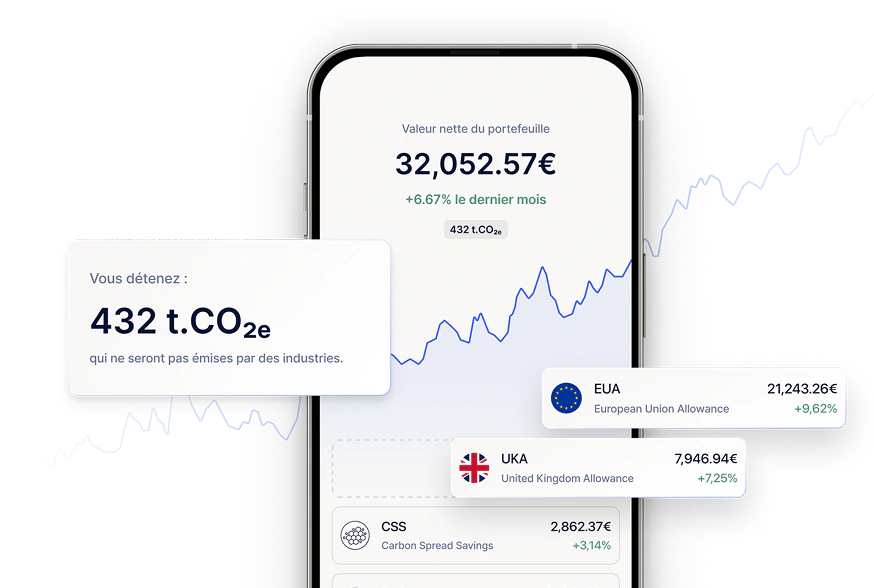
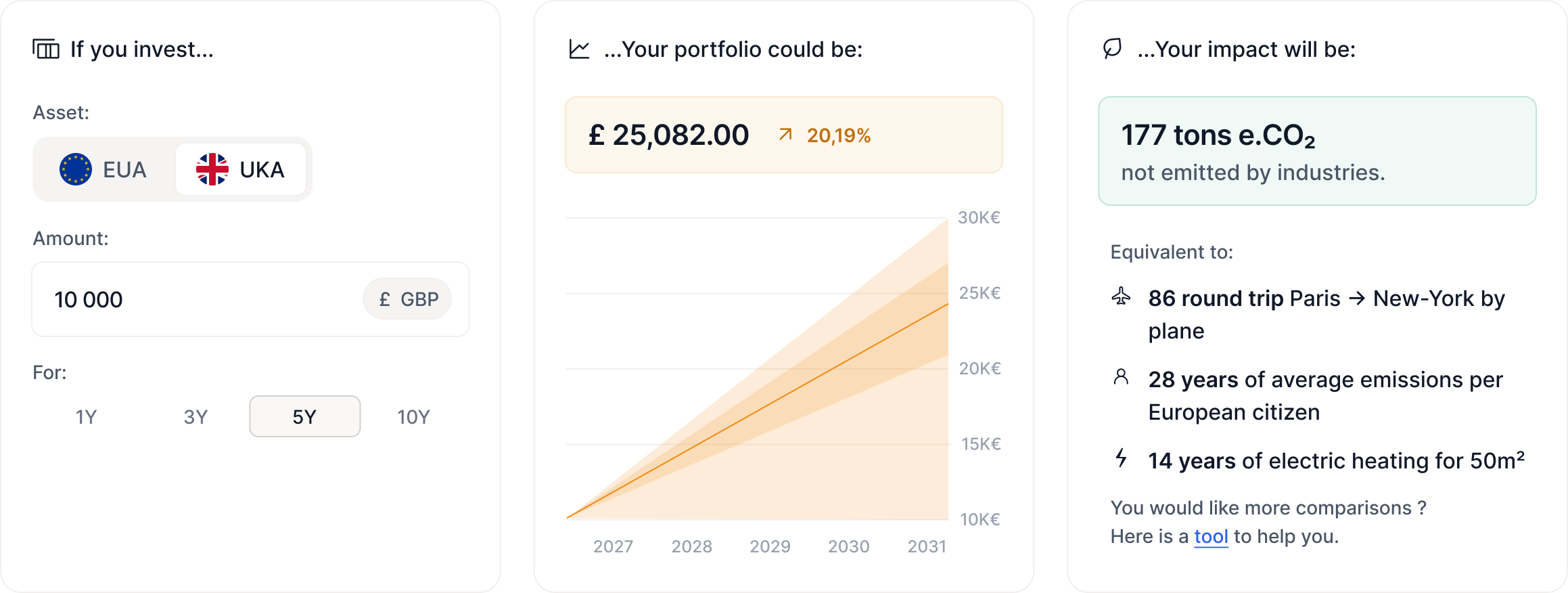
For example, platforms like Homaio now enable individuals to invest directly in the regulated European carbon market. This is another way to gain exposure to the real economy through an asset that is uncorrelated with traditional financial markets, while actively contributing to the ecological transition. Exploring these new forms of responsible investments can enrich an overall wealth strategy.
Private equity is a demanding but fascinating world. It represents a powerful lever for value creation for companies and a source of diversification and potential performance for investors who accept its risk and liquidity constraints. As with any investment, a solid understanding of its mechanisms is the first step toward an informed decision.
FAQ - Private equity questions
What is private equity in simple terms?
It means investing money in companies that are not listed on the stock exchange, becoming a shareholder for several years. The goal is to help the company grow and then sell the stake at a profit.
What is the difference vs. investing in the stock market?
The main difference is liquidity. Listed shares can be bought and sold every day, whereas a private equity stake is locked up for 3 to 10 years. In addition, a private equity investor is often deeply involved in the company’s strategy, which is not the case for a minority shareholder in a listed company.
What is the minimum entry ticket for an individual?
Direct investment in a company is reserved for very large fortunes. For individuals, access is via funds (FCPR, FCPI, FIP) whose entry ticket is much more accessible, generally starting at a few thousand euros. This makes it possible to participate in profitable investments even with a small budget.
How long does a private equity investment last?
It is a long-term investment. Funds are generally locked up for a period ranging from 3 to 10 years, or even longer. This duration is necessary to allow the company to develop and for the investor to realize a capital gain at exit.
Go further: invest in the carbon market
Homaio gives you access to European carbon allowances (EUAs), an asset class that combines potential financial performance with direct climate impact. Diversify your wealth with an asset uncorrelated from traditional markets, accessible from €1,000.