Reducing CO2 Emissions: From Individual Awareness to Systemic Strategy

Reducing our carbon footprint has evolved from a civic ideal into a prerequisite for economic and physical survival. In France, the average annual footprint stagnates at approximately 9.2 tons of CO2 equivalent per person. To meet the Paris Agreement targets, this figure must converge toward 2 tons by 2050.
This challenge cannot be met by a mere accumulation of "small gestures"; it requires a strategic reallocation of our resources. Whether through France's National Low-Carbon Strategy (SNBC) or the European Union’s "Fit for 55" ambitions, the trajectory is now dictated by law. Here is how to decipher the most effective levers for action in 2026.
1. Personal Metamorphosis: Four Levers for Transformation
Reducing daily emissions requires identifying the primary sources of consumption. Transportation, housing, and diet alone account for three-quarters of a French citizen's climate impact.
Decarbonizing Mobility: The Primary Source of Emissions
Transport is the cornerstone of individual decarbonization. Beyond the choice of vehicle, it is our relationship with distance that is being questioned. Rail, which emits up to 80 times less CO2 than air travel, remains the most robust alternative for long-distance journeys. For daily commutes, "eco-mobility" goes beyond cycling: the massive electrification of vehicles, supported by a decarbonized energy mix like that of France, can reduce a journey’s footprint by two-thirds compared to an internal combustion engine.
[[cta-nl]]
Housing: Breaking Fossil Fuel Dependency
Housing is often the site of an invisible pollution: embodied energy. This refers to the energy consumed throughout a product's life cycle, from manufacturing to recycling. Reducing the CO2 emissions of a home begins with deep renovation. Insulating roofs and walls is the essential prerequisite before replacing oil or gas boilers with heat pumps or biomass heating. Such work can prevent the emission of nearly 2 tons of CO2 per year for an oil-heated home.
Diet and Consumption: The Weight of Land Use
Our plate is both a political and a climatic act. Producing one kilogram of red meat emits between 5 and 10 times more greenhouse gases than a kilogram of grain. Transitioning toward a less meat-intensive, more local diet is not just a health issue; it is the fastest lever for reducing pressure on land use. Simultaneously, material sobriety—repairing rather than replacing—allows us to amortize the initial "carbon debt" of our digital and household appliances.
2. Corporate Adaptation: Facing New Regulations
For the private sector, reducing CO2 emissions is no longer a corporate social responsibility (CSR) option, but a condition for compliance. Companies must now navigate increasingly stringent legislation and a rising cost of carbon.
Evaluating these efforts requires rigorous carbon audits that include Scope 3 (indirect emissions linked to suppliers and product usage). To reach 2030 targets, the most polluting industries must electrify their processes and innovate radically. Those who fail to anticipate this shift face significant financial and reputational risks, as the carbon "price signal" makes fossil-fuel-based models increasingly unviable.
[[cta-impact]]
3. Finance as a Tool for Constraint: The Homaio Approach
At Homaio, we believe that individual action and state regulation must be complemented by a systemic lever: climate finance.
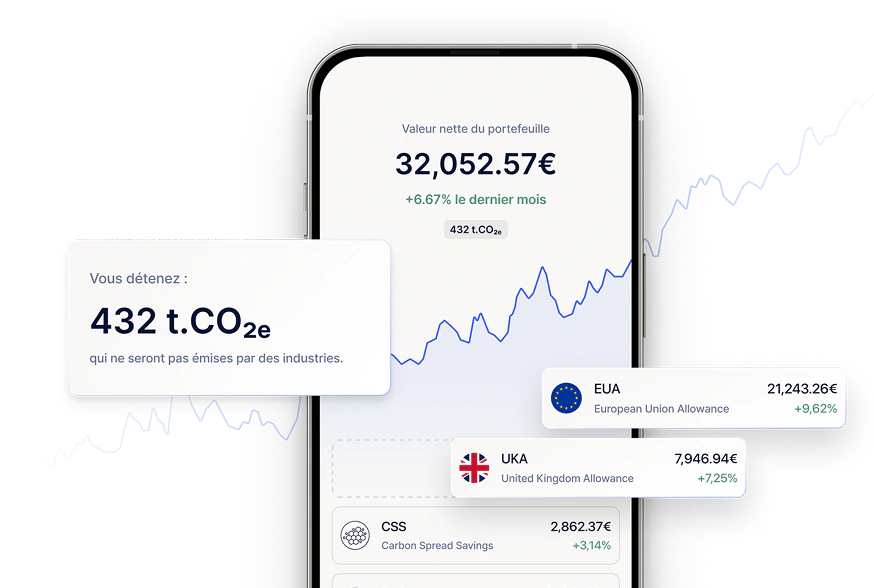
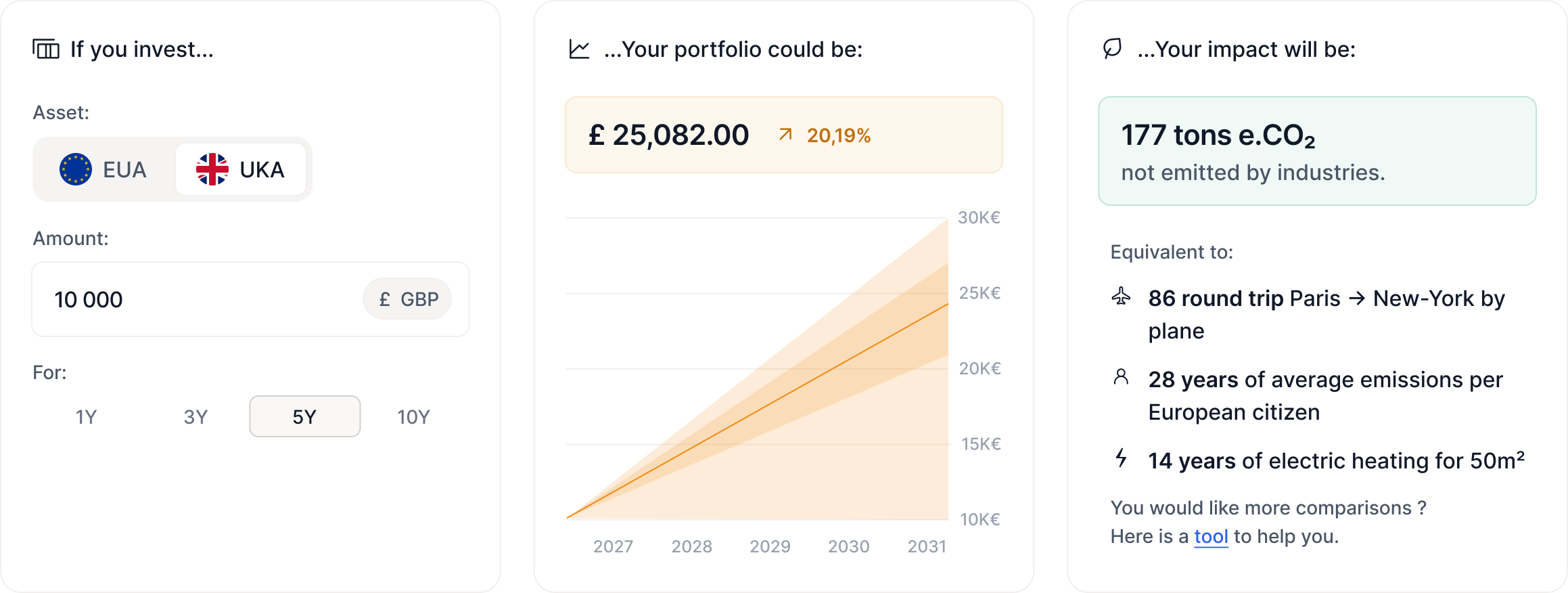
The European Union Emissions Trading System (EU ETS) is the most powerful tool for forcing industrial decarbonization. The principle is simple: the European Union sets an emissions cap that decreases every year, creating a structured scarcity. By investing in these allowances, private actors participate in the formation of a high carbon price.
This price is not a tax; it is an incentive. The more expensive the right to pollute becomes, the more profitable decarbonized technologies become by comparison. It is a way to transform savings into direct ecological pressure on the continent's largest emitters.
[[cta-simulateur]]
FAQ: Understanding the Stakes of CO2 Reduction
Why is it urgent to reduce our carbon footprint? Global warming, caused by human emissions, increases extreme weather events and threatens global economic stability. Reducing our footprint is the only strategy to mitigate these risks.
How can I assess my own emissions? Tools like NosGestesClimat allow you to perform a personal carbon audit in minutes. They identify priority actions based on your lifestyle (heating, transport, diet).
What are the most effective measures for a company? Energy efficiency in buildings, decarbonizing logistics, and adopting renewable energy sources are priority levers to remain competitive in a post-carbon economy.
Do my individual efforts really matter? Individually, the impact is small, but collectively, it dictates market trends. Companies adapt to consumer demand, and the state legislates based on the social acceptability of sobriety measures.