
EU Carbon Market: How the Antwerp Summit Sparked a New Battle for Europe’s Industrial Future
The European Industrial Summit in Antwerp has exposed a significant political struggle over the future of the EU carbon market (EU ETS). Amid calls for price relief from certain industrial member states and a firm defense of the market’s integrity by the European Commission, this article analyzes the causes of the recent flash crash and explains why, despite political volatility, the structural supply deficit continues to support the long-term investment case for carbon.
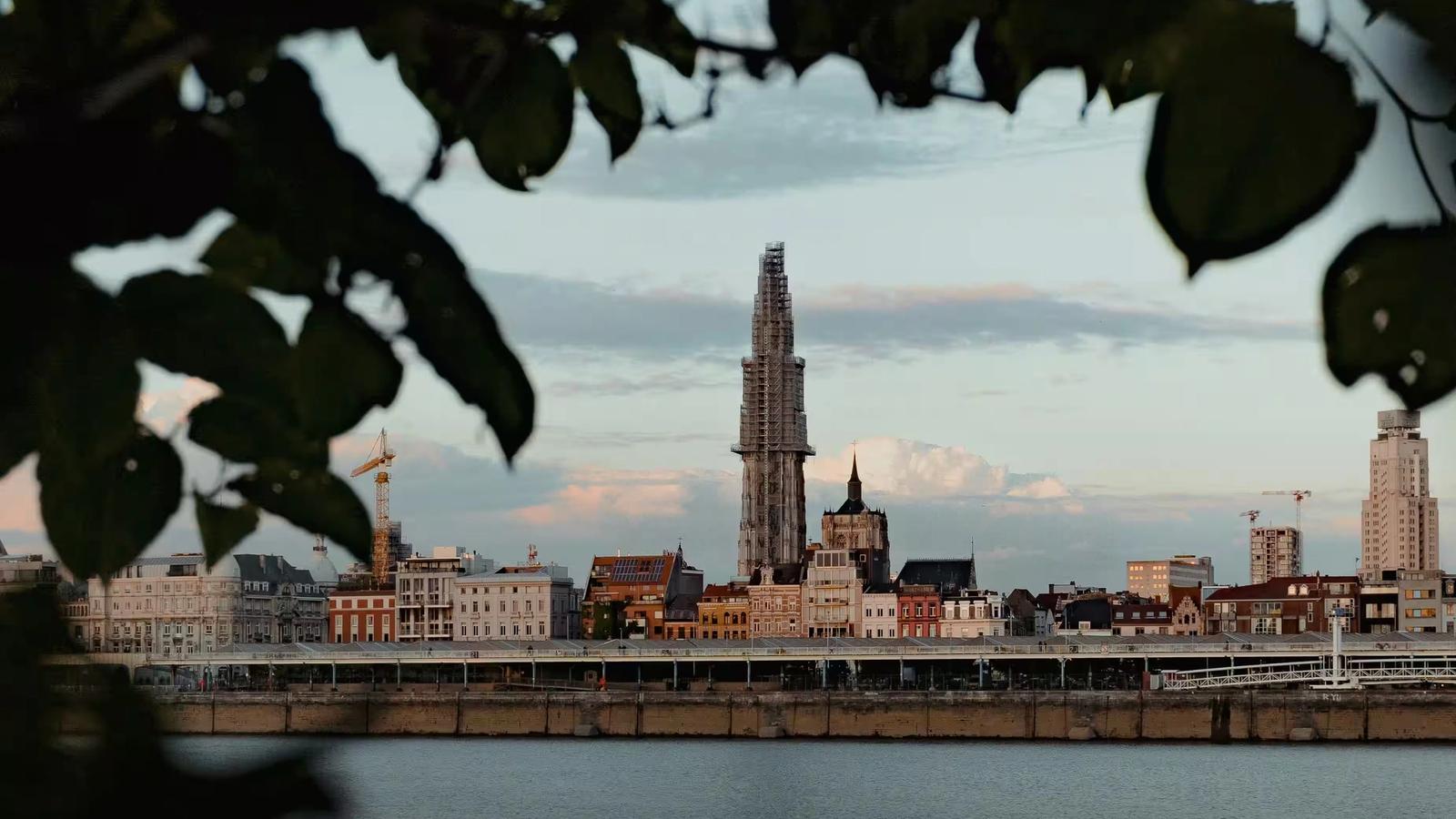
The third European Industrial Summit, held in Antwerp this February 2026, has served as a major political catalyst. Following weeks of media tension surrounding the European Union Emissions Trading System (EU ETS), the event confirmed a deep-seated conflict over Europe’s energy and industrial strategy.
At the heart of this struggle lies the post-2030 trajectory of the carbon market, which has now become the primary battlefield for European competitiveness.
A "Flash Crash" Driven by Political Risk, Not Fundamentals
The current sequence began on February 5th. A Bloomberg report suggested that, ahead of the ETS revision scheduled for Q3 2026, some EU policymakers were pushing to soften the pace of emissions reductions imposed on industry.
While this was not a formal EU position—originating instead from a group of actors concerned about long-term carbon prices, notably Czechia and Slovakia—the market reaction was swift. What followed was a brutal "flash crash," amplified by mechanical algorithmic trading.
Valentin Lautier's Insight: This movement highlights a massive disconnect. Despite the Bloomberg article bringing no new legislative facts to the table, the market panicked. It was a spike in the "political risk premium," rather than a change in market fundamentals, that drove the price action.
See how Homaio Comply handles EU ETS compliance.
Discover Comply
Eroding Long-Term Reliability: The "Liese Effect"
The debate soon took on a more institutional weight. Peter Liese, the German MEP and a key architect of the 2022 ETS reform, stated that the upcoming review must ensure carbon prices do not "skyrocket."
By suggesting a potential slowdown in the annual reduction of the emissions cap (the Linear Reduction Factor) or adjustments to the Market Stability Reserve (MSR), Liese triggered further price volatility. This nervousness is telling: it illustrates an erosion of the long-term reliability of current European measures, even though any potential changes would not take effect until 2029 at the earliest.
Fault Lines in Antwerp: Merz vs. Von der Leyen
The Antwerp Summit allowed the Commission to clarify its stance while exposing clear fractures between member states.
The "Industrial Relief" Camp (Germany, Czechia, Slovakia)
For countries heavily exposed to energy-intensive sectors, the priority is lowering short-term costs. German Chancellor Friedrich Merz was blunt: if the system fails to simultaneously reduce emissions and effectively support industrial transformation, Europe must be "open to revising it or at least postponing it," referencing the previous delay of the new carbon market for transport and buildings (ETS2).
The Commission’s Firm Defense
Facing this pressure, Ursula von der Leyen staunchly defended the market’s current architecture. She rejected calls for price caps or freezes, shifting the debate toward how revenues are used.
- The Fact: The ETS has generated €260 billion in public revenue over 20 years.
- The Problem: Only 5% of that has been allocated specifically to industrial decarbonization.
According to Von der Leyen, Member States—not the market—are responsible for their industries' exposure to carbon prices because they failed to reinvest the proceeds. Climate Commissioner Wopke Hoekstra went further, calling it "intellectually lazy" to make the ETS the scapegoat for industrial struggles.
See how Homaio Comply handles EU ETS compliance.
Discover Comply
The Decarbonized Advantage: The French Model and ArcelorMittal
Countries with a largely decarbonized power mix (nuclear and renewables) view a high carbon price as a major competitive advantage. For these nations, the goal is not to weaken the price signal but to use it to accelerate electrification.
Emmanuel Macron reiterated at the Summit that mechanisms like the ETS and its "mirror," the CBAM (Carbon Border Adjustment Mechanism), are the primary drivers of investment. He cited ArcelorMittal’s €1.3 billion investment in an electric arc furnace in Dunkirk—a project that will cut steel production emissions by two-thirds. Without a robust carbon price, such multi-billion euro transitions would lack a business case.
Conclusion: Structural Supply Deficit Remains the North Star
Despite the political noise, the market's reality remains nuanced:
- Legislative Status Quo: No changes have been decided. The Commission's legislative proposal is not expected until late 2026.
- The EU Timeline: The legislative process (Parliament and Council) will likely take two years, meaning any actual implementation is far off.
- Market Fundamentals: The structural supply deficit continues to support a long-term bullish outlook for prices.
The Antwerp Summit marks a turning point. For the first time since the 2022 reform, the long-term trajectory of the ETS is at the center of a high-level political debate tied to European economic sovereignty. For investors, this confirms that carbon is no longer just a climate tool—it is the central asset of Europe’s industrial strategy.
See how Homaio Comply handles EU ETS compliance.
Discover Comply
Sources :
https://eurometal.net/arcelormittal-to-invest-eur1-3bn-in-single-dunkirk-eaf/
https://climatemarketnow.com/euas-drop-on-bloomberg-story-so-what-is-going-on/
https://www.elysee.fr/emmanuel-macron/2026/02/11/3e-sommet-industriel-europeen-a-anvers
https://carbon-pulse.com/482119/?site=cpp
https://carbon-pulse.com/482278/?site=cpp
https://carbon-pulse.com/482025/?site=cpp
https://carbon-pulse.com/482764/?site=cpp
https://carbon-pulse.com/480018/
https://www.linkedin.com/posts/dan-maleski_cbam-ugcPost-7427395042924912640-Jj88?