The Carbon Market Under Political Stress: Temporary Volatility or Paradigm Shift?
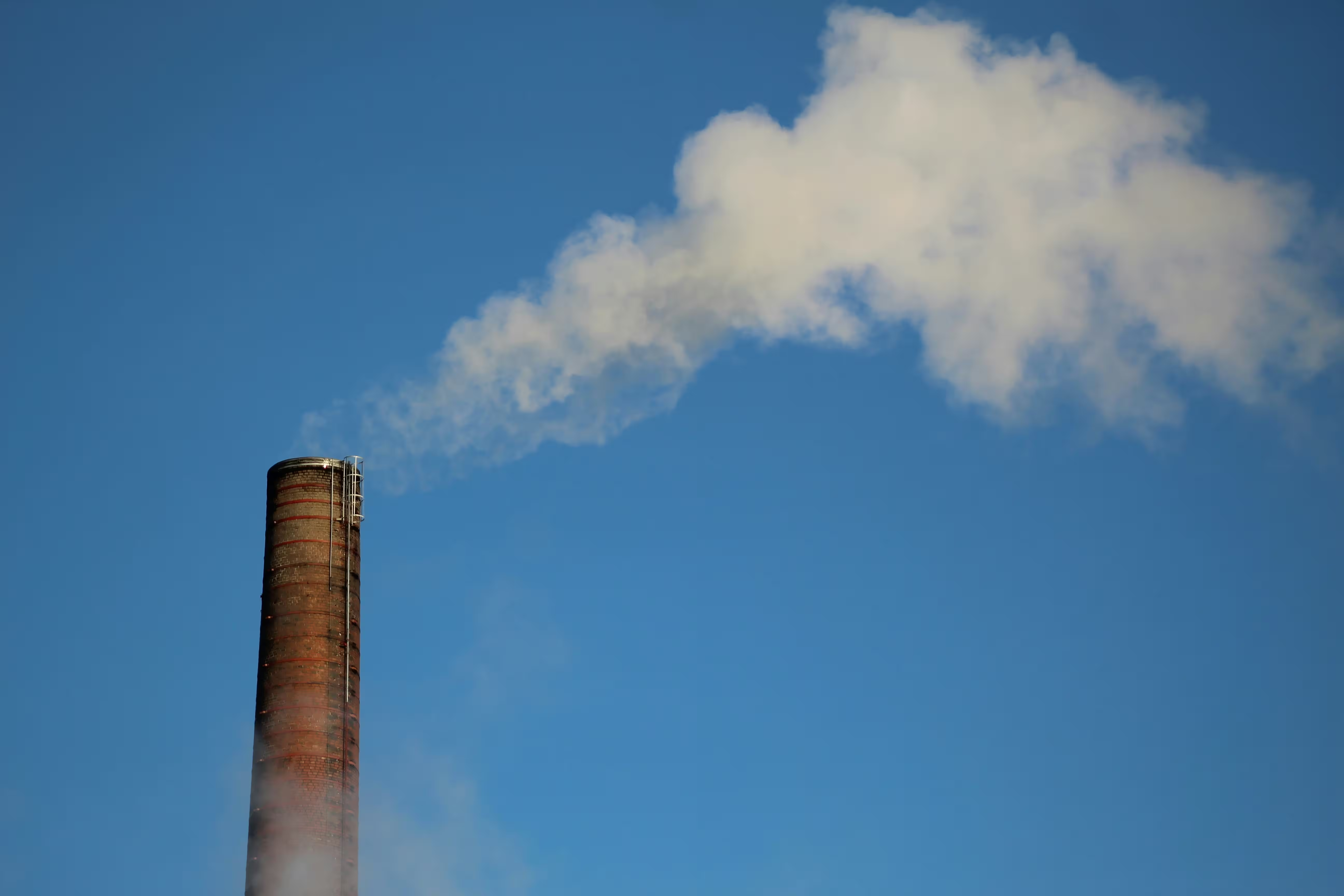
A few weeks ago, we analyzed the "flash crash" in the European carbon market. This brutal movement was no accident; it was the result of a coordinated offensive by several Member States and industrial lobbies. The objective? To pressure the European Commission into weakening the EU ETS ahead of the regulatory review scheduled for later this year.
While prices dropped from over €90 to nearly €70, one question remains: Has the structural value of carbon actually changed?
The Emergence of a "Political Risk Premium"
The market has priced in institutional risk. Yet, the rules of the game have not moved. Any substantial reform of the European carbon market must follow a full legislative process lasting several years. This gap between legal reality and market perception creates an opportunity for the long-term investor, but complex volatility for the uninitiated observer.
[[cta-nl]]
A Recurring Pattern: Carbon as a Convenient Scapegoat
This is not the first time the thermometer has been blamed for the fever. During the energy crisis following Russia’s invasion of Ukraine, Poland had already called for the suspension of the ETS.
Today, the front is widening:
- In Germany: Chancellor candidate Friedrich Merz has mentioned revising or postponing the ETS if it weighs too heavily on industry.
- In Central Europe: Slovakia and the Czech Republic are advocating for a weakening or suspension of the system.
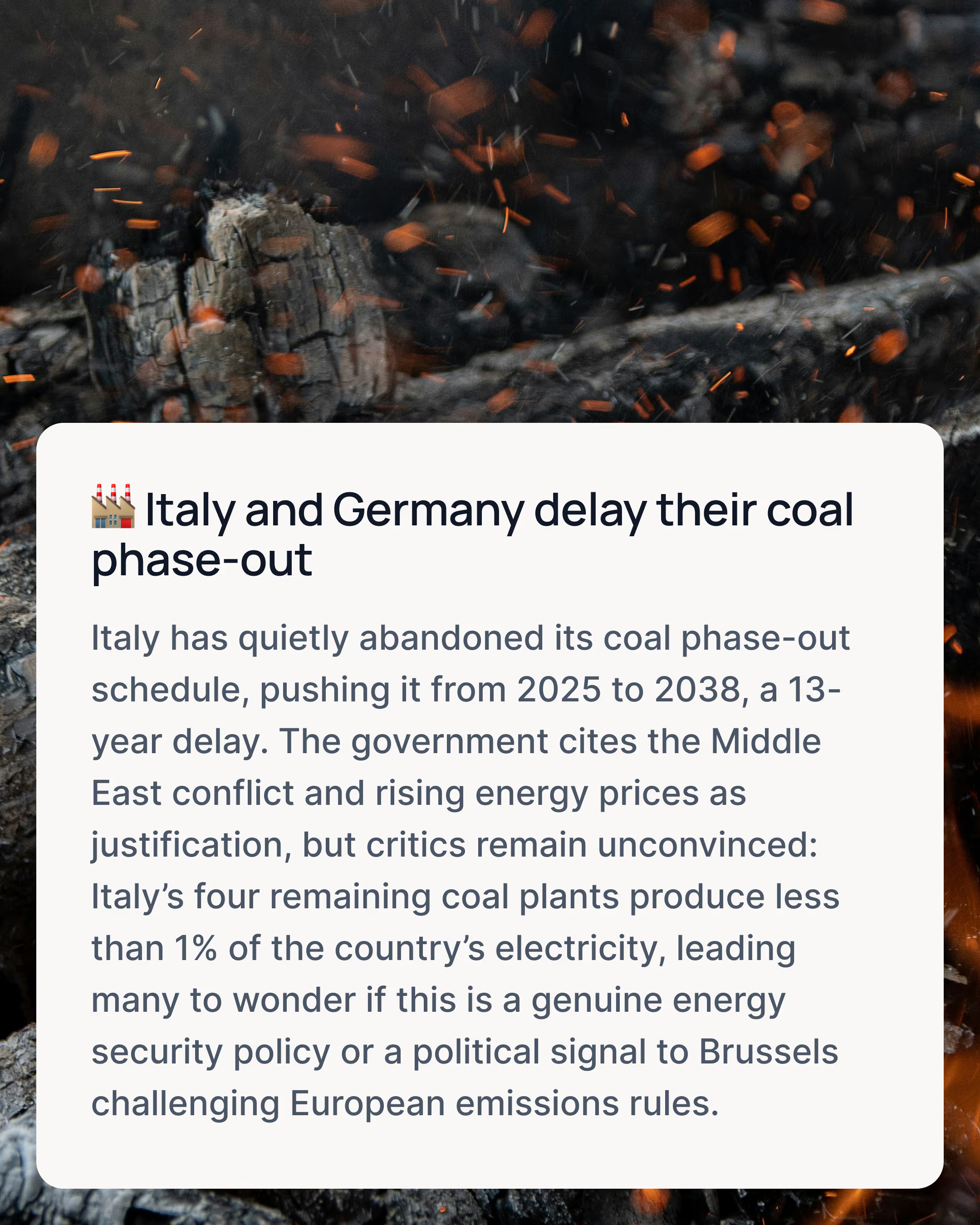
- In Italy: Rome took concrete action with a €3 billion "Energy Decree" aimed at compensating gas plants for carbon costs.
Homaio’s Analysis: The Italian initiative, while politically seductive in the short term, is an economic non-starter. By neutralizing the price signal, Italy is indirectly subsidizing fossil fuels and their extra-European suppliers, while depriving itself of crucial carbon revenues needed for its own modernization.
Carbon: A Pillar of Industrial Sovereignty
Beyond the climate debate, the EU ETS has become, in 2026, the bedrock of European industrial strategy.
- Predictability: Industries committed to electrification require a stable carbon price to justify massive long-term investments.
- Carbon Border Adjustment Mechanism (CBAM): The ETS is the mirror of the CBAM. Weakening one effectively dismantles the protection of our borders against carbon-intensive imports.
- Competitiveness: Europe cannot compete on cheap fossil fuels—it simply doesn't have them. Its sole comparative advantage lies in low-carbon electricity (nuclear and renewables), the competitiveness of which is guaranteed by the carbon price.
[[cta-guide2]]
Why Fundamentals Remain Unchanged
Despite the political noise, the mathematical structure of the market remains intact:
- The Emissions Cap continues to decrease annually, creating mechanical scarcity.
- The Market Stability Reserve (MSR) continues to absorb surpluses.
- Free allocations are being phased out, forcing industrials to purchase on the open market.
The carbon market is no longer a marginal climate instrument. It is the very architecture of the European economy.
Conclusion: Returning to Structural Reality
In the short term, politics dictates market sentiment. However, as institutional clarity returns and the limits of national maneuvers become apparent, fundamentals will resume their role as the primary price driver.
For the investor, this period of volatility is a phase of realignment. The long-term trajectory toward electrification and allowance scarcity remains etched in European legislative stone.