Emergency savings 2026: definition and first steps

In the face of an uncertain economic future, how can you ensure financial peace of mind? The answer often lies in a simple but fundamental step: building emergency savings.
This safety cushion is not a luxury, but the true foundation of any sound wealth strategy. It is the first building block that enables you to handle the unexpected without jeopardizing your life plans or your long-term investments.
Emergency savings is a sum of money set aside, accessible at any time, to cover urgent and unexpected expenses.
Recommended amount: 3 to 6 months of regular expenses.
Goal: Avoid overdrafts or consumer credit.
Preferred vehicles: Liquid, risk-free options such as regulated savings accounts (Livret A, LDDS).
What is emergency savings?
Emergency savings, also called an emergency fund or safety cushion, is a reserve of money intended exclusively to cover hard times.
Think of a car breakdown, an urgent repair in your home, unexpected medical bills, or a period of unemployment. This is the capital that will allow you to handle these situations without stress and without throwing off your monthly budget.
It is crucial to distinguish it from goal-based savings.
The difference from goal-based savings
Goal-based savings, as the name suggests, is aimed at a defined medium- or long-term objective: buying a primary residence, preparing for retirement, funding children’s education, or starting a business.
This savings can be invested in less liquid and potentially riskier vehicles, in search of higher returns. The sums may be locked up for several years in exchange for tax benefits or better performance. Emergency savings, on the other hand, must remain immediately available.
Why is it the pillar of your financial strategy?
Viewing emergency savings as a simple “pot of money” would be a mistake. It is the foundation on which your entire financial architecture rests.
Without this base, the slightest unexpected event can force you into harmful decisions:
- Falling into overdraft and paying high overdraft interest.
- Taking out consumer credit at often prohibitive rates.
- Selling other investments in a hurry (stocks, assurance-vie), potentially at a loss and at the worst possible time.
Building this safety cushion is therefore the first step in the life of a savvy saver. It provides essential peace of mind to calmly manage your finances and consider more ambitious investments afterward.
How to calculate the ideal amount for your safety cushion?
The most common rule is to set aside the equivalent of three to six months of essential expenses. This is not your salary, but what you actually need to live each month (rent, loan payments, bills, food, transportation...).
The exact amount will depend on your personal and professional situation.
A method based on your profile
A self-employed worker, whose income is irregular by nature, will need a larger emergency fund than a civil servant. Likewise, having children or significant debt justifies aiming for the upper end of the range.
Your situation changes—your savings should too
The amount of your emergency savings is not set in stone. It should be reassessed after every major life change: a raise, a move, a new child, a real-estate investment. The goal is to always maintain a level of protection suited to your actual lifestyle.
To achieve this, the most effective method is to set up an automatic monthly transfer, even a modest one. Consistency builds capital more than size does. Review your budget to identify your saving capacity and automate the process.
Where should you place this savings so it stays available and safe?
The two key criteria for an emergency-savings vehicle are:
- Liquidity: you must be able to withdraw your money instantly, without delay or penalty.
- Safety: the capital must be guaranteed, protected from fluctuations in the financial markets.
Return is not the primary objective. Chasing performance with your emergency fund is a mistake that puts its primary function—acting as a safety net—at risk.
Regulated savings accounts: the obvious solution
These investments, whose rate is set by the State, are ideal candidates.
- Livret A: Available to everyone, with a cap of 22 950 €.
- Livret de Développement Durable et Solidaire (LDDS): Similar to the Livret A, with a cap of 12 000 €. Can be combined with the Livret A.
- Livret d'Épargne Populaire (LEP): Reserved for lower-income households, it offers the best return among regulated savings accounts, with a cap of 10 000 €.
Their advantages are clear: capital guaranteed by the State, immediate access to funds, and interest fully exempt from taxes and social contributions.
Other short-term options
While regulated savings accounts are the foundation, other solutions can complement them once their caps are reached.
- Unregulated bank savings accounts (or “super-savings accounts”): Offered by banks, they can provide attractive promotional rates. Their liquidity is excellent, but gains are taxable.
- Euro funds in assurance-vie: The money remains available, but a withdrawal can take a few days. Contrary to popular belief, the funds are not “locked” for 8 years. This tax horizon simply offers the most favorable taxation on capital gains. For pure emergency savings, it is not the most agile vehicle.
The mistake to avoid: excessive idle savings
Once you reach your target of 3 to 6 months of expenses, it is counterproductive to keep accumulating money in these low-yield accounts.
Excess savings that “sleeps” in a Livret A is savings that loses value. Inflation, even moderate, erodes its purchasing power year after year. This is known as the risk of monetary erosion.
Once your safety base is established, how can you go further?
When your safety cushion is in place, you can free up your mind and your capital for more dynamic investment strategies. That is when diversification truly makes sense.
The goal is to build a resilient portfolio by exploring investments that do not necessarily follow the same cycles as traditional markets (stocks, real estate).
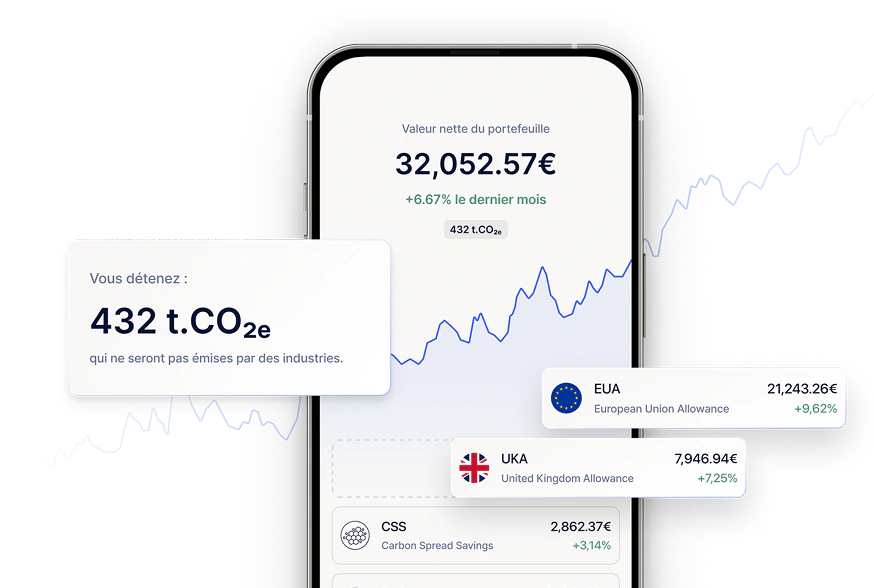
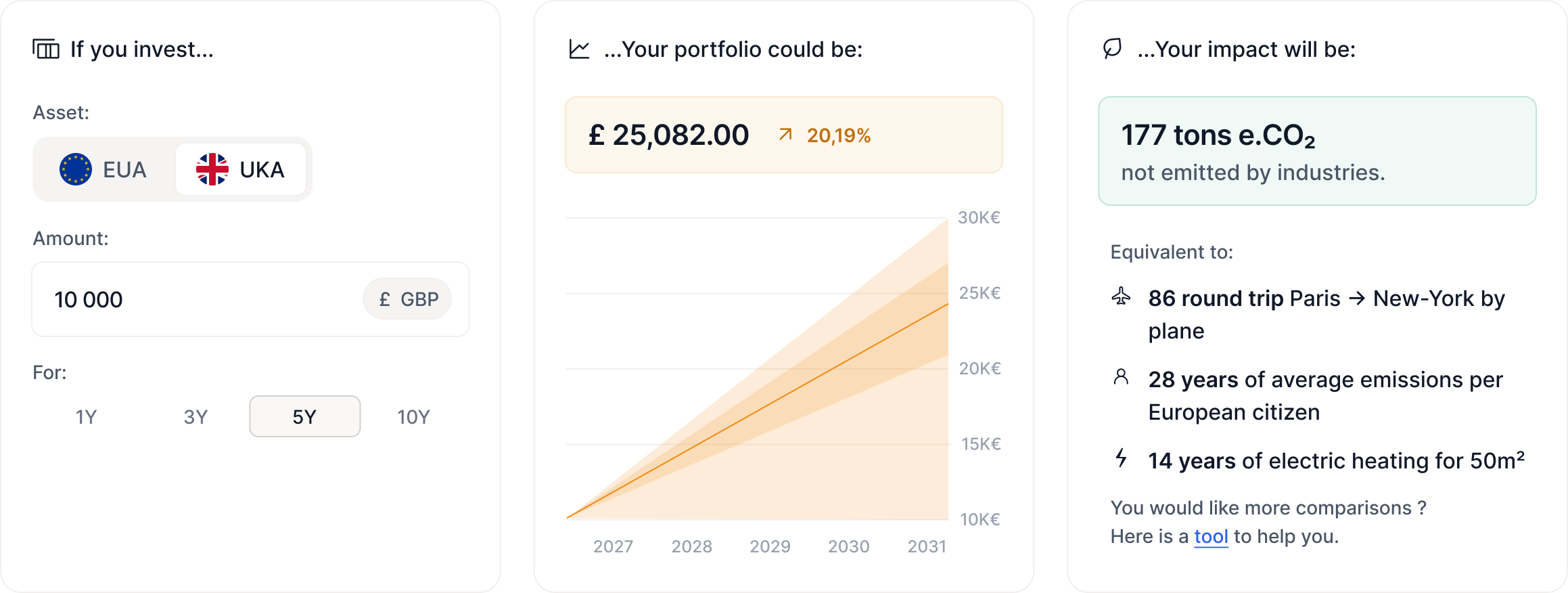
At Homaio, we have opened access to a fully fledged asset class: European carbon allowances (EUA). Historically reserved for institutional investors, this asset lets you invest directly in the ecological transition by making pollution more expensive for industrial companies.
This investment, accessible from 1 000 €, fits into a medium- to long-term approach. It does not replace emergency savings in any way, but complements it. It aims to diversify an existing portfolio by adding a dimension of direct environmental impact and potential decoupling from traditional assets. Like any market investment, it carries a risk of loss and does not guarantee capital.
Expert tip: the “Core-Satellite” strategy
A proven wealth approach is to split your capital into two buckets. The “Core” bucket (around 80%) is made up of stable and secure assets (euro funds, savings accounts, real estate). The “Satellite” bucket (20%) is allocated to high-conviction investments that can deliver higher performance but are also more specific, such as carbon allowances, which can boost your overall portfolio while keeping risk under control.
Emergency savings is your shield. It protects you from uncertainty and gives you the confidence needed to turn excess savings into a driver of performance and conviction. It is the key to moving from being a cautious saver to an informed investor.
Frequently asked questions about emergency savings
What exact amount should I aim for in my emergency fund?
There is no magic number, but a consensus emerges around 3 to 6 months of your fixed monthly expenses (rent, insurance, food, transportation, etc.). Adjust this amount to the stability of your income: aim for 3 months if you have a very stable job, and rather 6 months (or more) if you are self-employed or in a precarious situation.
Is it better to use a Livret A or assurance-vie for this savings?
For pure emergency savings, the Livret A (and the LDDS) is unbeatable in terms of liquidity. Funds are available in one click. Assurance-vie, even in a secure euro fund, involves a redemption period of a few days to a few weeks. It is better suited to medium-term goal-based savings, where its tax treatment becomes advantageous after 8 years.
Should I repay my debts first or build my emergency savings?
The absolute priority is to repay high-interest debt, such as consumer credit or overdrafts. The cost of this debt (often above 10%) will always be higher than the return on your emergency savings. A balanced approach can be to build a small emergency fund (e.g., 1 000 €) for immediate unexpected events, then devote all your efforts to repaying expensive debt, before building the rest of your safety cushion.
I can’t save a large amount each month—what should I do?
Consistency matters more than the amount. It is better to save 50 € every month without fail than 500 € just once. The best strategy is to automate the process: set up a standing transfer from your current account to your savings account on the day you receive your salary. That way you save without thinking about it, and even small amounts end up building meaningful capital over time.
Go further: invest in the carbon market
Homaio gives you access to European carbon allowances (EUAs), an asset class that combines potential financial performance with direct climate impact. Diversify your wealth with an asset uncorrelated from traditional markets, accessible from €1,000.