Assurance vie Pros and Cons: 2026 Guide to Choosing the Right Policy

Assurance vie is often presented as the French people’s favorite investment. Flexible, tax-efficient and useful for passing on wealth, it has many strengths. However, it also has drawbacks, fees that should not be overlooked, and risks of capital loss depending on the underlying investments chosen.
This investment is neither a miracle solution nor a product to avoid. Its value depends entirely on your goals, your investment horizon, and your risk tolerance. This neutral, fact-based guide helps you understand how it works, weigh the pros and cons, and identify pitfalls so you can decide whether assurance vie is a tool suited to your situation.
How does an assurance vie work in practice?
Before analyzing its advantages and disadvantages, it is essential to understand what an assurance vie is. It is not death insurance, but rather a long-term savings product. It is a tax wrapper in which you can invest your money across different assets to help it grow.
The role of the contract, contributions, withdrawals, and the beneficiary
- The contract : This is the legal framework that binds you to the insurer. It sets the rules, available investments, fees, and management options.
- Contributions : You fund your contract by paying in money. These payments can be ad hoc (whenever you want) or scheduled (a fixed amount each month, for example).
- Withdrawals : Contrary to a common belief, the money is never “locked in.” You can withdraw at any time by making a “withdrawal” (“rachat”), which can be partial (part of the capital) or full (all of it, which closes the contract).
- The beneficiary clause : This is a key feature. It allows you to name the person or people who will receive the capital upon your death, under tax conditions that are often very advantageous and outside the rules of the standard estate process.
Euro fund vs unit-linked investments: the two pillars of the contract
Money paid into an assurance vie contract can be allocated between two main families of investment options:
- The euro fund : It offers a capital guarantee (excluding entry fees). The insurer invests mainly in government or corporate bonds considered safe. Returns are generally modest, but the risk of loss is almost nil. This is the safety option.
- Unit-linked investments (UC) : These options provide no capital guarantee. They are invested in financial markets (equities, bonds, real estate, etc.). Their value fluctuates daily, up or down. The return potential is higher than that of the euro fund, but the risk of losing part or all of your investment is real.
Depending on your profile, you can choose the management mode for your contract:
- Self-directed management : You choose the allocation yourself between the euro fund and the different unit-linked investments.
- Managed management (or discretionary management) : You delegate management to professionals who allocate your savings according to a defined risk profile (cautious, balanced, growth).
The main advantages of assurance vie
Assurance vie is popular because it combines several major strengths for long-term savers.
Flexible, readily available savings
One of the biggest advantages of assurance vie is liquidity. Your savings remain available at any time. You can make a partial withdrawal within a few days if you face an unexpected need, without closing your contract. This flexibility makes it a much more adaptable tool than other investments designed for retirement, such as the PER.
Broad diversification across investment options
An assurance vie contract gives access to a wide range of investments, far beyond the euro fund alone. You can invest in hundreds, even thousands, of different unit-linked options:
- Equity funds (French, European, global).
- Bond funds.
- Real-estate vehicles (SCPI, OPCI).
- Thematic funds (technology, healthcare, Responsible and Sustainable Investing).
This diversification helps spread risk and seek better long-term performance potential.
Favorable taxation on withdrawals after 8 years
This is the best-known benefit of assurance vie. Taxation applies only to gains (the interest and capital gains portion) when you make a withdrawal, not to the capital you paid in.
After holding the contract for 8 years, this taxation becomes particularly mild. You benefit from an annual allowance on gains of:
- 4 600 € for a single person.
- 9 200 € for a couple.
Beyond this allowance, gains are taxed at a preferential rate. Before 8 years, taxation is less attractive.
A powerful tool for wealth transfer
Thanks to the beneficiary clause, assurance vie is an excellent tool for estate planning. The capital transferred to the designated beneficiary(ies) is not part of the estate. It is subject to a specific tax regime, often much lighter than standard inheritance tax.
For payments made before age 70, each beneficiary benefits from an allowance of 152 500 €. This means they can receive this amount without paying any tax.
What are the disadvantages of assurance vie?
Despite its strengths, assurance vie is not perfect. It is crucial to understand its limits and constraints before committing.
Fees that can reduce performance
Fees are the main point to watch. They can weigh heavily on the final return of your savings. There are several types:
- Contribution fees (or entry fees) : Charged on each amount you deposit. They can go up to 5 % on some contracts, but many online contracts have removed them.
- Annual management fees : They compensate the insurer and the fund manager. They are calculated as a percentage of your capital and charged each year. They vary by investment option (lower on the euro fund, higher on unit-linked investments).
- Switching fees : Charged when you change your allocation by moving from one investment option to another.
Net return vs gross return
The return shown for a euro fund is often “net of management fees” but “gross of social contributions.” It is essential to compare like with like and to understand that final performance will be affected by all contract fees and by taxation.
Risk of capital loss on unit-linked investments
This is the major drawback never to forget: if you invest in unit-linked investments, your capital is not guaranteed. The value of these options changes with financial markets. If markets fall, you may incur losses and withdraw less money than you initially paid in. This risk is the trade-off for higher potential gains.
Complexity that can confuse beginners
The number of available contracts, the diversity of investment options, the different management choices, and tax subtleties can make assurance vie complex for an inexperienced saver. A poor choice of contract or investments can lead to disappointing performance or unmanaged risk.
Low returns on euro funds
While the euro fund provides safety, its return has been historically low for several years. In an inflationary environment, it is common for the real return (after inflation and social contributions) to be negative. Investing 100 % of your savings in this option therefore does not always preserve purchasing power.
Is it possible to lose money with an assurance vie?
Yes, it is entirely possible to lose money with an assurance vie. However, this answer must be nuanced, because it all depends on how your savings are allocated.
Risk depends exclusively on your investment choices
Capital loss is not linked to the assurance vie wrapper itself, but to the investments you choose within it. It is exposure to financial markets through unit-linked investments that creates risk.
- If your contract is invested 100 % in the euro fund, the capital is guaranteed by the insurer (net of entry fees). The risk of loss is therefore almost non-existent.
- If your contract is invested, even partially, in unit-linked investments, you are exposed to loss risk. If markets fall, the value of your UC decreases. The loss becomes real only if you withdraw at that time.
The level of risk therefore depends directly on the percentage of your savings allocated to unit-linked investments. The higher this share, the greater the potential gain, but the greater the risk of loss as well. A long-term investment horizon is generally recommended for investing in UC, in order to smooth market fluctuations.
What pitfalls should you avoid with assurance vie?
To get the most out of this investment, you should be vigilant on several points.
- Ignoring fees : Do not be tempted by an offer without carefully comparing all fees (entry, management, switching). High fees can wipe out a large part of your investments’ performance.
- Choosing investments that do not match your profile : Do not invest in unit-linked options if you do not accept the risk of your capital falling. Define your risk profile (cautious, balanced, growth) before choosing your allocation.
- Neglecting the wording of the beneficiary clause : A poorly drafted clause (“my heirs,” for example) can lead to conflicts or the reintegration of the capital into the estate, canceling the tax advantage. Be precise (last name, first name, date of birth).
- Thinking too short term : Even though the money is available, assurance vie is an investment that delivers its full tax benefits over a long-term horizon (more than 8 years). Using it for very short-term savings is not optimal.
- Signing up without reading the general terms and conditions : This document details all contract rules. Take the time to review it to understand options, exclusions, and hidden fees.
So, is it worth opening an assurance vie?
There is no universal answer. Assurance vie is a relevant tool in many situations, but not for everyone or for every project.
Assurance vie is probably a good solution for you if:
- You have a long-term investment horizon (more than 8 years) : This is the time needed to optimize taxation and smooth market risk.
- You want to prepare for retirement or a major future project (property purchase, children’s education).
- You want to organize the transfer of your wealth while benefiting from a favorable tax framework.
- You are looking to diversify your investments with easy access to different financial markets.
On the other hand, assurance vie is less suitable if:
- You are looking for a vehicle for your emergency fund, which must be 100 % secure and available with no taxation at all (Livret A is more suitable).
- You have a very short-term project (less than 3-4 years), because taxation is less favorable and UC fluctuations can make you lose money at the wrong time.
- You are not comfortable at all with even the smallest notion of risk.
FAQ - Your questions about assurance vie
What are the disadvantages of assurance vie?
The main disadvantages are the different fees (contribution, management, switching) that can reduce returns, the risk of capital loss linked to unit-linked investments, less attractive taxation before 8 years of holding, and some complexity in choosing contracts and investments.
Is it possible to lose money with an assurance vie?
Yes, if you invest in unit-linked investments (UC). These options are subject to financial market fluctuations and do not guarantee invested capital. By contrast, amounts placed in the euro fund are guaranteed by the insurer.
Is the money locked in an assurance vie?
No, that is a misconception. Money invested in an assurance vie is available at any time. You can make a withdrawal (called a “rachat”) partially or in full whenever you want. However, taxation on gains is more advantageous after 8 years.
What is the taxation after 8 years?
After 8 years, gains from your withdrawals benefit from an annual tax allowance of 4 600 € for a single person and 9 200 € for a couple. Beyond that, taxation is reduced. This makes it one of the contract’s major long-term advantages. To learn more, see our FAQ.
Go further: invest in the carbon market
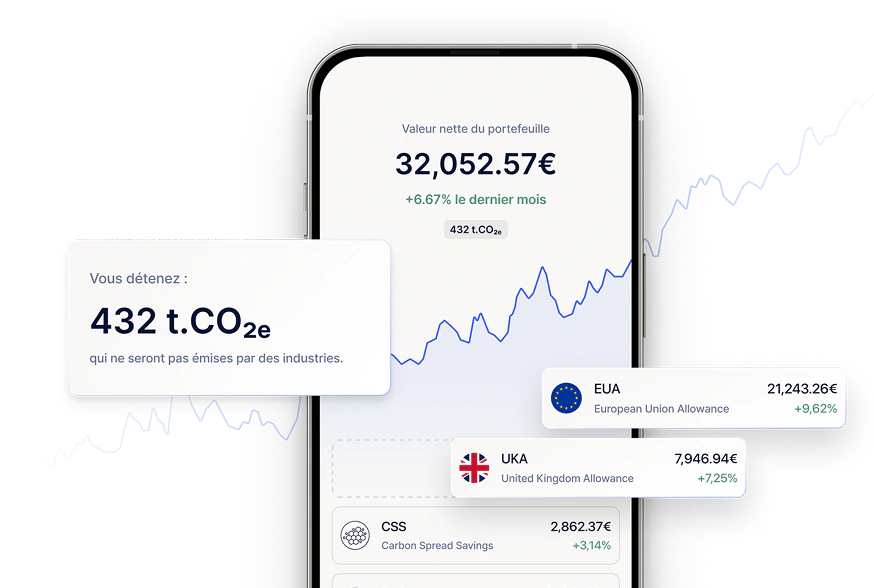
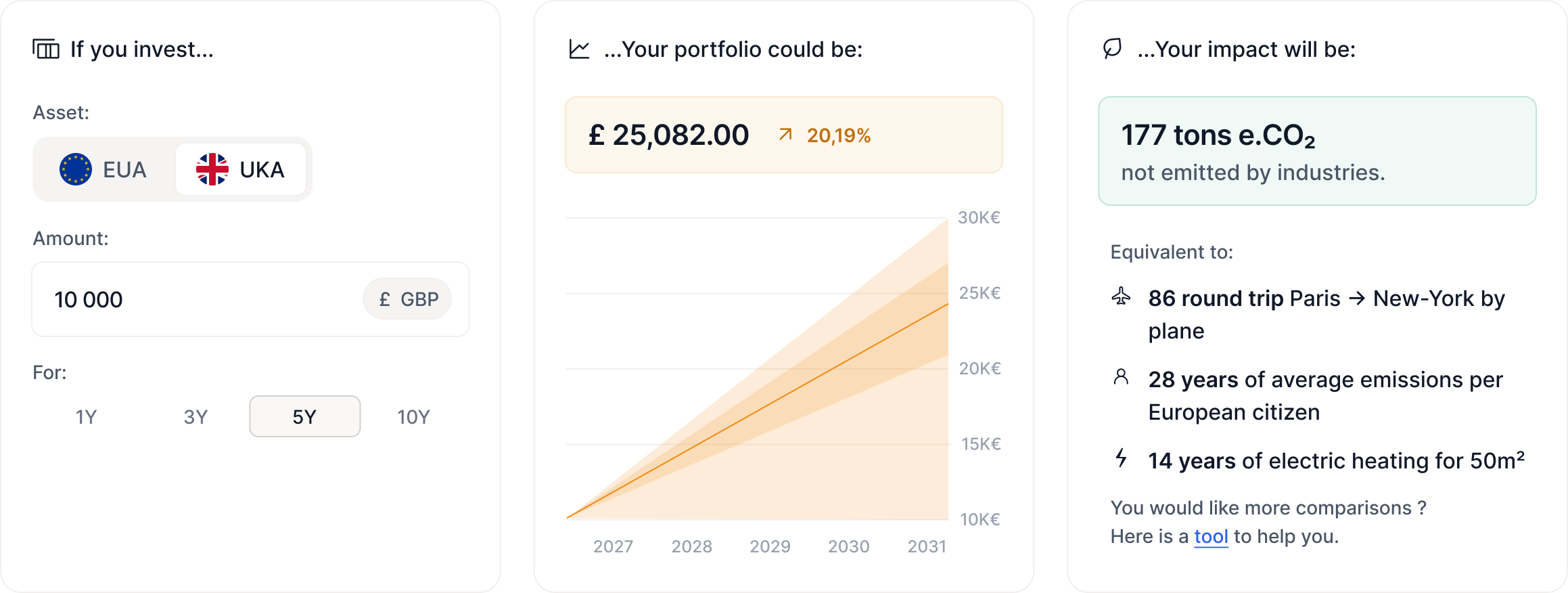
Homaio gives you access to European carbon allowances (EUAs), an asset class that combines potential financial performance with direct climate impact. Diversify your wealth with an asset uncorrelated from traditional markets, accessible from €1,000.