Which bonds to buy in 2026: a guide by yield, risk, and rates

This article is provided for informational purposes only and does not in any way constitute personalized investment advice. Past performance is not indicative of future results. Any investment involves a risk of capital loss.
The bond universe, often seen as complex, is once again attracting investors’ attention. In an uncertain economic environment, knowing which bonds to buy in 2026 requires a methodical analysis rather than a simple list of products. This guide helps you understand the mechanisms, categories, and selection criteria so you can make informed decisions.
Which bonds should you favor in 2026? Short answer based on your profile
Choosing a bond depends above all on your risk tolerance and your objectives. There is no single answer, but there are possible directions.
- Conservative profile: The goal is capital preservation. Government bonds from very highly rated countries (such as French OATs or German Bunds) and Investment Grade corporate bonds (the highest-rated) with short maturities are often favored. Diversifying via bond ETFs or funds in these segments is a common approach.
- Balanced profile: Seeking a moderate yield while accepting controlled risk is at the heart of the strategy. A combination of government bonds and Investment Grade corporate bonds with varied maturities can be considered. Adding a small allocation to target-maturity bond funds or strategic bond funds is an option to boost the portfolio.
- Dynamic profile: The investor accepts a higher share of risk to target potentially higher returns. Exposure may include High Yield corporate bonds (higher yielding, but riskier) or emerging market bonds, generally via ETFs or specialized funds to pool default risk.
Pay attention to risk
Each bond category comes with specific risks. The apparent safety of government bonds does not protect them from interest-rate risk, while corporate bonds are subject to credit risk (issuer bankruptcy).
Why bonds are becoming attractive again in 2026
After years of near-zero rates, the bond market has regained momentum. A bond is simply a loan made to a government or a company, which pays you interest in return (the “coupon”) before repaying the principal on a set date (the maturity).
Their appeal rests on two pillars: yields that have become competitive again and a diversification role within a household’s wealth.
How interest rates affect yields and prices
Understanding the inverse relationship between interest rates and bond prices is fundamental.
- When rates rise: Newly issued bonds offer better yields. As a result, older bonds with lower coupons lose value on the secondary market.
- When rates fall: The opposite happens. Older bonds with higher coupons become more attractive and their prices increase.
This sensitivity to rate changes is a risk, but also an opportunity for capital gains.
What 2026 could change under three market scenarios
Will 2026 be a good year for bonds? It will all depend on how central banks’ monetary policies evolve.
- Rate-cut scenario: If inflation is under control and central banks cut their policy rates, existing bonds—especially long-maturity ones—could see their value rise significantly.
- Rate-stability scenario: In this case, the main benefit of bond investing would be to “lock in” an attractive yield for the years ahead, focusing on the regular income generated by coupons.
- Another rate-hike scenario: Although less likely according to many analysts, this scenario would lead to a decline in the value of bonds held in the portfolio. Short-term bonds or target-maturity funds would then be more resilient.
The main bond families to know before buying
Before asking yourself “which bonds to buy,” it is crucial to distinguish between the main types of issuers.
Government bonds: relative safety and rate sensitivity
Issued by governments to finance their spending, they are considered among the least risky assets. The default risk of a country like France (via its OATs, Obligations Assimilables du Trésor) or Germany is considered very low.
- Pros: Very low credit risk, high liquidity.
- Cons: Generally lower yield, high sensitivity to interest-rate changes.
Investing in French government bonds is a classic way to gain exposure to this asset class.
Investment Grade corporate bonds: a yield/risk trade-off
These are debts issued by financially solid companies, rated between AAA and BBB- by rating agencies. They offer a higher yield than government bonds to compensate for slightly higher credit risk.
- Pros: Good yield/risk balance, high-quality issuers.
- Cons: Default risk (even if low), sensitivity to the company’s sector’s economic health.
High Yield bonds: higher yield, higher risk
Also called “high-yield bonds” or “speculative bonds,” they are issued by companies whose financial strength is considered more fragile (rated BB+ or lower). To attract investors, they offer much higher coupons.
- Pros: Very attractive return potential.
- Cons: Much higher default risk, high correlation with equity markets in times of crisis.
Should you buy bonds directly, via ETFs, funds, or life insurance?
Access to the bond market can be achieved in several ways, each with its own specifics. This is a direct answer to the question “how to buy bonds?”.
When to choose a bond ETF
An ETF (Exchange Traded Fund) is a fund that tracks the performance of a basket of bonds (for example, euro area government bonds).
- Ideal for: Instant, low-cost diversification. With a single purchase, you invest in dozens, even hundreds, of different bonds.
- Points to watch: You do not control the final maturity (the ETF has no end date) and the value of your share fluctuates with the market.
When a fund or life insurance may be more suitable
Actively managed bond funds or life-insurance euro funds offer delegated management. Target-maturity funds, which have a fixed end date, are particularly popular for their visibility on potential returns if the bonds are held to term.
- Ideal for: Investors who want to delegate security selection to a manager or benefit from the advantageous tax framework of Assurance vie (French life insurance).
- Points to watch: Management fees are generally higher than for an ETF.
What to know before buying directly
Buying a specific bond (an OAT or a bond from a large company) is possible via a broker.
- Ideal for: Experienced investors with larger capital who want to precisely control maturity and yield to maturity.
- Points to watch: The minimum investment is often high (sometimes 10 000 €, 50 000 € or more), and diversification is harder and more expensive to implement.
The special case of euro funds
The Assurance vie euro fund is mostly invested in government bonds. It offers a capital guarantee (excluding entry fees on contributions) but its yield follows market-rate changes with a lag. It remains a very conservative solution.
How to choose your bonds in 2026: the 5 decisive criteria
To refine your selection—whether for a single bond or a fund—several indicators should be monitored.
Real yield, credit quality, maturity, duration, and fees
- Yield: Do not rely only on the coupon. Yield to maturity is more relevant, as it takes into account the bond’s purchase price and the final repayment.
- Credit quality: The rating (from AAA to D) assigned by rating agencies (S&P, Moody's, Fitch) is a key indicator of default risk.
- Maturity: This is the bond’s lifespan. The longer it is, the higher the yield is generally—but the more sensitive the bond price is to rate changes.
- Duration: This is the most precise measure of a bond’s sensitivity to interest rates. A duration of 5 means that if rates rise by 1%, the bond price will fall by about 5%.
- Fees: For ETFs, funds, and life insurance, management, transaction, or entry fees reduce net performance.
Taxation and wrappers: CTO, life insurance, PEA unavailable or limited
Taxation is a key component of net performance. In France, interest and capital gains are generally subject to the flat tax (PFU) of 30%.
- Compte-Titres Ordinaire (CTO): The most flexible wrapper for buying bonds directly or bond ETFs. Taxation under the PFU.
- Assurance vie: Very advantageous after 8 years of holding, with an annual allowance on withdrawals. Ideal for bond funds.
- Buying bonds in a PEA (French equity savings plan): As a general rule, it is not possible to hold bonds directly in a Plan d'Épargne en Actions. Only certain bond ETFs, via specific financial structures, are eligible. Check eligibility carefully before any investment.
Examples of bond allocations for three investor profiles
These scenarios are educational illustrations and do not constitute recommendations. They must be adapted to each individual’s personal situation.
Conservative profile
- Goal: Stability and regular income.
- Typical allocation: Mostly euro funds (Assurance vie), complemented by short-term euro area government bond ETFs (low duration) to limit interest-rate risk.
Balanced profile
- Goal: Moderate growth and diversification.
- Typical allocation: A core of government and Investment Grade corporate bonds via ETFs or target-maturity funds for visibility. A small sleeve may be allocated to more flexible bond funds.
Dynamic profile
- Goal: Maximize returns while accepting risk.
- Typical allocation: The portfolio remains diversified but includes a share (for example 10-20% of the bond sleeve) in High Yield ETFs or funds, or in emerging-market debt, for performance potential.
Common mistakes to avoid when investing in bonds
- Confusing the coupon with total return: Final return also includes the change in the bond price if you sell before maturity.
- Ignoring duration: This is the most common mistake. A bond with a high coupon but long duration can suffer large losses if rates rise.
- Underestimating credit risk: The high yields of High Yield bonds are not “free.” They compensate for a very real bankruptcy risk.
- Forgetting diversification: Do not put all your capital into a single corporate bond. The issuer’s bankruptcy would lead to an almost total loss.
Frequently Asked Questions (FAQ) about buying bonds in 2026
Which bonds should you choose in 2026?
The choice depends on your risk profile. For safety, favor government bonds from the highest-rated countries (France, Germany). For a yield/risk trade-off, look to Investment Grade corporate bonds. For higher return potential (and increased risk), High Yield bonds may be considered, preferably via diversified funds.
Will 2026 be a good year for bonds?
The current rate environment makes bonds attractive for their yield. A potential cut in policy rates in 2026 could create opportunities for capital gains on long-maturity bonds. However, stable or higher rates remain a possible scenario that would affect portfolios differently. Caution is still warranted.
Which bonds are the most profitable?
The most profitable bonds are consistently the riskiest. These are High Yield bonds (issued by fragile companies) and bonds from emerging countries. Their high yield compensates for significant default risk and/or currency risk. They are intended for experienced investors.
How do you buy bonds?
For an individual, the simplest and most diversified ways are bond ETFs (via a brokerage account), bond funds (via a brokerage account or Assurance vie), and Assurance vie euro funds. Direct purchases are possible but require larger amounts and a good understanding of markets.
Can you buy bonds in a PEA?
No, buying bonds directly is not allowed in a PEA. Only a few synthetic bond ETFs (which track performance without holding the securities) are eligible. You have to check case by case. The most suitable wrappers remain the brokerage account or Assurance vie.
Go further: invest in the carbon market
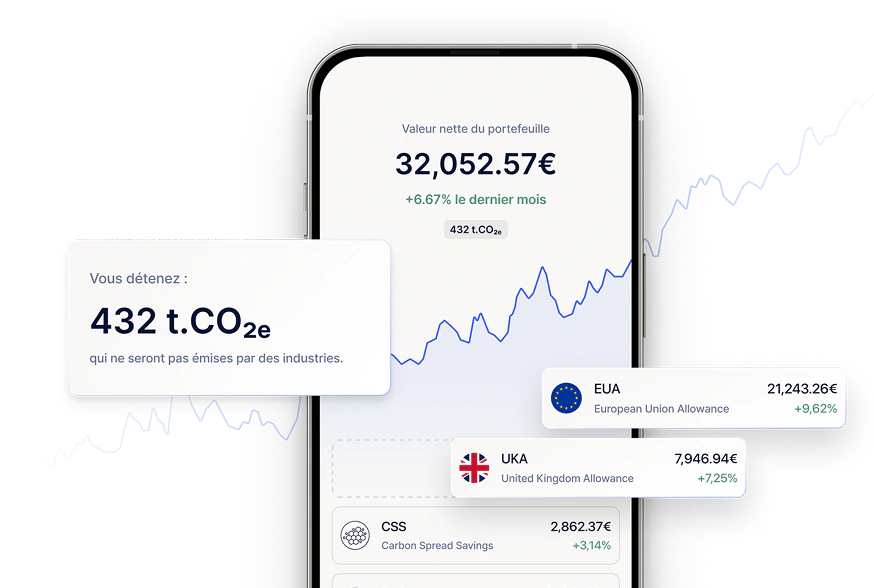
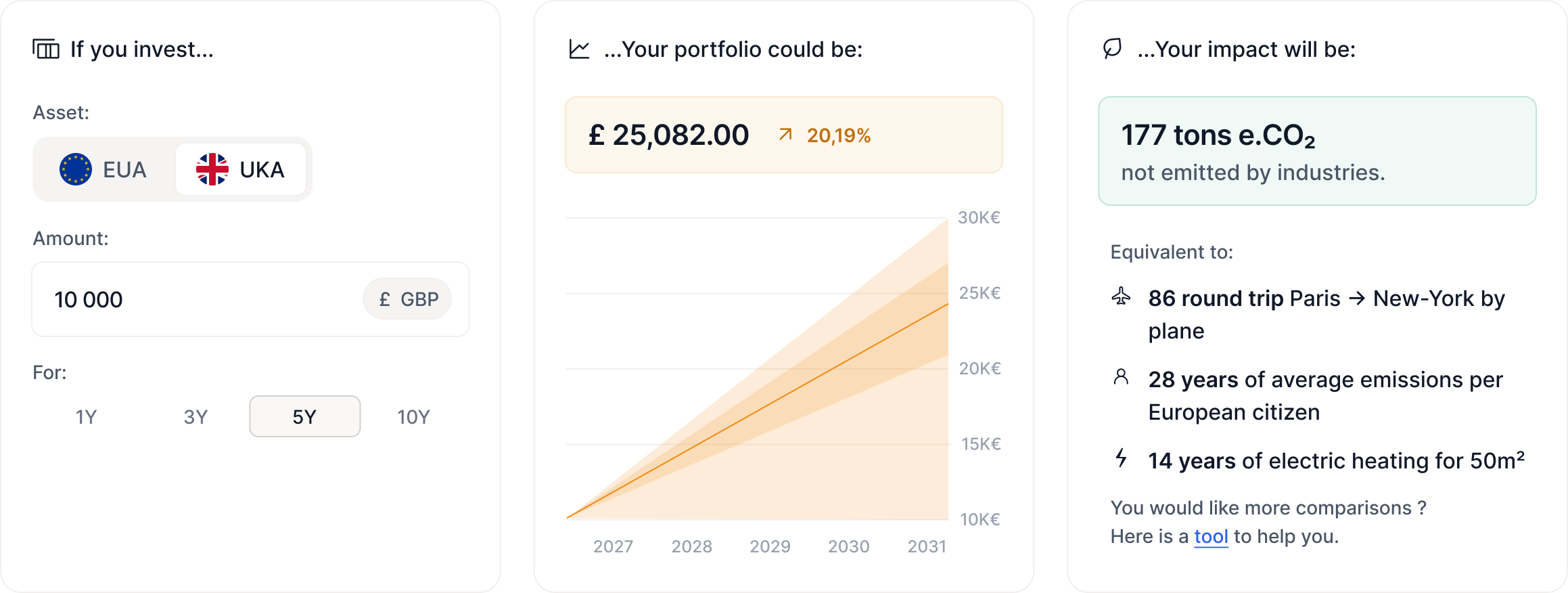
Homaio gives you access to European carbon allowances (EUAs), an asset class that combines potential financial performance with direct climate impact. Diversify your wealth with an asset uncorrelated from traditional markets, accessible from €1,000.