Term deposit account: how to choose, secure and maximise your return in 2026

A term deposit account, or CAT, is a savings product that comes back into focus when interest rates rise. It lets you invest a sum of money for a set period in exchange for guaranteed remuneration known in advance.
This complete and neutral guide explains how it works, its benefits, its risks and the key criteria to assess whether it fits your savings goals.
The term deposit account at a glance
- Principle : You deposit a single sum into an account that is locked for a fixed period (from a few months to several years).
- Return : The interest rate is set and guaranteed at subscription. It is generally higher for longer terms.
- Risk : The capital is guaranteed. The main risk is the opportunity cost if rates rise after you subscribe (interest-rate risk) and penalties in case of early withdrawal.
- Availability : Funds are in principle locked until maturity. Early withdrawal is often possible, but it results in penalties on the remuneration.
What is a term deposit account and how does it work?
A term deposit account (CAT), also called a time deposit (DAT), is a contract you enter into with a bank. You lend it a sum of money for a defined period and it undertakes to return it to you at maturity, plus the agreed interest.
How it works is straightforward and relies on four pillars:
- Single payment : Unlike a savings account, you make one single deposit when opening the account. It is not possible to add money afterwards.
- Fixed term : The lock-up period is set by the contract. It can range from 1 month to 5 years, or even more.
- Known interest rate : The rate of return is defined when you sign. You therefore know exactly how much your investment will earn at maturity.
- Maturity : At the end of the agreed period, the bank pays you the initial capital and the gross interest generated. Depending on the contract, the account may be closed or renewed automatically.
How are the rate, term and interest calculated?
The remuneration of a term deposit account depends directly on the interest rate and the investment term. Banks set their rates based on central bank policy rates and money-market conditions.
There are mainly two types of rates for a term deposit account:
- Fixed rate : The return rate stays the same for the entire term. This is the most common case, offering perfect visibility on the final gain.
- Step-up rate : The rate increases in stages at predefined times in the contract (for example, each quarter or each year). Remuneration is higher towards the end of the period to encourage savers to keep their investment until the end.
Interest calculation is generally simple. Interest is calculated over the entire period and paid in a single instalment at contract maturity.
What are the advantages and disadvantages of a term deposit account?
Like any savings product, a term deposit account has strengths and limits that are essential to understand before committing.
Advantages:
- Security : The capital is guaranteed by the bank. In addition, deposits are covered by the Fonds de Garantie des Dépôts et de Résolution (FGDR) up to 100 000 € per client per institution.
- Known return : Since the rate is set at subscription, there are no surprises about the amount you will receive at maturity.
- No fees : Opening, managing and closing a term deposit account are generally free.
- No cap : Unlike regulated passbook accounts, there is often no deposit cap, although a minimum amount is required.
Disadvantages:
- Funds locked : Money is unavailable for the entire term of the contract. In case of an unexpected need, early withdrawal is possible but penalised.
- Single payment : You cannot top up the account with regular contributions to grow monthly savings.
- Taxation : Interest is subject to tax and social contributions, which reduces the net return.
- Potentially low return : In a low-rate environment, remuneration may be below inflation, leading to a loss of purchasing power.
[image alt="Comparison table of the advantages and disadvantages of the term deposit account, highlighting security on one side and locked funds on the other."]
What are the risks of term deposit accounts?
A term deposit account is considered a capital-guaranteed, risk-free investment, but it is not completely risk-free. It is crucial to understand the risks.
The main risk is interest-rate risk. If market interest rates rise sharply after you subscribe to your CAT, your money is “locked” at a rate that has become less competitive. You then face an opportunity cost compared with new, higher-paying offers.
The second point of attention concerns early withdrawal. If you need to recover your money before the scheduled maturity, the bank will apply penalties. These take the form of a reduction, or even a cancellation, of the interest you were due. The exact conditions are always specified in the contract.
Finally, although very low in France, the risk of bank default exists. However, it is largely mitigated by the FGDR guarantee up to 100 000 €.
How to choose a term deposit account: criteria to compare
Choosing the “best” term deposit account depends entirely on your personal situation and plans. There is no universal offer—only an offer suited to your needs.
Here are the key criteria to analyse to compare banks’ offers:
Term: 3 months, 6 months, 12 months or more?
Choosing the term is strategic and depends on your expectations about how rates will evolve.
- 3-month and 6-month term deposit accounts : These short terms are attractive if you expect rates to rise. They let you benefit quickly from better reinvestment conditions. It is also a good option to park cash while waiting for an imminent project (property down payment, major purchase).
- 12-month and longer term deposit accounts : Longer terms make it possible to “lock in” an attractive rate over the long term, especially if you think rates will fall. This is a suitable solution for a medium-term project with a known date.
A look at the past to shed light on the present
Historically, in an environment of high and volatile interest rates, savers have often favoured shorter terms (3 to 12 months) for their term deposit accounts. The goal was to keep flexibility to reinvest their capital under potentially even better conditions a few months later, without being locked into a long period at a rate that would quickly become obsolete.
Taxation and net return
It is essential not to forget the impact of taxation. Interest generated by a term deposit account is considered income from movable capital.
In France, it is subject by default to the Prélèvement Forfaitaire Unique (PFU), also called the “flat tax”, at an overall rate of 30 %. This levy is broken down into:
- 12,8 % as income tax.
- 17,2 % as social contributions.
You can, by option, choose to have this income taxed under the progressive income tax scale if that is more advantageous for you. To know the real return on your investment, you should always calculate the net gain after tax.
Term deposit account or other savings investments: what to choose?
The term deposit account positions itself as a secure short- to medium-term savings solution. To use it well, you need to compare it to its main alternatives.
A term deposit account is therefore particularly attractive if you have a sum of money you will not need for a determined period and you want a guaranteed return, higher than passbook accounts, without taking capital risk.
[image alt="Simple chart comparing the potential performance and risk level of the term deposit account, savings passbooks and an assurance-vie euro fund."]
Always check the contractual terms
This article provides general information. The features of a term deposit account (rate, term, minimum deposit, early-withdrawal conditions) vary considerably from one bank to another. Before any decision, it is imperative to read the contractual documentation provided by the financial institution and, if necessary, seek advice from a professional.
Term deposit account FAQ
Is it worth opening a term deposit account?
Yes, a term deposit account can be very worthwhile in certain situations. It is an excellent option if you have a sum of money to invest for a defined period (for example, while waiting for a property purchase) and you are looking for a guaranteed return without risk to your capital. On the other hand, it is not suitable for emergency savings, which must remain available at all times.
What are the best term deposit accounts right now?
There is no “best” term deposit account in absolute terms. The best one is the one that matches your needs in terms of term, amount and flexibility. To find it, you need to compare offers from different banks based on the Gross Annual Actuarial Yield Rate (TRAAB), early-withdrawal conditions and the minimum investment amount.
What are the risks of term deposit accounts?
A term deposit account is a very safe investment with guaranteed capital. The main risk is interest-rate risk: if overall interest rates rise after you subscribe, your investment becomes less attractive than new offers. The second risk is linked to early withdrawal: if you withdraw your money before maturity, you will face penalties that will reduce, or even cancel, your gains.
What taxation applies to a term deposit account?
Interest from a term deposit account is taxed. It is subject to the prélèvement forfaitaire unique (PFU or “flat tax”) at a rate of 30 % (12,8 % tax and 17,2 % social contributions). You can opt for taxation under the progressive income tax scale if this is more advantageous for your tax situation.
Can I withdraw money from a term deposit account before the end?
Yes, most contracts allow early withdrawal, but almost always under conditions and with penalties. These penalties consist of a reduction in the interest rate initially planned. In some cases, no interest is paid if the withdrawal takes place too early (for example, during the first month). The precise conditions are detailed in your contract.
Go further: invest in the carbon market
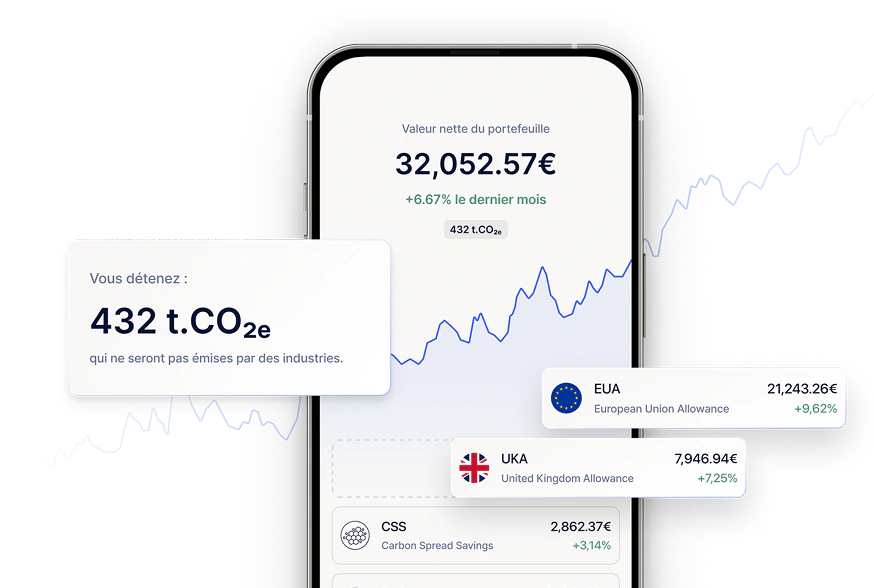
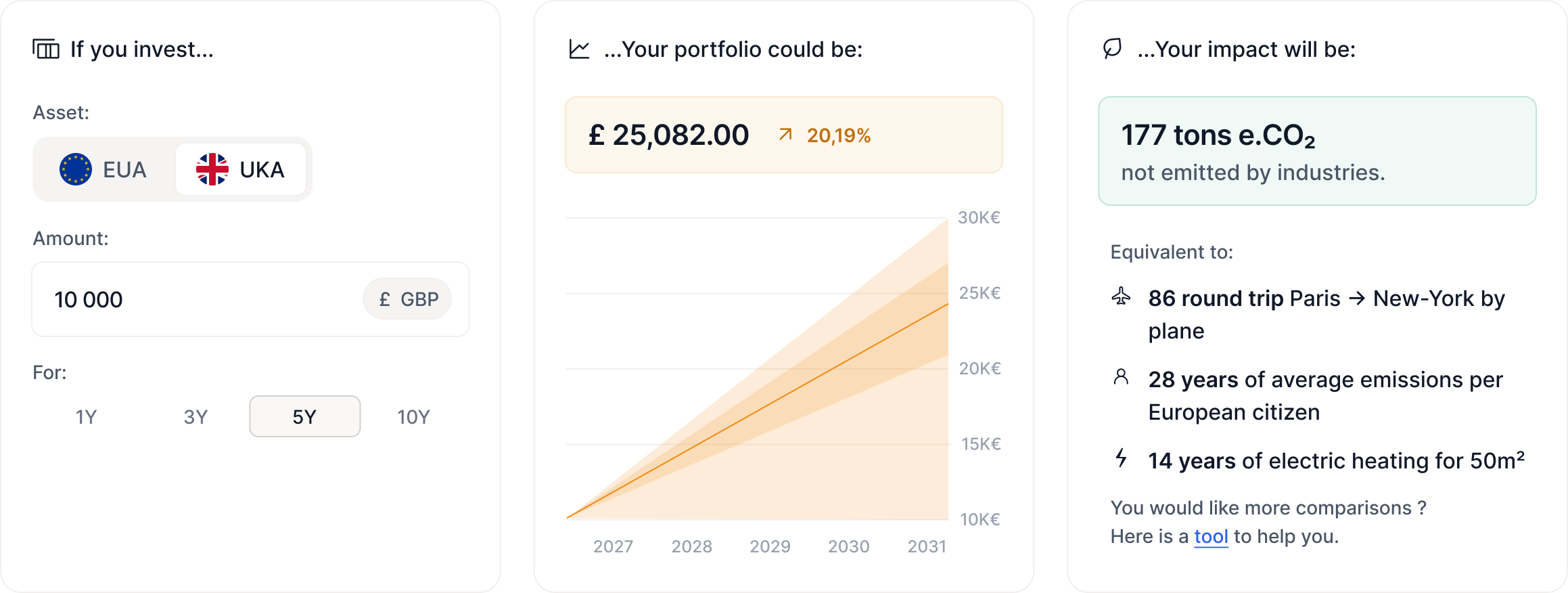
Homaio gives you access to European carbon allowances (EUAs), an asset class that combines potential financial performance with direct climate impact. Diversify your wealth with an asset uncorrelated from traditional markets, accessible from €1,000.