Tangible asset: definition, examples, and its role in your wealth

A tangible asset is a physical, concrete item that you can see and touch, with economic value. It includes, for example, real estate, gold, works of art, or farmland. Unlike financial assets, its value is often perceived as more direct and less dependent on fluctuations in financial markets.
Tangible asset: simple definition
A tangible asset, also called a physical asset, is a material item that you can physically hold. Its main characteristic is its physical substance: you can see it, touch it, and locate it geographically. This concrete nature sets it apart radically from other forms of wealth.
Whether it is an apartment, a gold bar, or a bottle of fine wine, a tangible asset has value in its own right. This value can come from its utility (living in a home), its rarity (a unique work of art), or its production potential (farmland). From an investment perspective, it is often considered for its ability to preserve value over the long term.
What are the differences between a tangible asset, an intangible asset, and a financial asset?
Understanding the nature of an asset is essential to assess its place in a wealth portfolio. Assets are generally classified into three main families, whose characteristics, risks, and functioning differ completely.
Tangible asset vs. intangible asset
The simplest distinction is physicality.
- The tangible asset is physical. Its value is linked to its material substance and its concrete use.
- Examples: a building, a vehicle, inventories of raw materials, furniture.
- The intangible asset (or non-physical asset) has no physical substance. Its value lies in the rights or advantages it grants.
- Examples: a patent, a trademark, software, a business (going concern).
If a production workshop is a tangible asset, the patent protecting the machine inside it is an intangible asset.
Is an ETF a tangible asset?
No, an ETF (Exchange-Traded Fund or index fund) is not a tangible asset. It is a financial asset.
A financial asset is a security or a contract that represents a claim on an entity’s future financial flows (company, government). It has no physical existence of its own; it is an entry in an account. Shares, bonds, fund units, or Assurance vie contracts are typical examples.
An ETF gives you exposure to the performance of a basket of assets, which may themselves be linked to tangible assets. For example, a gold ETF tracks the price of the precious metal, but you hold a unit of the fund, not the physical bar. The same applies to an SCPI (Société Civile de Placement Immobilier), which is a financial product that allows you to invest in a real estate portfolio.
Do not confuse the asset and the wrapper
It is crucial to distinguish the underlying asset (gold, real estate) from the financial instrument that allows you to invest in it (ETF, SCPI, shares in a mining company). Buying an SCPI unit gives you a right to the income from a real estate portfolio, but you do not own the buildings directly. The instrument is financial, even if its return is linked to a tangible asset.
Examples of the most well-known tangible assets
Tangible assets cover a wide diversity of property. Here are the most common categories from a wealth-building perspective.
Real estate and land
This is the most emblematic category. It includes:
- Residential real estate (apartments, houses) for personal use or rental.
- Commercial real estate (offices, retail premises).
- Undeveloped land, such as farmland or forest plots, which can generate income from operations.
Gold, precious metals, and physical commodities
These assets are often considered for their role as a safe haven, although their price can be volatile.
- Gold and silver: in the form of bars, coins, or jewelry.
- Other precious metals: platinum, palladium.
- Storable commodities: certain industrial metals or energy resources.
Wine, art, and collectibles
These so-called “pleasure” assets combine the appeal of ownership with potential appreciation.
- Wine and spirits: classified growths, rare whiskies.
- Works of art: paintings, sculptures, photographs.
- Collectibles: luxury watches, classic cars, rare stamps.
Investing in this category requires sharp expertise to assess authenticity and resale potential.
Why invest in tangible assets?
Interest in tangible assets is based on several characteristics, but it is important to approach them cautiously and without expecting guaranteed returns.
- Intrinsic value: Unlike a share whose value can fall to zero in the event of bankruptcy, real estate or a gold bar retains physical substance and a use or resale value.
- Potential protection against inflation: Historically, the value of certain tangible assets such as real estate or precious metals has tended to rise during periods of price increases. However, this correlation is neither automatic nor guaranteed.
- Wealth diversification: Adding tangible assets can help reduce a portfolio’s dependence on financial markets alone. Their performance is often (but not always) uncorrelated with that of stocks and bonds.
- The ability to generate income: A property can produce rent, farmland can generate lease income, and forests can generate income from timber harvesting.
What risks and limitations should you be aware of?
Investing in tangible assets involves specific constraints and risks that should not be underestimated.
- Low liquidity: Selling a tangible asset can take time. Reselling a property or a work of art is a far longer and more complex process than selling a stock on the market.
- Holding and transaction costs: Owning a physical asset entails costs: insurance, maintenance, secure storage, notary fees, intermediary commissions, etc.
- Valuation difficulty: The value of a tangible asset can be subjective, especially for art or collectibles. It depends on expert opinions and on market conditions at the time of sale.
- Physical risks: A physical asset is exposed to theft, deterioration, natural disasters, or destruction.
- Complex taxation: Each type of tangible asset is subject to specific tax rules (capital gains, property taxes, inheritance taxes), which can be significant.
Liquidity, a major issue
The main point to watch is how difficult it can be to quickly convert your asset into available cash without suffering a loss in value. Before any investment, it is essential to consider your time horizon and any potential need to recover your funds in the short term. Tangible assets are generally associated with a long-term view.
How do you assess a tangible asset before investing?
A methodical approach is needed to analyze a tangible asset. The aim is not to give advice, but to offer a neutral framework for reading it.
- Authenticity and provenance: For art, wine, or collectibles, certificates and a clear history are essential.
- Physical condition and maintenance costs: A property survey, the condition of a classic car, or the storage conditions of a fine wine are key factors in their value.
- The market and demand: Is the asset sought after? Is there an active and transparent secondary market to facilitate a future resale?
- All associated costs: Calculate not only the purchase price, but also all ancillary costs over the intended holding period.
- Investment horizon: Most tangible assets require a long or very long-term view to hope for potential capital gains.
FAQ on tangible assets
What is an intangible asset?
An intangible asset is a non-monetary asset that has no physical substance. Its value comes from the rights, privileges, and economic benefits it provides to its holder. The most common examples are patents, copyrights, trademarks, software, or a company’s reputation (goodwill).
What are the 3 types of assets?
There are generally three broad categories of assets:
- Tangible (or physical) assets: physical property such as real estate, vehicles, gold.
- Intangible (or non-physical) assets: non-material property such as patents, trademarks, software.
- Financial assets: securities or contracts representing a claim or an ownership right, such as shares, bonds, fund units (ETF, SCPI), or cash.
What is a tangible product?
A tangible product is a physical object that can be offered on a market to be bought and consumed. It is the concrete manifestation of a commercial offering. A car, a smartphone, or a bottle of water are tangible products. In an investment context, a tangible asset is a tangible product held for its wealth value rather than for immediate consumption.
What are tangible goods?
“Tangible goods” is a synonym for “tangible assets” or “physical assets.” The term refers to all material possessions with economic value. It can include movable property (a car, a work of art) or immovable property (land, a building).
Disclaimer: This article is for general informational purposes. It does not constitute investment advice, nor tax, legal, or wealth management advice. Features, risks, fees, and tax rules depend on each asset and the investor’s personal situation.
Go further: invest in the carbon market
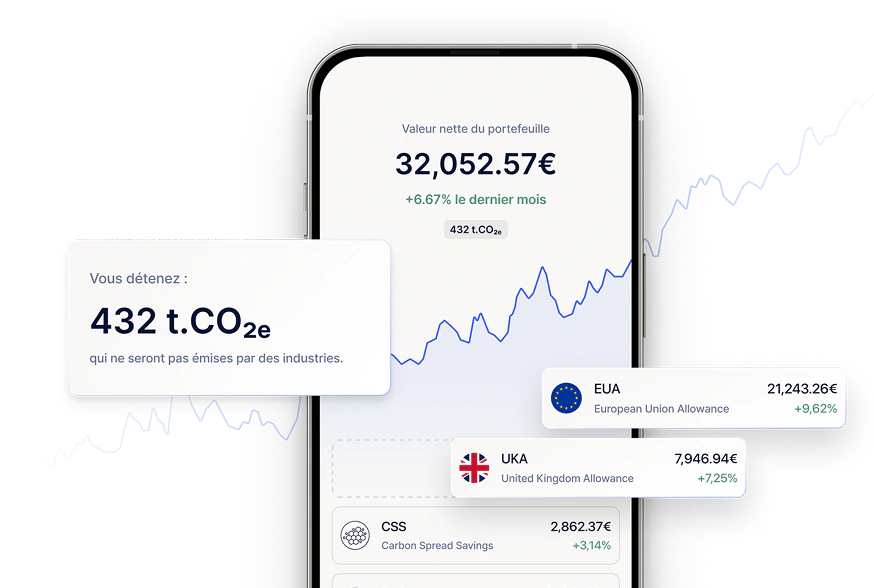
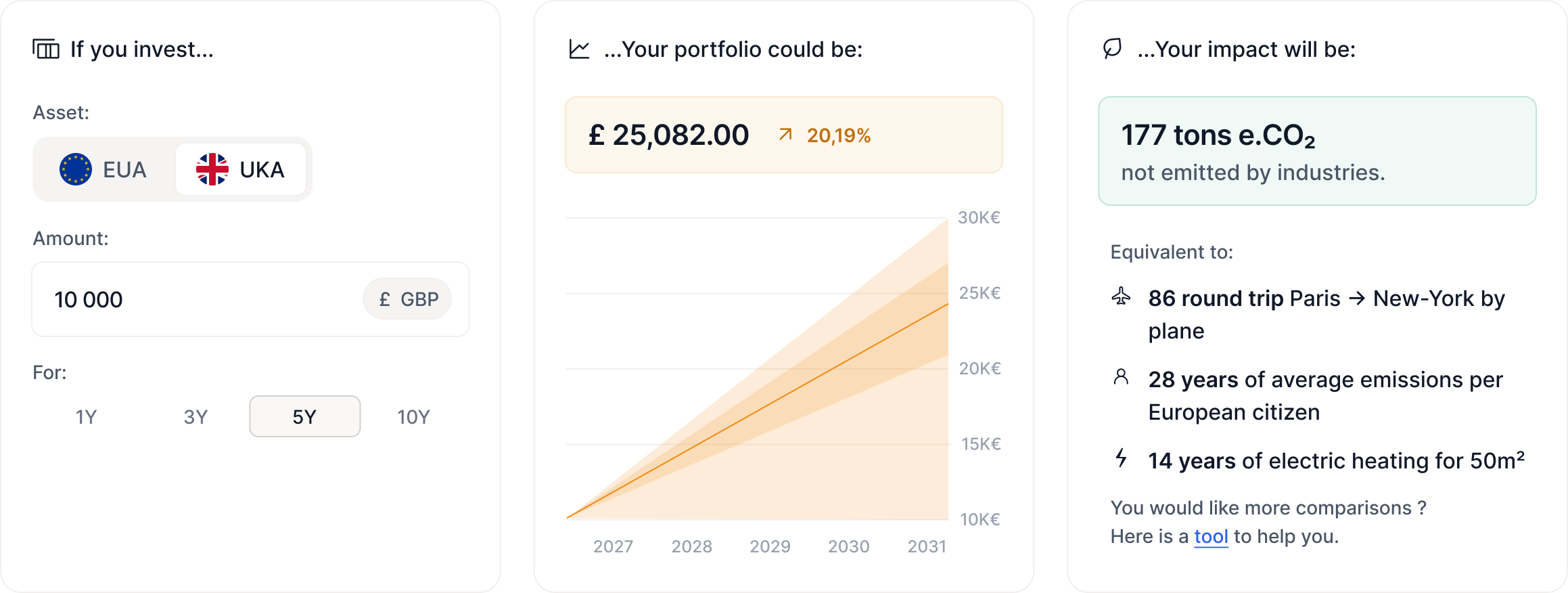
Homaio gives you access to European carbon allowances (EUAs), an asset class that combines potential financial performance with direct climate impact. Diversify your wealth with an asset uncorrelated from traditional markets, accessible from €1,000.