Systemic Risk 2026: A Clear Guide to Prevention

Have you ever wondered how the collapse of a single bank on the other side of the world could threaten your own savings? That isn’t science fiction, but the perfect illustration of systemic risk—this domino effect capable of shaking the entire global financial system.
Understanding this phenomenon is no longer reserved for experts. It is a crucial civic issue for anyone who wants to navigate tomorrow’s economic landscape with clarity and protect their wealth. Far from being inevitable, this threat can be anticipated and managed—provided you understand how it works.
What is systemic risk? A simple definition
Systemic risk refers to the possibility that a triggering event affecting one player or one market spreads to the entire financial system and, by extension, to the real economy. This is not an isolated risk, like the poor management of a single company, but a threat that weighs on the system as a whole because of its very structure.
Unlike “non-systemic” risk, which can be diluted through diversification (not putting all your eggs in one basket), systemic danger hits everywhere at once. It’s a tide that lifts all boats—then strands them together.
The paradox of this phenomenon lies in its cause. It often arises from a series of individually rational behaviors that, collectively, lead to disaster. The clearest example is a bank run: if you learn your bank is fragile, the logical reaction is to withdraw your money immediately. But if all customers do the same at the same time, they cause the very failure they feared. In this case, the market does not move toward equilibrium, but toward collapse.
Contagion mechanisms: how the house of cards collapses
The spread of a systemic crisis isn’t magic. It rests on very real mechanisms that act like transmission belts, turning a local problem into a financial pandemic.
Interconnectedness, the first link in the chain
The modern financial system is an incredibly dense network where every institution is linked to the others. Banks lend money to each other every day on the interbank market, hold stakes in one another, and are exposed to the same assets.
When a major link in this chain breaks—for example, a large bank fails—all the institutions that lent it money or held its securities suffer losses. Distrust then sets in: who will be next? Interbank credit freezes, depriving even healthy banks of the liquidity they need to operate. It’s a financial heart attack.
The confidence crisis, the fuel of panic
Finance relies on an invisible but essential ingredient: trust. When that trust disappears, chain reactions accelerate. Investors massively sell their assets, triggering a sharp stock market drop. Savers, fearing for their money, rush to the counters.
The example of the British bank Northern Rock in 2007 is emblematic. As soon as the institution’s difficulties became public, lines of customers formed to withdraw their deposits, sealing the bank’s fate—it had to be urgently nationalized by the UK government. Panic, fueled by uncertainty, became a self-fulfilling prophecy.
Leverage, an accelerator of losses
Leverage means borrowing to invest more than your starting capital. While it can multiply gains in good times, it magnifies losses when the market turns. Many financial institutions operate with very high leverage levels.
In a crisis, a slight drop in the value of their assets may be enough to wipe out their equity, pushing them into bankruptcy. They are then forced to sell assets urgently to repay themselves, which pushes prices down even further and contaminates other players.
From concept to reality: the 2008 crisis as a textbook case
The 2008 global financial crisis is the most spectacular—and most painful—illustration of systemic risk. It all began in a specific segment of the US housing market: subprime mortgages, home loans granted to households with low creditworthiness.
When those households could no longer repay, defaults multiplied. The problem was that these loans had been “securitized”, meaning they were turned into complex financial products and resold to banks and investors around the world—often with misleading risk ratings.
The collapse of the US housing market triggered a crash in the value of these products. The bankruptcy of investment bank Lehman Brothers on 15 September 2008 was the detonator. No one knew who held what, or which institution was still solvent. Trust vanished, credit completely seized up, and the crisis spread to the global economy, causing a deep and lasting recession. This event etched into stone the saying “Too big to fail”, justifying massive public bailouts to prevent a total collapse.
Prevention rather than cure: the regulators’ toolkit
Faced with such danger, inaction isn’t an option. Public authorities and financial regulators have developed a range of tools to reduce the likelihood of a crisis and contain its effects if it occurs.
Preventive measures
The best defense is anticipation. To prevent the system from becoming too fragile, strict regulation was put in place, particularly after the 2008 crisis.
- Prudential rules: Banks are required to hold a minimum amount of capital (equity) in proportion to the risks they take. These rules (known as the Basel Accords) act as a safety cushion to absorb unexpected losses.
- Supervision: Central banks and regulatory authorities continuously monitor the health of financial institutions, analyze risks, and can impose corrective measures.
- Deposit guarantee funds: In many countries, including France, a mechanism guarantees individuals’ bank deposits up to a certain amount (100 000 € in the European Union). This insurance has a major psychological effect: it removes the incentive for a bank run, knowing savings are protected even in the event of a failure.
Interventions in the event of a crisis
When prevention isn’t enough, public intervention becomes necessary to stop the fire.
Central banks’ main role then is that of “lender of last resort”. They inject massive liquidity into the system to ensure that even banks that are temporarily strained but fundamentally sound can continue operating and meet their obligations. It is a way to restore the economy’s blood circulation.
In the most extreme cases, governments may decide to rescue an institution deemed systemic (“Too big to fail”) through a temporary nationalization or a public capital injection to prevent its collapse from bringing down everything else.
How can this invisible danger be measured?
For a long time, systemic risk was a qualitative concept. But given how dangerous it is, economists have developed tools to quantify it. One of the best known is the SRISK indicator.
Designed after the 2008 crisis, SRISK aims to estimate how much capital would need to be injected into a financial institution for it to survive another major crisis. It doesn’t just look at a single variable; it combines three, considered essential:
- Company size: the larger an institution is, the greater the consequences of its failure.
- Leverage: high leverage makes the company more vulnerable.
- Volatility: how the company’s return moves with the market, especially in times of stress.
Expressed in dollars or euros, this indicator makes it possible to rank institutions by their contribution to overall risk and to track how system fragility evolves over time. Initially designed for the United States, it has been adapted to analyze the more heterogeneous European financial system.
Diversify your wealth to reduce your exposure
The very nature of a systemic crisis is to hit all traditional financial markets. In periods of panic, correlations between different asset classes (equities, bonds, etc.) tend to converge toward 1: everything falls at the same time. Traditional diversification within these markets then loses much of its effectiveness.
Given this reality, a resilience strategy is to allocate part of your wealth to uncorrelated assets, whose value is driven by dynamics independent of traditional financial cycles.
Expert tip: Think beyond apparent correlations
During the 2008 crisis, many investors thought they were diversified by holding equities, bonds, and real estate. Yet everything fell simultaneously. True diversification is not just mixing traditional assets, but incorporating asset classes whose performance drivers are fundamentally different. Before investing, ask yourself: “What determines this asset’s value? Is it the same as for the rest of my portfolio?”. It is this independence that provides real protection in the event of a widespread shock.
The European carbon emissions allowance market (EU ETS) is a relevant example of such an asset class. Its value is mainly driven by European Union climate regulation, the pace of industrial energy transition, and climate factors—rather than by stock market sentiment. Historically, this market has shown a low correlation with equity indices.
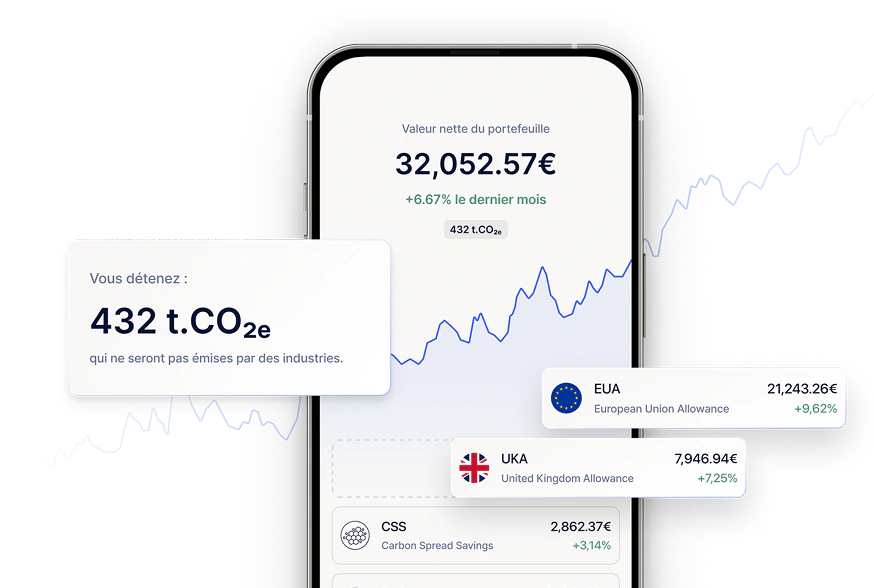
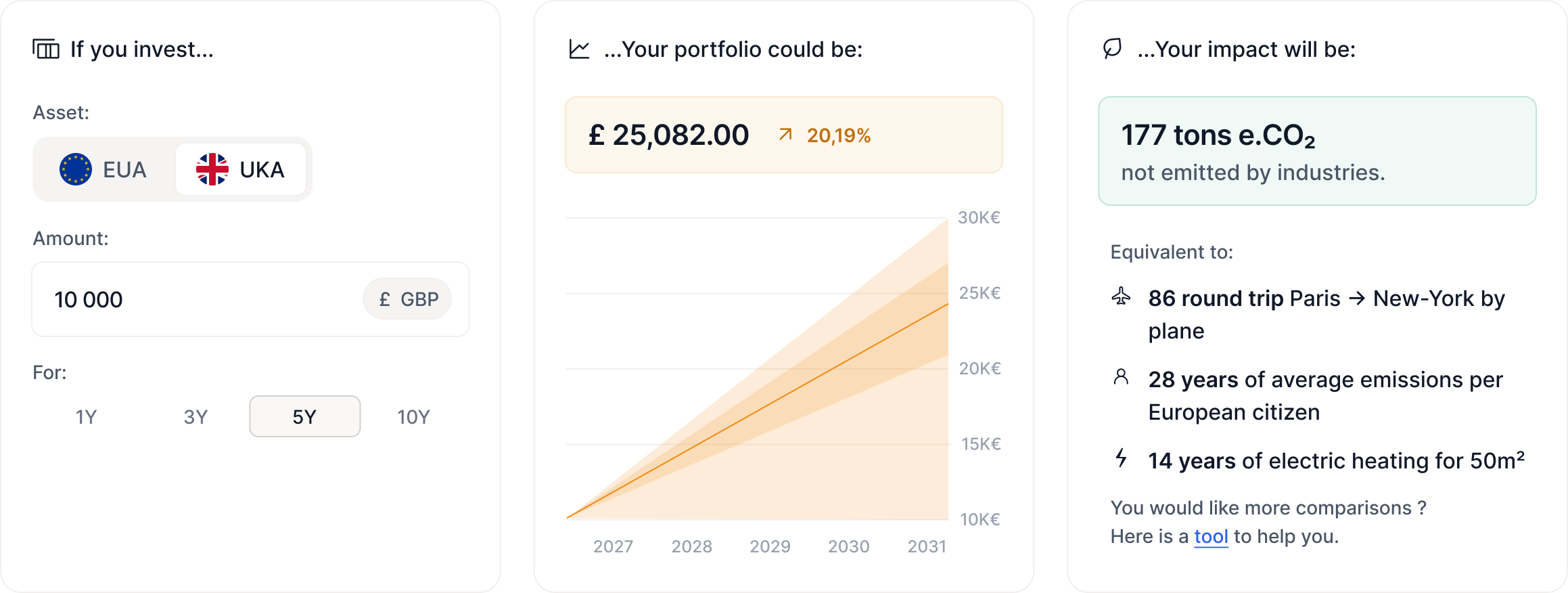
Until recently, this universe was reserved for large industrial players and investment funds. Today, as French pioneers in investing in climate assets, our mission is to democratize access to this regulated market. Our platform enables retail investors to acquire carbon allowances (EUA). By withdrawing them from circulation, each investment puts upward pressure on the carbon price, encouraging polluters to accelerate their decarbonization. This approach aligns the pursuit of financial performance, decoupled from traditional markets, with direct and measurable environmental impact.
Systemic risk is an inherent feature of our globalized and interconnected economy. While it cannot be eliminated entirely, it is now far better understood, monitored, and regulated than before the 2008 crisis. For citizens and investors, understanding its mechanisms is the first step toward making informed decisions. Knowing that safeguards exist, such as deposit guarantees, is reassuring. Exploring smart diversification strategies—especially through uncorrelated impact assets—is a proactive way to build more resilient wealth in the face of future turbulence.
FAQ
Can systemic risk be completely eliminated?
No, it is inherent to the interconnected structure of the financial system. The aim of regulation is not to eliminate it, which would be impossible, but to reduce it, contain it, and strengthen the system’s resilience so it can absorb shocks without collapsing.
Are my savings at risk in a systemic crisis?
For bank deposits (current accounts, passbook savings accounts), the Fonds de Garantie des Dépôts et de Résolution (FGDR) in France protects individuals’ savings up to 100 000 € per depositor per institution. This mechanism is a crucial bulwark against bank runs and secures the bulk of the savings of the majority of citizens. Investments in financial markets (equities, bonds) do not benefit from this capital guarantee.
Do cryptocurrencies represent a systemic risk?
Currently, regulators consider that the crypto-asset market is not yet large enough or sufficiently interconnected with traditional finance to constitute a major systemic risk. However, its rapid growth and the increasing bridges with the traditional banking system (via derivatives products, funds, etc.) are being monitored very closely. A crisis in this market could, in the future, have broader repercussions.
How can an individual protect themselves best?
Without giving investment advice, best practices rest on three pillars. First, information: understanding the products you invest in and the associated risks. Second, diversification: not concentrating your wealth in a single type of asset or a single geographic area. Finally, a long-term view: avoiding hasty decisions driven by market panic. It is often relevant to consider alternative asset classes to complement a traditional portfolio.
Go further: invest in the carbon market
Homaio gives you access to European carbon allowances (EUAs), an asset class that combines potential financial performance with direct climate impact. Diversify your wealth with an asset uncorrelated from traditional markets, accessible from €1,000.