Plan Épargne Retraite: Complete, Independent Review 2026

Is the Plan Épargne Retraite (PER) really the miracle investment for preparing for old age, or just a tax carrot that could backfire on you? Since its launch in 2019, this savings product has been attracting more and more French people, but opinions remain very divided.
On the one hand, its supporters praise an unmatched tax-optimization tool. On the other, its critics point to savings locked up until a distant horizon and an exit tax treatment that is sometimes poorly understood.
So, should you open one? The answer is not universal. It depends entirely on your personal situation, your tax bracket, and your long-term wealth goals.
The PER review in brief: pros and cons
To get a quick, informed view, nothing beats a summary of the strengths and weaknesses of the Plan Épargne Retraite. Reviews are often polarized, because its features can be a major advantage for some and a deal-breaker for others.
What is the plan épargne retraite (PER)?
Created by the 2019 Pacte law, the PER is a long-term savings product designed to help you build up a lump sum or an annuity to complement your mandatory retirement pensions. It is intended to replace and simplify older schemes such as PERP, the Madelin contract, PERCO, or Article 83.
How it works is fairly similar to assurance-vie: you make contributions that are invested across different financial supports. The big difference lies in its main advantage: the ability to deduct these contributions from your taxable income.
The different types of PER
There is not one, but three distinct PERs, each with its own specific features.
- The PER Individuel (PERin): Available to everyone (employees, self-employed, or those without a professional activity), it is opened personally with a bank, insurer, or broker. It is the one people most often think of. It is funded by voluntary contributions.
- The PER d'Entreprise Collectif (PERECO): Set up by a company, it is optionally available to all employees. It can be funded by employee contributions, but also by profit-sharing, incentive schemes, and possible employer top-ups.
- The PER d'Entreprise Obligatoire (PERO or PERCat): Also offered by the employer, it is mandatory for certain categories of employees (often executives). It is mainly funded by mandatory contributions from the company and the employee.
It is important to note that even within a company PER, the voluntary contributions you make on your own initiative are placed in an “individual” compartment. They therefore follow the same tax rules as a PERin.
How does a PER work in practice?
The life cycle of a PER is divided into two main phases: a long savings period during your working life, followed by a payout phase once you retire.
The savings phase: contributions and management
To fund your plan, you have a great deal of flexibility:
- Free contributions: you pay in when you want, with no constraints on amount or frequency.
- Scheduled contributions: you set up automatic transfers (monthly, quarterly...) to save without thinking about it and smooth your effort over time.
Once paid in, your savings are invested according to a management approach you choose:
- Target-date (or managed) investing: This is the default approach. Your asset allocation is managed automatically. The further you are from retirement, the more savings are invested in dynamic supports (equities). Conversely, the closer you get to the target date, the more the capital is secured in low-risk funds such as the euro fund.
- Self-directed management: If you have financial knowledge, you can choose your own investment supports from a list provided by the contract (euro funds, ETF, SCPI, shares, etc.).
The exit phase: lump sum or annuity?
Once you reach the legal retirement age, you can withdraw your savings in several ways:
- Lump-sum withdrawal: you withdraw all your savings at once or through staggered withdrawals, at your own pace. This is the most flexible option.
- Lifetime annuity: your capital is converted into regular income that will be paid to you until your death. The amount depends on the accumulated capital and your life expectancy at the time of conversion.
- A combination of both: it is entirely possible to withdraw part as a lump sum and convert the rest into an annuity.
Is the money really locked up? Early release cases
This is the PER’s main drawback: the money is locked. However, the law provides several exceptional situations that allow you to withdraw your capital before retirement:
- Buying your primary residence (only for amounts coming from voluntary contributions and employee savings).
- Disability (you, your spouse, or a child).
- Death of your spouse or PACS partner.
- Expiry of your unemployment insurance rights.
- Over-indebtedness.
- Cessation of a non-salaried activity following a court-ordered liquidation.
PER taxation: the heart of the debate
The PER’s attractiveness rests almost entirely on its taxation. You need to understand it well to know whether it’s worth it. The principle is simple: an up-front benefit is paid for by taxation at the exit.
The up-front tax benefit: deducting contributions
Each voluntary contribution you make to your PER can be deducted from your net taxable income, within certain limits. The tax savings are proportional to your marginal tax rate (TMI).
Concrete example:
- You are a couple with two children, net taxable income of 80 000 € and a TMI of 30 %.
- You decide to contribute 10 000 € to a PER this year.
- Your new taxable income becomes 70 000 € (80 000 € - 10 000 €).
- Your direct tax saving is 10 000 € x 30 % = 3 000 €.
Clearly, the higher your TMI is (41 % or 45 %), the larger the tax gain. It is a formidable tool for “shaving down” your highest tax bracket each year.
[image alt="Diagram explaining the impact of the tax deduction from a PER contribution on the calculation of income tax."]
Taxation at exit: the other side of the coin
This is where things get complicated. At retirement, when you withdraw your money, the tax authorities will be waiting. The taxation depends on the exit option you choose.
For a lump-sum withdrawal:
- The portion corresponding to your contributions will be subject to the progressive income tax scale (without social contributions).
- The portion corresponding to capital gains will be taxed under the Prélèvement Forfaitaire Unique (PFU or “flat tax”) at 30 % (12,8 % tax + 17,2 % social contributions).
The fundamental question to ask yourself is: will my marginal tax rate in retirement be lower than my current TMI? If the answer is yes, the PER is fiscally advantageous. If your TMI is likely to increase in retirement (a very rare case), the operation is disadvantageous. That is the whole challenge of planning ahead.
PER or assurance-vie: the showdown between two favorite wrappers
The PER is often compared with assurance-vie. These two wrappers are complementary rather than opposed. The choice depends on your goals.
In short, the PER is a retirement tax-optimization tool, while assurance-vie is a Swiss army knife for savings—more flexible and more advantageous for passing on wealth.
Our expert advice
Historically, savers often put everything into a single wrapper. The modern approach is to combine both: use the PER as a fiscal “scalpel” to erase your highest tax bracket each year, and place the rest of your long-term savings capacity into an assurance-vie for its liquidity and inheritance benefits. Diversifying wrappers is just as important as diversifying assets.
Our verdict: is the PER a good investment for you?
After analysis, our view is that the PER is not for everyone. It is an excellent tool, but it must be used wisely.
Profiles for whom the PER is formidable
The PER is particularly relevant if you recognize yourself in this profile:
- You pay significant tax, with a TMI of at least 30 %. That is where the up-front tax benefit really makes sense.
- You can lock away part of your savings for the long term without putting yourself under financial pressure.
- You expect your income to fall in retirement, which is the case for the vast majority of French people. Your TMI will therefore be lower at exit, optimizing the overall tax benefit.
Cases where you should be cautious
Conversely, it is probably better to pass if:
- You are in a low tax bracket or not taxable. You will not benefit from the up-front deduction and will still face taxation at exit.
- You need to keep your savings available for medium-term projects or as a safety cushion.
- You think your TMI will be higher in retirement than today (for example, if you expect a large inheritance).
Thinking beyond the PER: diversification into impact assets
A solid wealth strategy is not limited to choosing between the PER and assurance-vie. It is about diversifying the assets themselves, beyond traditional equities and bonds.
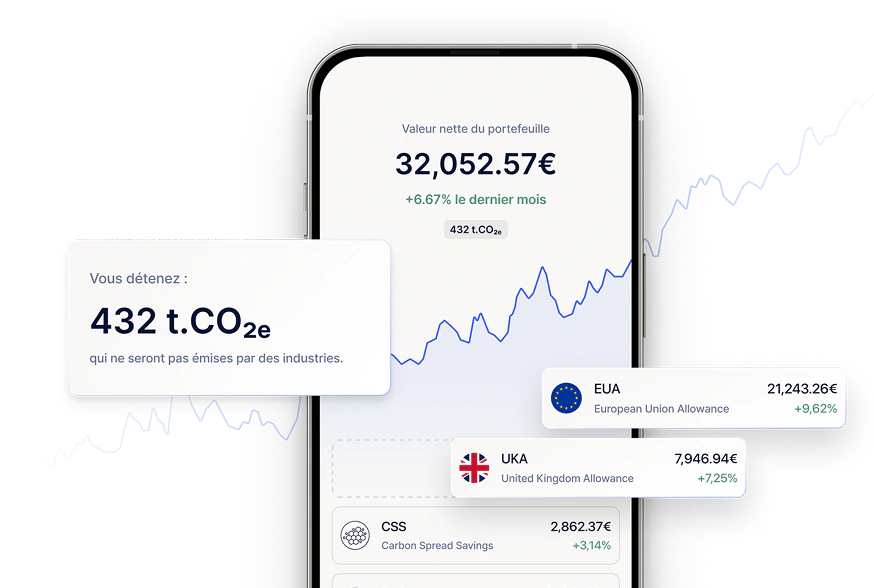
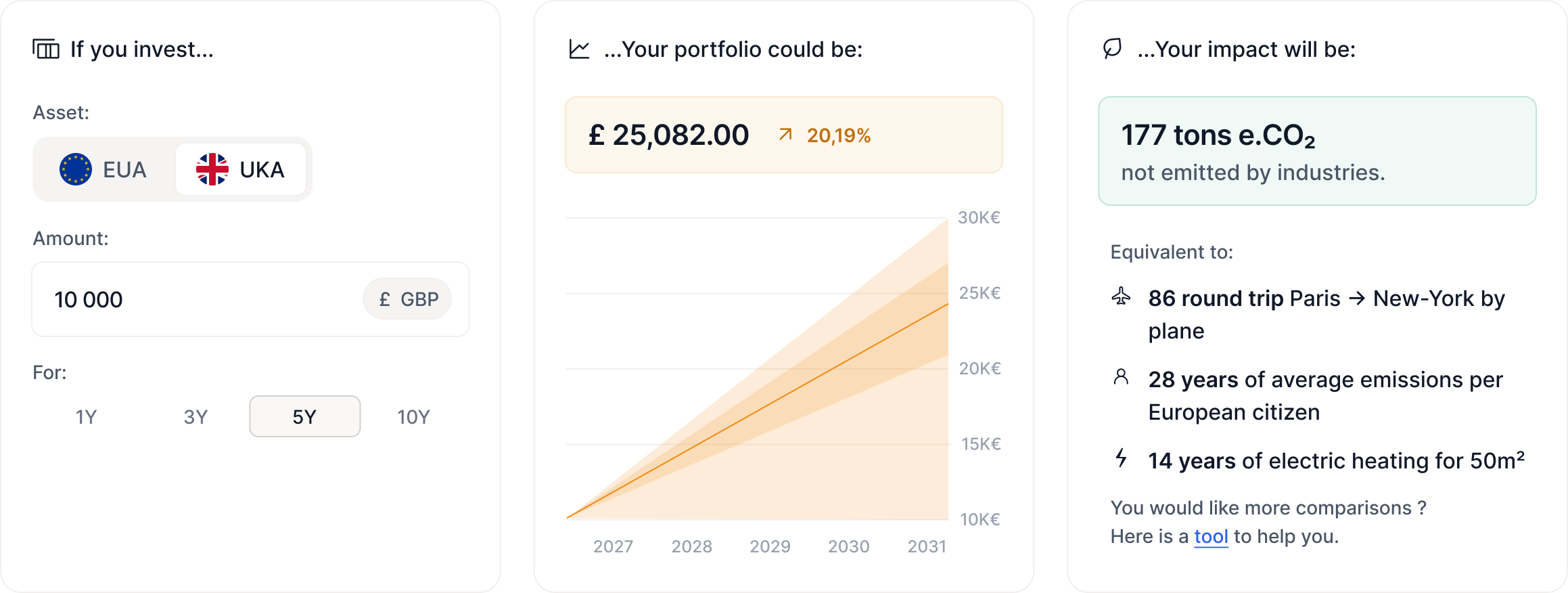
Innovative platforms now make it possible to access new asset classes, often uncorrelated with traditional financial markets. For example, Homaio offers individuals the possibility to invest directly in European carbon allowances. This investment aligns potential financial returns with a direct environmental impact: each allowance purchased is a right to pollute removed from the market, encouraging industrial players to accelerate their ecological transition.
Integrating this type of tangible asset into an overall strategy can provide relevant diversification and add more meaning to your savings, alongside retirement-focused wrappers.
The goal is not to replace the PER, but to build a more resilient, diversified portfolio in which each investment plays a specific role.
Ultimately, the PER is a powerful tool for those who know how to use it. Its tax benefit is undeniable for higher-taxpayers preparing for the future. However, locked-up savings and exit taxation require careful thought. Never put into a PER savings you might need. For many, the best strategy will be to combine the PER’s fiscal precision with the flexibility of assurance-vie and the diversification offered by new impact investments.
FAQ: frequently asked questions about the plan épargne retraite
Can you hold several PERs?
Yes, absolutely. It is entirely possible—and sometimes recommended—to hold several individual PERs. This allows you to diversify insurers, management styles (one self-directed, one managed), and access different investment universes.
Which fees should you watch before subscribing?
Fees can significantly reduce your contract’s performance. Be particularly vigilant about: contribution fees (target 0 %), annual management fees (on the euro fund and unit-linked options), switching fees (target 0 €), and annuity fees. Online contracts are often far more competitive than those from traditional banks.
What happens in the event of the holder’s death?
The PER’s inheritance treatment depends on the age at death. If death occurs before age 70, the capital is transferred to the designated beneficiaries with an allowance of 152 500 € per beneficiary (identical to assurance-vie). If death occurs after age 70, the allowance is only 30 500 €, to be shared among all beneficiaries. This is an important watch point compared with assurance-vie.
Is it possible to transfer an old retirement contract into a PER?
Yes, the Pacte law made transfers easier. You can transfer your old contracts (PERP, Madelin, PERCO, Article 83) into a new PER. This allows you to consolidate all your retirement savings in one place, benefit from the PER’s more flexible exit terms (notably 100 % lump-sum withdrawal), and often access more modern contracts with lower fees.
Go further: invest in the carbon market
Homaio gives you access to European carbon allowances (EUAs), an asset class that combines potential financial performance with direct climate impact. Diversify your wealth with an asset uncorrelated from traditional markets, accessible from €1,000.