Paper Gold 2026: A Practical Guide to Investing

If the image of bullion carefully stored in a safe may seem appealing, a more modern, liquid, and accessible alternative has taken a leading place in investment strategies: paper gold.
Dematerialized gold provides exposure to the price of the yellow metal without the logistical constraints of physical ownership. It is a financial approach that turns the precious metal into an asset as easy to trade as a stock. But behind this simplicity lie mechanisms, benefits, and risks that are essential to understand before getting started.
What is paper gold?
Paper gold, as opposed to physical gold (bars, coins such as Napoléons), does not represent material possession of the metal. It is a set of financial products whose value is directly indexed to the price of gold. In other words, you invest in a security that replicates the performance of the precious metal, without ever having to worry about storage or insurance.
This form of investing is particularly popular for its flexibility and its ability to generate returns over a shorter time frame. It comes in several financial instruments, each with its own specifics.
The different types of paper gold
To gain exposure to the price of gold via financial markets, investors have several options:
- ETFs and ETCs (Trackers) : Exchange-Traded Funds (ETFs) or Exchange-Traded Commodities (ETCs) are the most popular instruments. These are exchange-listed funds that seek to replicate as faithfully as possible the evolution of the price of an ounce of gold. They are bought and sold continuously, like a stock, via a simple brokerage account.
- Shares of mining companies : Another approach is to buy shares in companies specialized in the extraction and production of gold. The performance of these securities is correlated with the price of gold, but it also depends on the company’s financial health, its production costs, and its strategic decisions. It is a more volatile bet.
- Gold funds : These mutual funds (OPCVM) invest in a diversified basket of mining company shares. They allow you to pool the risks linked to a single company, while benefiting from the expertise of professional managers.
- Certificates : These are more complex exchange-traded products issued by financial institutions. They are debt securities that allow you to bet on the performance of gold, often with leverage effects, but they involve a limited lifespan and a higher risk of capital loss.
Advantages and disadvantages: the paper gold vs physical gold showdown
The choice between physical gold and its dematerialized counterpart depends entirely on your objectives, your investment horizon, and your risk tolerance. Each option presents a distinct risk-and-return profile.
The strengths of dematerialized investing
Paper gold shines for its simplicity and efficiency. Its liquidity is its main advantage: you can buy or sell your positions in just a few clicks from a brokerage platform, during market opening hours. There are no physical steps and no secure transport to arrange.
The costs are also reduced. Gone are safe-deposit custody fees or insurance premiums. The only costs to anticipate are brokerage fees on your transactions and, for ETFs and funds, annual management fees that are generally very competitive. Finally, its accessibility is an undeniable advantage: it is possible to invest small amounts and to split your investment, which is impossible with a one-kilo bar.
Risks not to overlook
The main drawback of paper gold is the absence of physical ownership, which creates counterparty risk. You depend on the strength of the financial institution that issues the product. In the event that it goes bankrupt, the guarantee of recovering your stake is not absolute, even if products are often backed by real physical gold inventories.
This feeling of insecurity is why many investors prefer the tangibility of a bar. In addition, annual management fees, even low, nibble away at returns over the long term. Lastly, you remain exposed to the usual ups and downs of financial markets, such as short-selling risks that can influence prices.
How to invest in paper gold in practice?
Buying gold-backed financial products is a simple process carried out through standard tax wrappers.
The most common route is the Compte-Titres Ordinaire (CTO). It allows you to buy nearly all ETFs, mining shares, and certificates without any restriction. Assurance vie can also be used as a wrapper, but the range of gold-linked unit-linked funds is often more limited.
The process is as follows:
- Open a CTO or an assurance-vie policy with a bank or an online broker.
- Fund your account.
- Search for the desired financial instrument (for example, a Gold ETF) using its ISIN code or its ticker.
- Place a buy order, specifying the desired quantity.
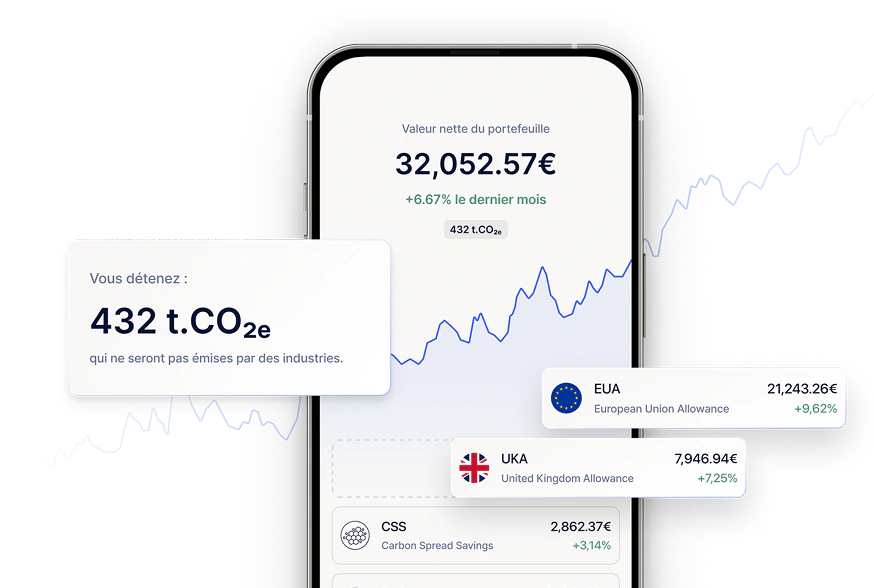
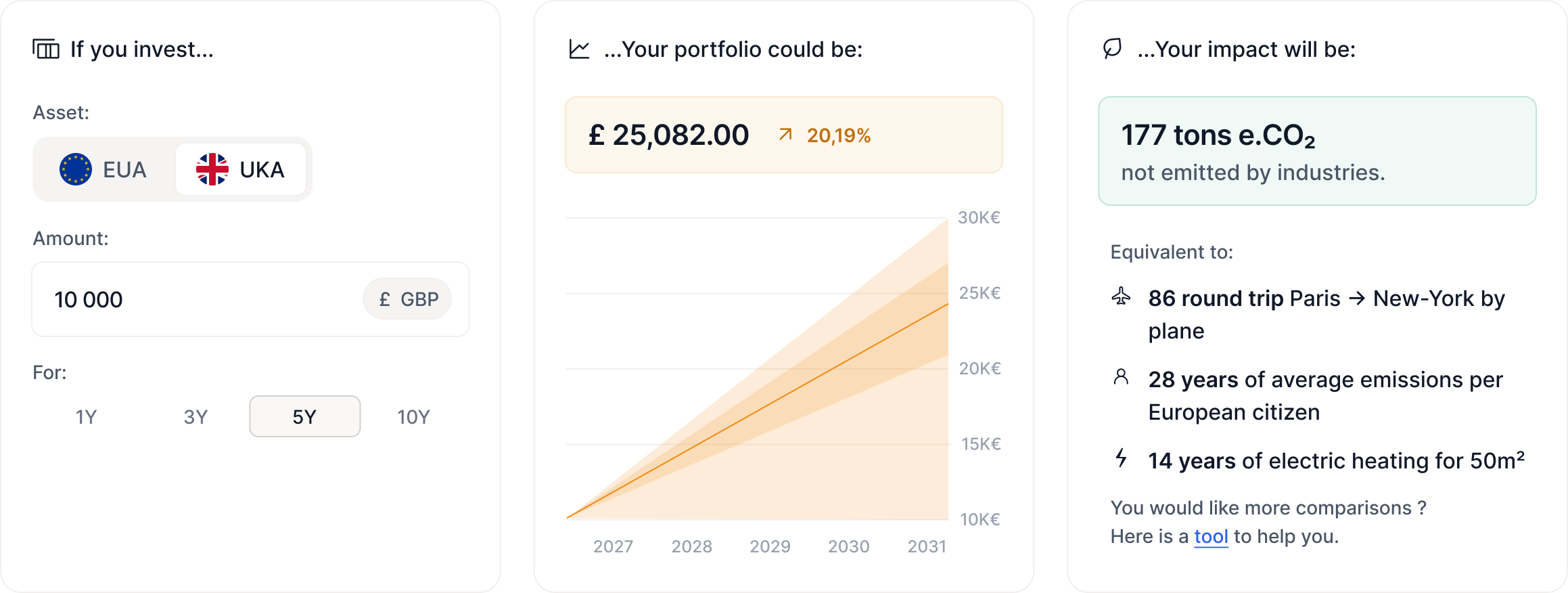
Today, the search for tangible assets to diversify a portfolio no longer stops at precious metals. A new generation of investors is turning to innovative asset classes that combine financial potential with direct impact. For example, platforms like Homaio are democratizing access to the regulated carbon market, allowing individuals to invest in emission allowances (EUA). This approach offers diversification while actively contributing to the ecological transition—an aspect absent from a traditional gold investment.
Taxation of paper gold: what you need to know
Taxation is a decisive criterion in any investment strategy. For paper gold, the rules are clear and align with those for securities.
Unlike certain collectible gold items, buying paper gold (like physical investment gold) is subject to no VAT.
Tax applies upon resale. Capital gains on disposal are by default subject to the Prélèvement Forfaitaire Unique (PFU), or “flat tax,” at a total rate of 30 %. This levy breaks down as follows:
- 12,8 % for income tax.
- 17,2 % for social contributions.
Choosing taxation under the progressive scale
You can opt to have your capital gains taxed under the progressive income tax scale. This option is global (it applies to all your investment income for the year) and can be advantageous if your marginal tax rate (TMI) is 0 % or 11 %. Above that, the 30 % flat tax is generally more favorable.
This taxation differs from that of physical gold, which offers a choice between a flat tax on the sale price (11,5 %) or the capital gains regime for movable property, with a holding-period allowance leading to full exemption after 22 years.
An investment with no guarantee
Gold, whether physical or paper, remains a volatile asset. Its price reached historical thresholds in 2020 and 2023, but past performance in no way guarantees future performance. Any investment in financial markets involves a risk of capital loss. It is crucial to invest only amounts you are prepared to lose.
Paper gold has established itself as a modern and efficient solution for gaining exposure to fluctuations in the yellow metal. Its ease of management, liquidity, and accessibility make it a tool of choice for investors looking to boost part of their portfolio over the short or medium term. It is an excellent gateway into the world of gold for non-specialists.
However, it does not replace the role of physical gold, which remains the ultimate precautionary asset—disconnected from the financial system and tangible. The final decision between these two worlds will depend on your overall wealth strategy and your need for security versus your appetite for returns. A balanced approach may also consist of combining both, allocating part of your portfolio to physical gold for long-term security, and another part to paper gold for tactical flexibility.
FAQ
Paper gold or physical gold: what should a beginner choose?
For a beginner investor, paper gold—especially via an ETF—is often easier to approach. The entry ticket is low, transactions are easy to execute via a brokerage account, and there are no storage constraints. It is an effective way to become familiar with the gold market without the logistical complexity of physical gold.
What are the main risks of paper gold?
The three major risks are: counterparty risk (the strength of the issuer of the financial product), market volatility (the price of gold can fall and lead to a capital loss), and the impact of management fees which, while low, can reduce the net performance of the investment over the long term.
Can you hold paper gold in a PEA?
As a general rule, no. The Plan d'Épargne en Actions (PEA) (French equity savings plan) is reserved for shares of companies headquartered in the European Union. Commodities like gold are not eligible. Gold ETFs backed by physical gold therefore cannot be held within it. The preferred wrappers for paper gold are the Compte-Titres Ordinaire (CTO) and, to a lesser extent, certain assurance-vie policies.
Is the taxation of paper gold more advantageous than that of physical gold?
It depends on the investment horizon. For short- to medium-term transactions, the 30 % flat tax on capital gains from paper gold is clear and predictable. For very long-term holding (more than 22 years), physical gold becomes unbeatable from a tax standpoint thanks to the full exemption from capital gains tax. The choice therefore depends entirely on your strategy.
Go further: invest in the carbon market
Homaio gives you access to European carbon allowances (EUAs), an asset class that combines potential financial performance with direct climate impact. Diversify your wealth with an asset uncorrelated from traditional markets, accessible from €1,000.