Unit-Linked Funds in Life Insurance 2026 – Plan Ahead

With regulated savings returns often seen as insufficient to build a long-term project, how can you seek performance without playing sorcerer’s apprentice with your capital? Life insurance, the French people’s favorite investment, offers a nuanced answer through a specific mechanism: unit-linked funds.
These investment vehicles, at the heart of multi-support contracts, represent an alternative to the traditional euro fund. They allow you to diversify your assets and target potentially higher returns, provided you fully understand the rules of the game and accept a degree of risk. To plan properly for 2026, it is crucial to master how they work.
What is a unit-linked fund? The definition
A unit-linked fund (UC) is a financial or real-estate investment vehicle within a life insurance contract. Unlike the euro fund, whose capital is guaranteed by the insurer, the value of a UC is not secured.
It reflects the market value of the assets that make it up: equities, bonds, units of real-estate funds (SCPI, OPCI), or units in collective investment schemes (OPCVM, FCP, SICAV).
Savings invested in these vehicles are therefore subject to fluctuations in financial markets, up and down. The risk of capital loss is the trade-off for a higher expected gain than that of the euro fund.
The fundamental contrast: euro funds vs unit-linked funds
A single-support contract, increasingly rare, offers only the euro fund. Conversely, a multi-support contract combines a euro fund with access to several, even hundreds, of different unit-linked funds, offering maximum flexibility.
How it works in practice: from theory to reality
When you invest in a unit-linked fund, you do not buy equities or bonds directly, but units in a fund. The value of these units is expressed in euros and is called the “net asset value”.
The mechanism is simple: the insurer does not guarantee the value of your units, but the number of units you hold. If the value of each unit rises, the total value of your investment increases. If it falls, your capital decreases.
Let’s take a concrete example, excluding fees:
- You invest 1 000 € in a UC whose unit is worth 100 €. You therefore hold 10 units (1 000 € / 100 €).
- Bullish scenario : A few months later, markets rise and the unit value increases to 120 €. Your capital is now worth 1 200 € (10 units x 120 €).
- Bearish scenario : If markets decline and the unit falls to 85 €, your capital is worth only 850 € (10 units x 85 €).
Unrealized gains and losses
As long as you do not sell your units (an operation called a “withdrawal” or an “arbitrage switch”), your gains or losses are considered “unrealized” or “paper”. They become real only when you decide to sell your holdings to recover cash or reinvest elsewhere.
The diversity of vehicles: an investment universe at your fingertips
One of the main strengths of UCs is access to a wide range of assets, making it possible to build a truly diversified portfolio according to your convictions and objectives.
Traditional categories
These are the pillars of most allocations:
- Equity UCs: invested in company shares via funds (FCP, SICAV). They may be specialized by geographic area (France, Europe, World) or by sector (technology, healthcare).
- Bond UCs: made up of government or corporate bonds. They are generally considered less risky than equities.
- Money-market UCs: invested in very short-term instruments; their risk is very low, as is their return.
“Paper” real estate
Real-estate UCs allow you to invest in commercial real estate (offices, retail) without the constraints of direct management. The best known are SCPI (Sociétés Civiles de Placement Immobilier) and OPCI (Organismes de Placement Collectif en Immobilier).
The new frontiers of investing
The most modern contracts provide access to more innovative vehicles:
- ETFs (Exchange-Traded Funds): also called “trackers”, these funds passively replicate the performance of a stock market index (CAC 40, S&P 500) with very low fees.
- Thematic and impact funds: they make it possible to invest according to your convictions by targeting future-oriented sectors (artificial intelligence, energy transition) or by meeting ESG criteria (Environmental, Social and Governance).
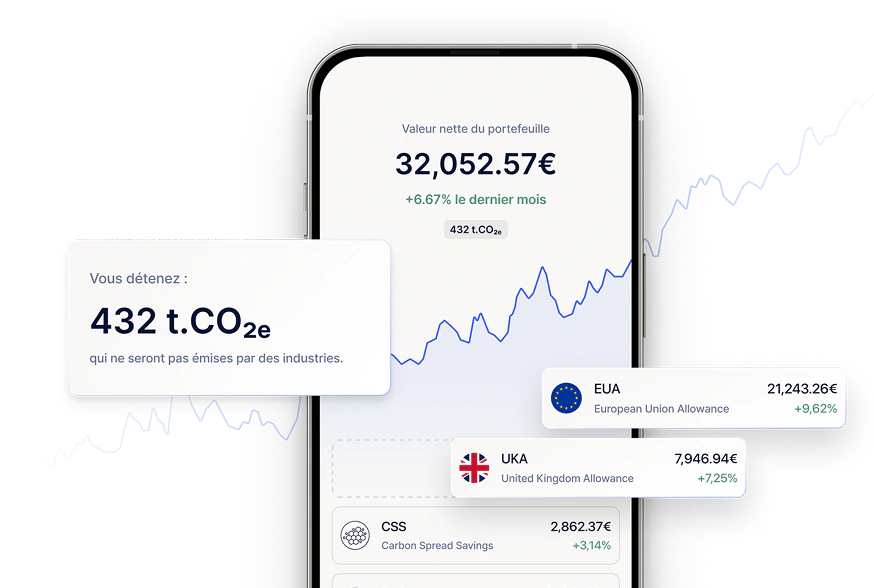
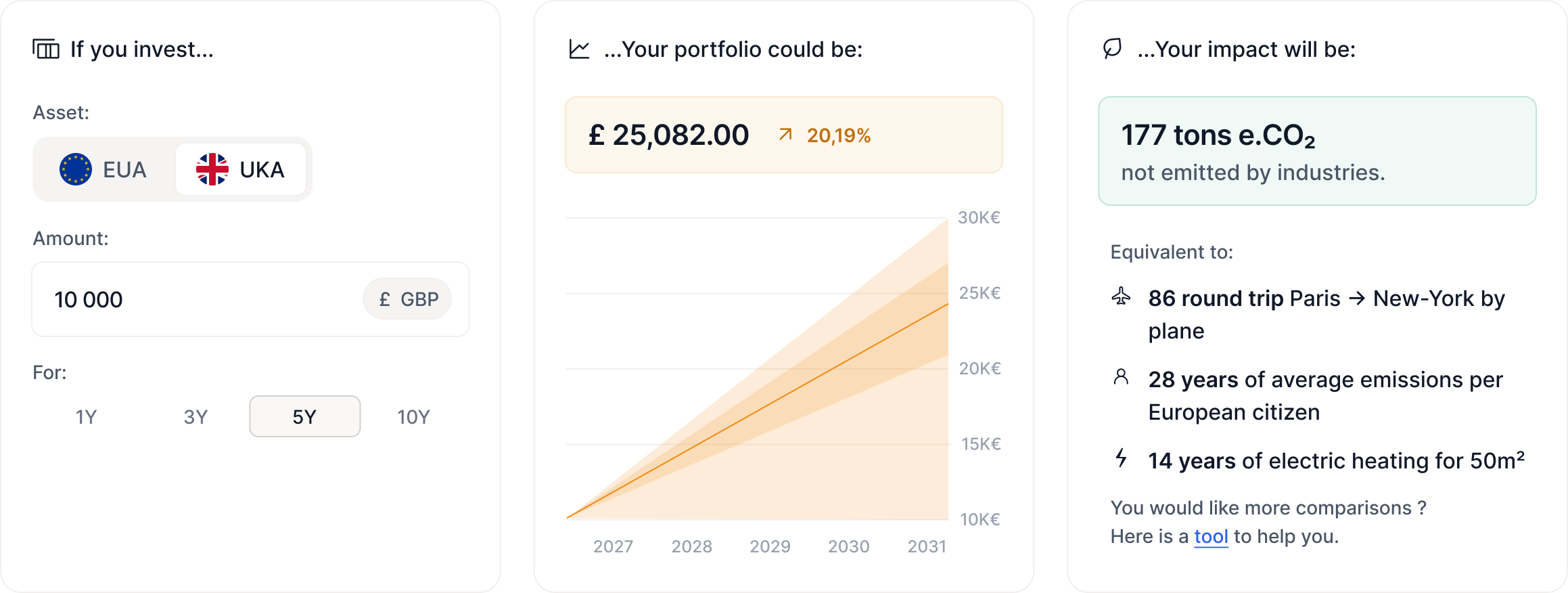
Some specialized funds even provide exposure to assets that are uncorrelated with traditional markets. This is the case for vehicles linked to European carbon allowances, aiming to align potential financial performance with a direct and measurable climate impact— a market previously reserved for institutional investors.
Benefits and risks: the inseparable pair behind performance
Investing in unit-linked funds requires accepting a dual reality: the search for return is mechanically linked to accepting risk.
The risk of capital loss is the main concern for savers. It is real and must never be underestimated. However, it can be managed through good diversification and a sufficiently long investment horizon, which helps smooth out market fluctuations.
The SRRI indicator: your risk compass
Each unit-linked fund must provide a Key Information Document (KID) that includes the summary risk and return indicator, or SRRI. It is a scale from 1 (lowest risk) to 7 (highest risk). This tool is essential to quickly assess whether an investment matches your risk tolerance before investing.
Management styles: manage yourself or delegate?
Once the decision to invest in UCs has been made, one question arises: who will choose the vehicles and manage the allocations? Two main options are available to you.
Self-directed management
This approach is intended for knowledgeable, independent investors who want to select their own vehicles, carry out their own switches, and define their strategy. It offers total freedom but requires time, knowledge, and strong emotional control—especially during periods of high market volatility—so as not to make overly pessimistic decisions at the wrong time.
Managed management (or discretionary mandate)
With this mode, you delegate the management of your capital to experts from the asset management company or the insurer. After defining your risk profile (cautious, balanced, dynamic), the managers handle everything: selecting vehicles, making switches, rebalancing the portfolio. It is the ideal solution for those who lack time or expertise.
Many contracts also offer automatic switching options, such as locking in gains (profits made on UCs are automatically transferred to the euro fund) or phased investing.
Fees and taxation: key watch points
The performance of a unit-linked investment must always be analyzed net of fees. It is crucial to identify them clearly, as they can weigh on the final return.
- Contribution fees (or entry fees): deducted from each amount invested. They are increasingly often zero on online contracts.
- Contract management fees: deducted annually by the insurer; they apply both to the euro fund and to unit-linked funds.
- Switching fees: charged when changing vehicle (from one UC to another, or to the euro fund).
- Vehicle-specific fees (UC fees): each fund (FCP, SICAV, SCPI) charges its own internal management fees. They are directly embedded in the unit value and therefore are not visible on your contract statement.
From a tax perspective, the life insurance wrapper retains its advantages, whether savings are held in the euro fund or in UCs. In the event of a withdrawal after 8 years, gains benefit from an annual allowance. Inheritance taxation also remains one of the contract’s major strengths.
My expert advice
The classic mistake is to focus only on contract fees and forget the internal fees of unit-linked funds. A global equity fund may charge 2% in annual fees, while an ETF on the same index will charge only 0,30%. Over the long term, this difference is considerable and can represent tens of thousands of euros on your final capital. Take the time to read the information documents (KID) for each vehicle.
Defining your investment strategy for 2026
There is no single strategy, only an allocation suited to each profile. Your strategy should rest on three pillars: your objectives, your investment horizon, and your risk tolerance.
To plan ahead for 2026, it is wise to build an allocation that reflects these parameters. Here are model allocation examples, for illustrative purposes only:
- Cautious profile: Objective of preserving capital with a slight performance boost. Horizon of 3 to 5 years.
- Typical allocation: 70-80% in the euro fund, 20-30% in UCs (mostly bond and real-estate).
- Balanced profile: Seeking a compromise between safety and performance. Horizon of 5 to 8 years.
- Typical allocation: 50% in the euro fund, 50% in UCs (diversified across equities, bonds and real estate).
- Dynamic profile: Performance is the priority, accepting high volatility. Horizon greater than 8 years.
- Typical allocation: 20-30% in the euro fund, 70-80% in UCs (mostly international equities and thematic funds).
The key to long-term success lies in diversification and staying the course. Trying to predict short-term market movements is often counterproductive. A well-defined strategy, maintained with discipline, is the best asset for achieving your objectives.
Ultimately, unit-linked funds transform life insurance from a simple secure savings product into a truly global and high-performing investment wrapper. They offer a gateway to financial and real-estate markets, but require the saver to clearly understand the risks involved. Used well, they are a powerful tool for growing wealth over the long term.
FAQ: Frequently asked questions about unit-linked funds
What is the main difference between a euro fund and a unit-linked fund?
The fundamental difference is the capital guarantee. The euro fund offers total security (excluding fees); your capital cannot go down. The unit-linked fund, on the other hand, does not guarantee the invested capital; its value fluctuates daily depending on financial markets, which implies a risk of loss.
Is the capital invested in UCs totally lost in a crisis?
No, a total loss is extremely unlikely, unless you invest in a single highly speculative asset that goes bankrupt. Most UCs are diversified funds across dozens, even hundreds, of securities (equities, bonds). In a crisis, the value of your units will fall, but you still keep the same number of units. A market recovery will lead to a revaluation of your capital. The risk is selling at the bottom, which would crystallize the loss.
Can I change my contract allocation during its lifetime?
Yes, absolutely. That is the principle of switching (arbitrage). At any time, you can decide to sell units in one unit-linked fund to buy another, or to secure your gains in the euro fund. This operation may be subject to fees depending on the contract.
Is taxation different for unit-linked funds?
No, the tax treatment that applies is that of the overall life insurance wrapper. Whether your gains come from the euro fund or from unit-linked funds, the rules in the event of withdrawal or transfer are exactly the same. This is one of the major advantages of this investment.
Go further: invest in the carbon market
Homaio gives you access to European carbon allowances (EUAs), an asset class that combines potential financial performance with direct climate impact. Diversify your wealth with an asset uncorrelated from traditional markets, accessible from €1,000.