Life insurance switching: the 2026 guide to switching effectively

Life insurance switching is an essential management tool to help your savings evolve, but how it works often remains unclear. It allows you to change the allocation of your capital among different investment vehicles within your contract.
Understanding this mechanism is the first step to managing your life insurance contract in line with your goals, investment horizon, and risk tolerance.
What is a switch in life insurance? Definition and eligible contracts
Before getting into the details, it is crucial to clearly define what a switch is and to know which life insurance contracts allow this operation.
What is a switch on a life insurance policy?
A switch is an operation that consists of transferring all or part of your savings from one investment vehicle to another, within your life insurance contract. It is a reallocation of your capital. You are not withdrawing money, and you are not making a new payment: you are simply changing how your savings are invested.
This operation allows you to adjust your contract strategy based on changes in your plans or in financial market conditions, without having to close your contract or lose its tax seniority.
Single-support or multi-support contract: what’s the difference?
Switching is only possible on multi-support life insurance contracts. These contracts give you access to two main families of vehicles:
- The euro fund: This vehicle provides security because the paid-in capital is guaranteed (net of the management fees provided for in the contract). Its return is generally moderate.
- Unit-linked funds (UC): These vehicles (shares, bonds, real estate via SCPI, etc.) are invested in financial markets. They offer higher return potential, but they involve a risk of capital loss, because their value fluctuates both up and down.
A single-support contract, on the other hand, offers only the euro fund. It is therefore impossible to carry out a switch there, since there is no other vehicle to which the savings can be transferred.
How does a switch work in life insurance?
Now that the definition is clear, let’s look concretely at how a switch takes place.
The different types of transfers possible
Switching gives you the option to redirect your savings in three main ways:
- Secure your savings: You transfer funds from unit-linked investments to the euro fund. This action aims to protect part of your capital or your gains from market fluctuations.
- Boost your investment: You move part of your capital from the euro fund to one or more unit-linked funds to seek greater performance potential, while accepting the associated risk.
- Rebalance your holdings: You sell units of one unit-linked fund to buy units in another, in order to adjust your exposure to a business sector or a geographical area, for example.
What is the switching procedure in life insurance?
The procedure for making a switch is generally simple and depends on your insurer.
- The request: You can submit your switching request directly from your online customer area, by post via a dedicated form, or sometimes with the help of your advisor. You must indicate the source vehicle, the destination vehicle, and the amount (or percentage) to transfer.
- The value date: This is a technical but important point. The operation is not instantaneous. The sale price of the source vehicle and the purchase price of the destination vehicle are set on a "value date", which depends on your contract terms and the time of your request. A few days may pass between your request and the actual execution of the operation.
- Validation: Once the switch has been completed, you receive confirmation from your insurer, detailing the amounts transferred and the new units acquired.
Once the request has been validated and processed, it is generally impossible to cancel a switch in life insurance. The speed of processing, especially online, makes any cancellation very difficult. Check the specific terms of your contract.
[image alt="Diagram explaining how a switch works in a life insurance policy with arrows between a euro fund and unit-linked funds."]
What are the switching fees in life insurance?
One of the main pitfalls in life insurance is fees. Switching is no exception. Before any operation, it is essential to consult the general terms and conditions of your contract.
Flat fees, percentage-based fees, or free
Switching fees can take several forms, which vary greatly from one contract to another:
- Percentage-based fees: The insurer charges a percentage of the amount switched. These fees are often between 0,5 % and 1 %.
- Flat fees: A fixed amount is charged for each operation, regardless of the amount.
- Free switches: Many contracts, especially those taken out online, do not charge any switching fees. Others may offer a limited number of free switches per year (for example, the first switch of the year is free).
Always check your contract
Switching terms and fees are specific to each life insurance contract. Never assume they are free. Reading your contract’s information notice is an essential step before carrying out an operation.
The impact of fees on performance
Even a small percentage fee can have a significant impact on the long-term return of your savings, especially if you make frequent switches. Fees of 1 % on each operation can quickly eat into your potential gains. This is an important criterion to consider when choosing your life insurance contract.
When should you switch within your life insurance policy?
There is no single answer to this question. The decision to switch depends on your personal situation and your strategy.
Based on your objectives, horizon, and risk profile
Switching is a tool to align your contract with how your life evolves.
- As you approach a project (retirement, property purchase): It is often wise to gradually secure savings by transferring capital from unit-linked investments to the euro fund. This reduces the risk of seeing your capital fall just before you need it.
- If your investment horizon lengthens: You may decide to make part of your savings more dynamic to aim for a better long-term return.
- If your risk profile changes: Your risk tolerance can evolve. A switch makes it possible to adjust your contract allocation so it once again matches your profile (cautious, balanced, dynamic).
Reacting to markets: the emotion trap
Trying to "time" the market—i.e., buy at the bottom and sell at the top—is extremely difficult, even for professionals. Reacting impulsively to a market downturn by selling your unit-linked holdings is often the best way to lock in a loss.
Regular investing as an alternative
Rather than making large switches in reaction to markets, a calmer approach is to set up regular investments. By investing a fixed amount at regular intervals, you smooth your purchase price and reduce the impact of market volatility over the long term.
A concrete example of switching in life insurance
To illustrate the mechanism, let’s take a simple example.
- Initial situation: Claire has a life insurance contract worth 40 000 €. Her savings are allocated as follows:
- 50 % in the euro fund (20 000 €).
- 50 % in unit-linked funds (20 000 €).
- Objective: Approaching retirement, Claire wants to secure the gains made on her unit-linked funds.
- The switching operation: She decides to transfer 10 000 € from her unit-linked funds to the euro fund.
- Final situation: After the switch, her 40 000 € capital is allocated as follows:
- 75 % in the euro fund (30 000 €).
- 25 % in unit-linked funds (10 000 €).
Claire reduced her exposure to risk without making a withdrawal, thereby preserving the tax seniority of her contract.
What pitfalls should you avoid when switching?
Switching is a powerful tool, but it must be used wisely. Here are the most common mistakes to avoid:
- Switching too often: Multiplying operations can generate significant fees and is more like gambling than wealth management.
- Forgetting the fees of the new vehicles: A switch moves your savings into a new vehicle that has its own annual management fees. Check them before validating your choice.
- Acting on emotion: Decisions made in panic or euphoria are rarely the right ones. It is better to stick to a strategy defined in advance.
- Not taking your risk profile into account: Taking on a level of risk higher than you can tolerate can lead to decisions you may regret.
Taxation, automatic switching, and special cases
To finish, let’s cover a few specific points often searched for by savers.
Tax treatment of switching in life insurance
This is one of the major advantages of this mechanism: switching is tax-neutral. As long as the money remains inside the life insurance wrapper, no tax on capital gains is triggered. The favorable tax treatment of life insurance applies only when you make a partial or total surrender (withdrawal).
Automatic switching in life insurance
Some contracts offer automatic management options to perform switches without your intervention, based on rules you set in advance. The most common are:
- Securing gains: As soon as a unit-linked vehicle reaches a certain gain threshold (ex: +10 %), the gain is automatically transferred to the euro fund.
- Limiting losses (stop-loss): If the value of a vehicle falls to a defined threshold (ex: -10 %), the remaining capital is switched to the euro fund to stop the loss.
- Automatic rebalancing: The contract automatically maintains the target allocation you defined (ex: 60 % euro fund / 40 % UC) by performing periodic switches.
These options, if available, should be checked in your contract terms.
Switching in life insurance after age 70
Making a switch on your life insurance contract after age 70 does not change anything about the operation itself. The tax treatment of switching remains neutral. The specific rules for life insurance after age 70 concern payments made after that age and their tax treatment in the event of inheritance, not the internal management of the contract.
Warning
This article is purely informative and educational. It does not in any way constitute personalized investment advice. Past performance is not indicative of future results. Any investment in unit-linked vehicles involves a risk of capital loss. Before making a decision, it is essential to refer to the contractual documents of your life insurance policy and, if necessary, to consult a professional.
FAQ: Frequently asked questions about switching in life insurance
Can you lose money by making a switch?
Yes, if you switch from a euro fund to a unit-linked fund and the value of the latter then falls. The switch itself does not create a loss, but it can expose you to a risk of capital loss if you leave a secure vehicle for a more dynamic one.
Is switching in life insurance always free?
No. Many online contracts offer it for free, but older contracts or those distributed by traditional banking networks often charge fees. It is imperative to check this point in your contract terms.
How long does a switch take?
The execution time varies depending on insurers and the vehicles concerned. You generally need to allow between 2 and 10 business days for the operation to be fully finalized and visible in your customer area.
Do you need to make switches to manage your life insurance well?
It is not mandatory. A saver with a long-term strategy who is comfortable with their initial allocation may never make a switch. It is a tool available to you to adapt your contract, not a necessity.
Go further: invest in the carbon market
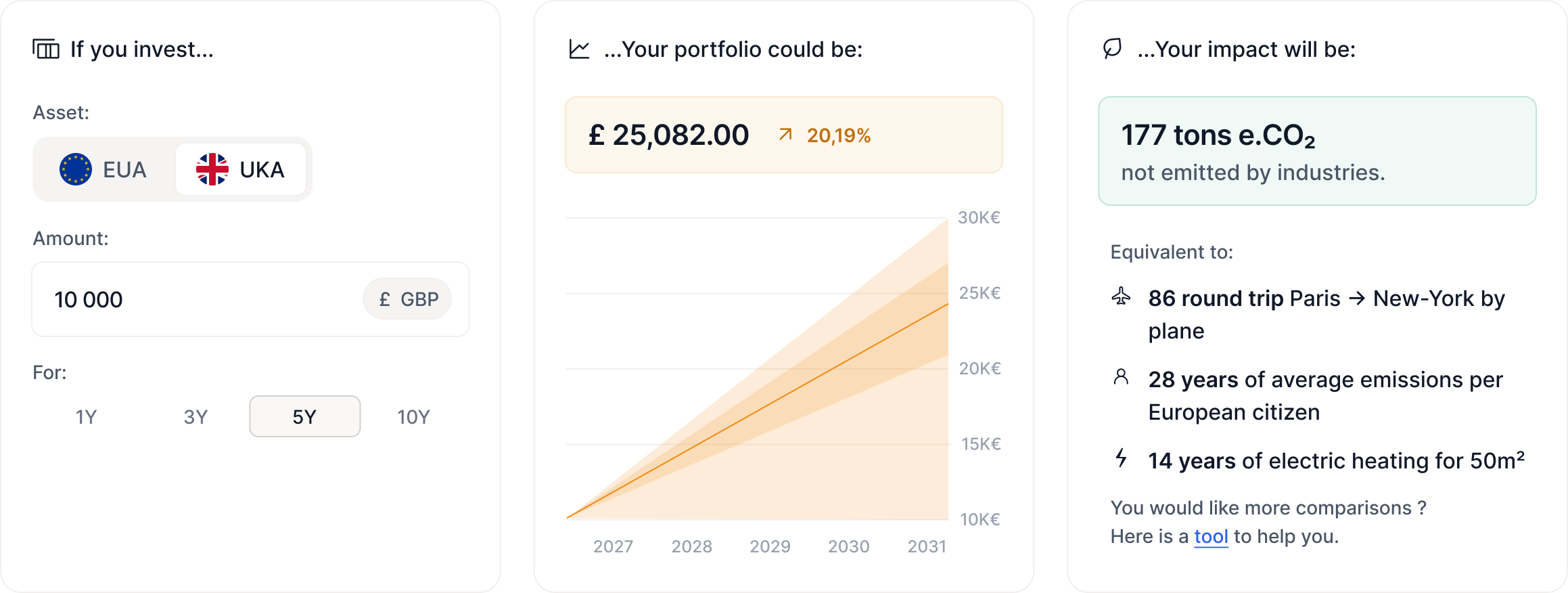
Homaio gives you access to European carbon allowances (EUAs), an asset class that combines potential financial performance with direct climate impact. Diversify your wealth with an asset uncorrelated from traditional markets, accessible from €1,000.