How to invest €5,000 in 2026 depending on your profile

You’ve managed to set aside €5,000 and you’re wondering how to turn that sum into a real lever for your financial future? That’s an excellent question. This amount, far from insignificant, is the ideal entry ticket for building a diversified and high-performing portfolio.
Contrary to popular belief, €5,000 is more than enough to lay the foundations of a solid wealth-building strategy. The real issue isn’t so much the amount as the method. It’s about getting familiar with financial mechanisms, building good habits, and choosing investments that match your ambitions, your time horizon, and your risk tolerance.
Before investing: the essential prerequisites
Even before thinking about performance, the first step is to build healthy foundations for your wealth. Ignoring these prerequisites is like building a house without foundations: the risk of collapse is high.
Build your emergency fund
The golden rule for any investor is simple: only invest money you can afford to lose or lock up over the long term. Before chasing returns, it’s essential to have an emergency fund.
This reserve, equivalent to 3 to 6 months of day-to-day expenses, should be held in risk-free, immediately available vehicles. Its purpose is to handle unexpected events (car breakdown, health issue) without having to liquidate your investments urgently—potentially at a loss.
The most suitable vehicles for this savings are:
- Livret A
- Livret de Développement Durable et Solidaire (LDDS)
- Livret d'Épargne Populaire (LEP), if you are eligible, since its yield is much higher.
Define your goals and investment horizon
Why do you want to invest these €5,000? The answer to that question shapes your entire strategy.
- Short term (under 3 years): You’re planning a major purchase (car, trip). The absolute priority is preserving capital. Risky investments should be avoided.
- Medium term (3 to 8 years): You’re aiming to build a down payment for a property purchase. You can accept a moderate dose of risk to seek a better return.
- Long term (over 8 years): You’re preparing for retirement or simply want to grow your capital over time. This is the ideal horizon to gain exposure to more dynamic assets, because you have time to smooth out market fluctuations.
Tax wrappers: the foundations of your portfolio
A “tax wrapper” is a legal and tax framework that holds your investments. Choosing the right wrapper is just as crucial as choosing the right investments, because it optimizes the taxation of your gains.
Assurance vie: versatility above all
Assurance vie is often seen as the Swiss Army knife of savings. It allows you to invest in two types of vehicles:
- The euro fund (fonds en euros): A capital-guaranteed vehicle, ideal for the defensive part of your portfolio. Its return has exceeded 3 % on the best recent contracts.
- Units of Account (UC): Vehicles without capital guarantees, invested in financial markets (equities, bonds, real estate...). They offer much higher return potential in exchange for the risk of loss.
Thanks to this dual structure, assurance vie adapts to all profiles. Its tax treatment becomes particularly attractive after 8 years, with an annual allowance on capital gains.
Plan d'Épargne en Actions (PEA): to bet on Europe
The PEA (French equity savings plan) is the go-to wrapper for investing in European equity markets. Its main advantage is taxation: after 5 years of holding, capital gains are fully exempt from income tax (only the 17,2% social contributions remain due).
It’s a powerful tool to boost a portfolio over the long term. It is particularly well suited to investing in ETFs (Exchange Traded Funds), these index funds that replicate the performance of a stock market index (such as the CAC 40 or the Euro Stoxx 600) at low cost. It’s an excellent way to diversify your risk instantly.
Lump sum or recurring contributions?
Should you invest your €5,000 all at once or spread out the contributions? Investing in one go gives you immediate exposure to the market’s upside potential. Recurring contributions (for example, €500 per month for 10 months) help smooth the entry point. This technique, called Dollar Cost Averaging (DCA), reduces the impact of volatility and is often recommended for beginners in equity markets.
How should you allocate €5,000 depending on your profile?
There is no single perfect portfolio. The best allocation is the one that matches your profile. Here are three concrete examples for allocating a sum of €5,000.
Cautious profile: security and capital preservation
The main goal is to protect capital while seeking a return higher than savings accounts, without taking major risk.
- Investment horizon: 1 to 5 years.
- Strategy: Favor guaranteed vehicles and low-volatility assets.
Balanced profile: the sweet spot between risk and return
The balanced investor aims to grow their capital over the long term, accepting moderate volatility to capture market performance.
- Investment horizon: 5 to 8 years and more.
- Strategy: A balanced split between the security of euro funds and the dynamism of equities.
Dynamic profile: maximize long-term performance
Ready to accept significant fluctuations to target the best return potential, the dynamic investor has a long time horizon that allows them to ride out market crises.
- Investment horizon: 8 to 10 years and more.
- Strategy: High exposure to equities and innovative diversification assets.
Alternative investments to diversify your portfolio
To go further—especially with a dynamic profile—it can be relevant to explore asset classes that are less correlated with traditional markets.
Paper real estate (SCPI)
Sociétés Civiles de Placement Immobilier (SCPI) allow you to invest in real estate in the professional segment (offices, retail, warehouses) with a low entry ticket. You buy units and receive rental income pro rata, without worrying about management. It’s an excellent way to generate passive income, but watch out for high entry fees and low liquidity.
Impact investing: aligning finance and convictions
New opportunities are emerging for investors who want their money to have a positive impact. Beyond purely financial returns, impact investing aims to generate a measurable social or environmental benefit.
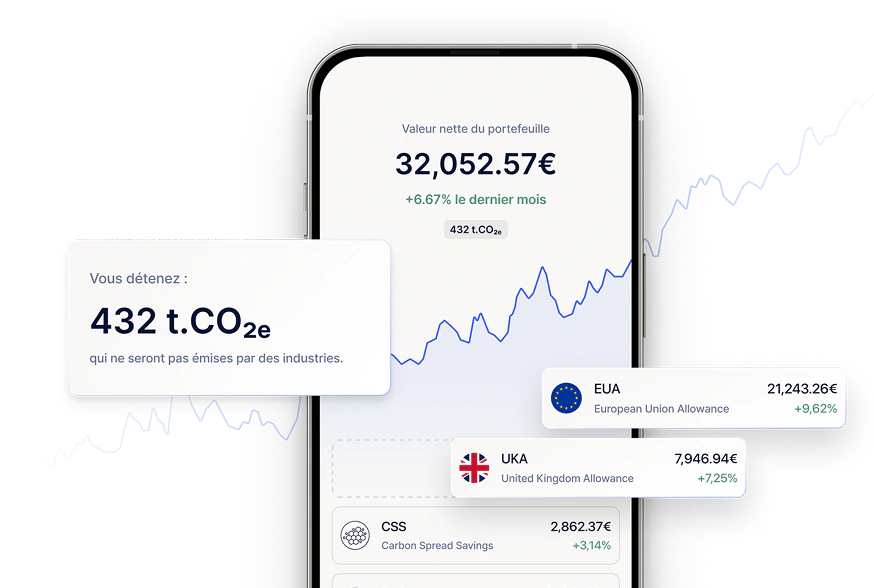
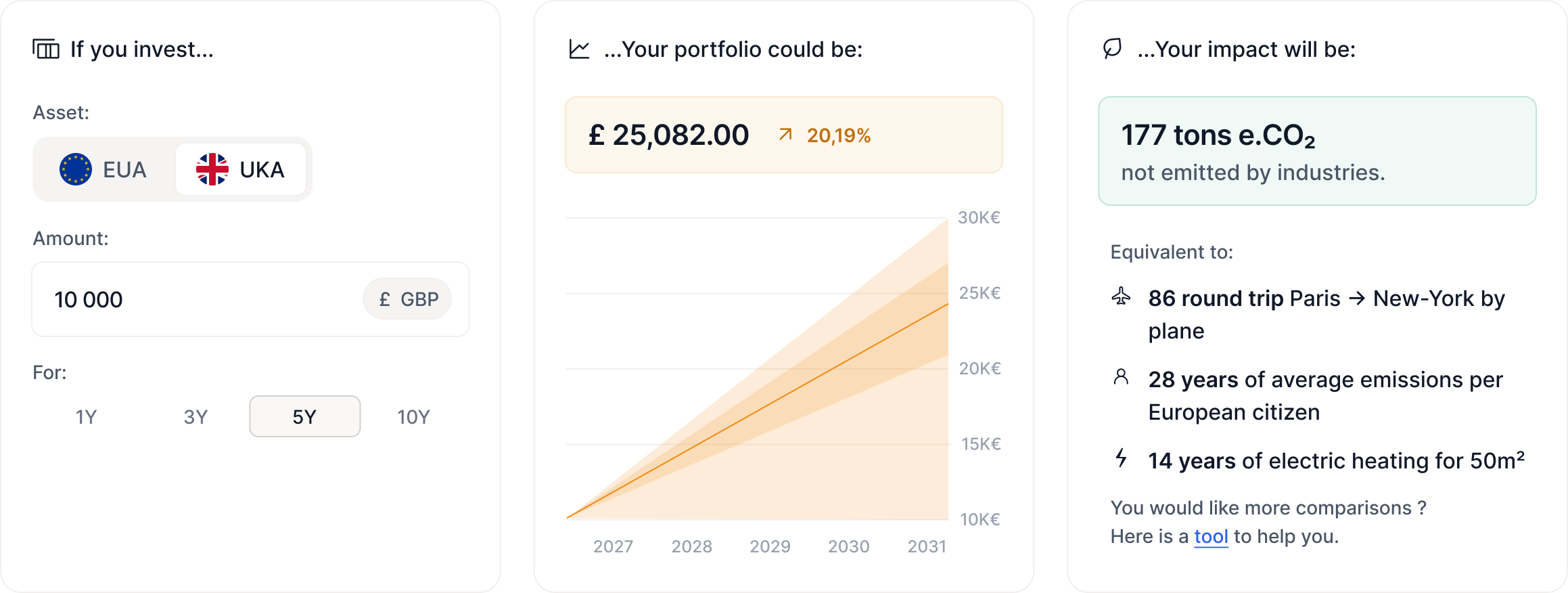
This is the perspective behind investing in European carbon allowances (EUA). At Homaio, we have opened access to this regulated market, historically reserved for industrial players. By acquiring “rights to pollute,” you remove them from circulation. This action helps reduce supply and therefore increase the price of carbon, which pushes the most polluting companies to invest in clean technologies. It is an investment that combines three advantages:
- A direct and quantifiable environmental impact.
- Low correlation with traditional financial markets.
- Performance potential linked to European climate policies.
With an entry ticket starting from €1,000, it’s a relevant diversification sleeve for a modern portfolio.
Cryptocurrencies: caution is essential
Cryptocurrencies like Bitcoin or Ethereum attract investors with their explosive upside potential. However, their volatility is extreme and the risk of a total loss of capital is real. If you choose to allocate part of your portfolio to them, it should remain very small (never more than 5-10% of your investments) and you must be ready to lose your entire stake.
Mistakes to avoid for a first €5,000 investment
An investor’s journey is full of pitfalls. Here are four you should absolutely avoid to get off to a good start.
- Putting all your eggs in one basket: Diversification is the only “free lunch” in finance. Spreading your €5,000 across multiple vehicles, asset classes, and geographic areas considerably reduces your overall risk.
- Forgetting fees: Entry, management, or switching fees that are too high can eat away at your performance over the long term. Compare offers carefully and favor low-fee vehicles like ETFs or transparent platforms that, like ours, do not charge exit fees.
- Reacting emotionally to market fluctuations: Markets go up and down—it’s their nature. Panic-selling during a downturn is the best way to lock in a loss. Having a long-term strategy and sticking to it is the key to success.
- Neglecting taxes: Not using the right tax wrappers (PEA, assurance-vie) is a common mistake that can cost you dearly. A good investment strategy is inseparable from a good tax strategy.
Investing €5,000 in 2026 is a smart and accessible step. It’s an amount that opens the door to real diversification and to putting in place a thoughtful wealth strategy. The key is not to look for a stroke of genius, but to apply simple principles with discipline: define your profile, choose the right wrappers, diversify wisely, and keep a long-term view. By proceeding methodically, this €5,000 will only be the first stone in a much larger financial structure.
FAQ: Frequently asked questions about investing €5,000
Is it possible to invest €5,000 risk-free?
No, zero risk does not exist outside regulated savings accounts (Livret A, LDDS), whose yield often struggles to keep up with inflation. Any investment seeking a higher return involves some risk of capital loss. The euro fund in assurance-vie is the closest, with capital guaranteed by the insurer (excluding management fees).
What is the best tax wrapper to start with?
There is no single “best” wrapper in absolute terms. Assurance-vie is often recommended for its versatility and its ability to adapt to all profiles. The PEA is ideal for those who want to focus on European equities with a major long-term tax advantage. Often, the best strategy is to combine both.
Should you invest all at once or gradually?
For investments in volatile vehicles like equities, gradual investing (or “DCA”) is often more cautious. It helps smooth the purchase price and reduce the psychological impact of a potential market drop right after investing. For less volatile vehicles like euro funds or SCPI, a lump-sum contribution is perfectly feasible.
How do you get started in practice?
- Check your emergency fund.
- Define your risk profile (online, many simulators exist).
- Choose your wrapper(s) (PEA, assurance-vie...).
- Open your contract with an online broker, a bank, or a specialized platform. The process is now mostly digitized.
- Make your first contribution and implement your allocation according to the strategy you have defined.
Go further: invest in the carbon market
Homaio gives you access to European carbon allowances (EUAs), an asset class that combines potential financial performance with direct climate impact. Diversify your wealth with an asset uncorrelated from traditional markets, accessible from €1,000.