European energy mix 2026: the 2030 pathway

Is Europe’s energy sector undergoing a silent revolution? While headlines focus on geopolitical tensions and price volatility, a deep and historic transformation is underway.
The continent’s energy mix, long dominated by fossil fuels, is reaching a tipping point. For the first time, renewable electricity generation has overtaken that from coal and gas.
This shift, though promising, is far from uniform. Between wind champions, nuclear proponents and countries still heavily dependent on oil, Europe’s energy landscape is more complex and fragmented than ever. Understanding this dynamic is essential to grasp the stakes of the coming decade and the pathway to 2030.
What is the European energy mix?
The term “energy mix,” or “energy blend,” refers to the breakdown of the different primary energy sources consumed in a territory to meet all of its needs: industry, transport, heating, electricity, etc.
It should not be confused with the “electricity mix,” which focuses only on the sources used to generate electricity.
To assess this mix, we analyze gross available energy, which includes domestic production and imports, minus exports. This is the most accurate indicator of the real consumption of a country or an area such as the European Union. On this basis, the finding is clear: the EU remains largely dependent on fossil fuels, which still account for more than 70% of its total consumption.
The overall breakdown is as follows:
- Oil: around 36%
- Natural gas: around 22%
- Renewable energy: around 15%
- Nuclear: around 13%
- Coal: around 11%
While the share of fossil fuels has fallen by 11 points since 1990, their structural predominance raises crucial questions of independence and security of supply.
Total energy vs. electricity: a key distinction
The overall energy mix includes transport fuels (cars, planes, ships), which are overwhelmingly oil-based. That is why oil dominates the total energy mix, while it is almost absent from the electricity mix. Conversely, wind and solar, which are very prominent in electricity generation, carry less weight in the overall energy mix.
The historic tipping point in the electricity mix: renewables take the lead
While the overall picture changes slowly, the electricity sector is experiencing a spectacular acceleration. The year 2025 marked a historic “tipping point”: electricity generation from wind and solar (30.1% of the total) exceeded that from fossil fuels (29%).
This performance is the result of a decade of proactive policies and massive expansion of generation capacity. The European power system is thus continuing a rapid decarbonization, even though major challenges remain in managing the intermittency of these new sources.
Nuclear remains the EU’s leading source of electricity generation, at around 23.4% of the mix, despite the shutdown of several reactors, notably in Belgium and Germany.
The accelerated decline of coal
Coal is the big loser of this transition. Its share in the electricity mix fell from nearly 25% in 2015 to just 9.2% in 2025, an all-time low.
In 19 Member States, this energy source now represents less than 5% of electricity generation. This drop is explained by the scheduled closure of many plants and by the economic pressure exerted by the price of CO2 allowances, which makes coal combustion less and less profitable.
Globally, however, coal remains the leading source of electricity, accounting for more than 33% of the global mix.
The rise of the wind-solar duo
The growth of renewables is mainly driven by solar. For the fourth consecutive year, solar generation increased by more than 20%.
Its contribution to Europe’s electricity mix has nearly doubled in five years. In countries such as Hungary, Cyprus, Greece, Spain or the Netherlands, solar already represents more than one fifth of the electricity produced.
Wind is also continuing its progress, consolidating its position as a pillar of renewable energy production in Europe.
[image alt="Chart showing renewables overtaking fossil fuels in the European electricity mix."]
The pivotal role of gas and hydropower
Despite the overall decline of fossil fuels, gas-fired plants saw their output increase to offset fluctuations in other sources. Gas plays the role of a flexible “peaking plant,” able to start up quickly when wind, solar or hydro generation is low.
In 2025, a sharp drop in hydropower generation (-8%) due to exceptional drought conditions in Northern Europe required increased reliance on gas. This episode highlights the power system’s sensitivity to climatic conditions and the need for flexibility solutions, such as battery storage, whose deployment is accelerating.
Major disparities between Member States
The European Energy Union is far from homogeneous. Each country has an energy mix shaped by its geography, industrial history and political choices.
The largest economies, Germany and France, are logically the biggest energy consumers.
The strongest disparities are observed in the composition of national mixes:
- High dependence on oil: Some countries, often islands, depend almost exclusively on oil. This is the case for Cyprus (89.9%) and Malta (87%). Luxembourg (64.9%), Greece (55%) and Ireland (50.1%) also show a very high share.
- Renewable energy champions: Nordic countries, thanks to their hydropower potential and forest biomass, are leading. Sweden (39.6%), Latvia (36.8%) and Finland (35.4%) have the highest share of renewables in their total energy mix.
- Estonia’s special case: This Baltic country has an original mix based on oil shale, a sedimentary rock that can be used to produce electricity and an unconventional oil.
- The renewable “laggards”: Conversely, five Member States struggle to exceed 10% renewable energy in their final consumption: Malta (1.5%), the Netherlands (6.3%), Belgium (6.8%), Luxembourg (7.1%) and Cyprus (8.5%).
These fundamental differences explain the difficulties in finding common positions on energy and climate policies at the European level.
Energy dependence and geopolitical challenges
Europe’s energy mix raises a strategic question: dependence. Most of the gas and oil consumed in the EU is imported, making the continent vulnerable to geopolitical shocks.
Russia long was the main supplier, notably for crude oil (27% of imports before 2022). Other major partners include Iraq, Nigeria and Saudi Arabia.
This dependence was the driver of the 2022 energy crisis, when rising gas prices rippled through to electricity prices across Europe. The transition to local renewable energy sources (solar, wind) is therefore also a quest for independence and energy sovereignty.
By investing in grids, storage and the electrification of end uses, the EU can not only decarbonize but also stabilize prices and protect itself against “energy blackmail.”
The role of the carbon market (EU ETS) in transforming the mix
At the heart of Europe’s decarbonization strategy is a powerful tool that is often unfamiliar to the general public: the carbon market, or the EU ETS (Emissions Trading System).
This “cap and trade” mechanism sets a cap on the total amount of CO2 that the most polluting industries (energy, steel, cement plants...) can emit.
The principle is simple: for each tonne of CO2 emitted, an industrial must hold and surrender a “license to pollute,” also called an allowance or an EUA (European Union Allowance). The total number of these allowances is limited and decreases every year, forcing companies to cut emissions. Those that do not must buy allowances on the market, which increases their costs.
This system makes fossil fuels, and especially coal (a very high CO2 emitter), increasingly expensive and therefore less competitive versus renewables or nuclear. The carbon price has thus become one of the main drivers of coal’s decline in Europe.
A two-sided investment
The European carbon market is a complex financial instrument. Its price fluctuates depending on regulatory policies, the economic cycle and participants’ expectations. Historically, it has offered high returns, but past performance is not indicative of future performance. Any investment in this asset carries a risk of capital loss and should be considered with caution, in line with your risk profile.
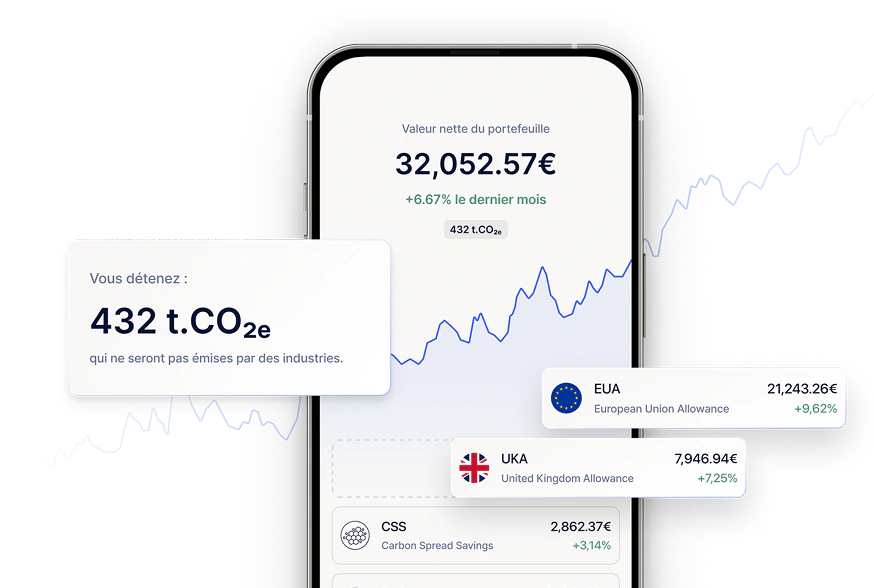
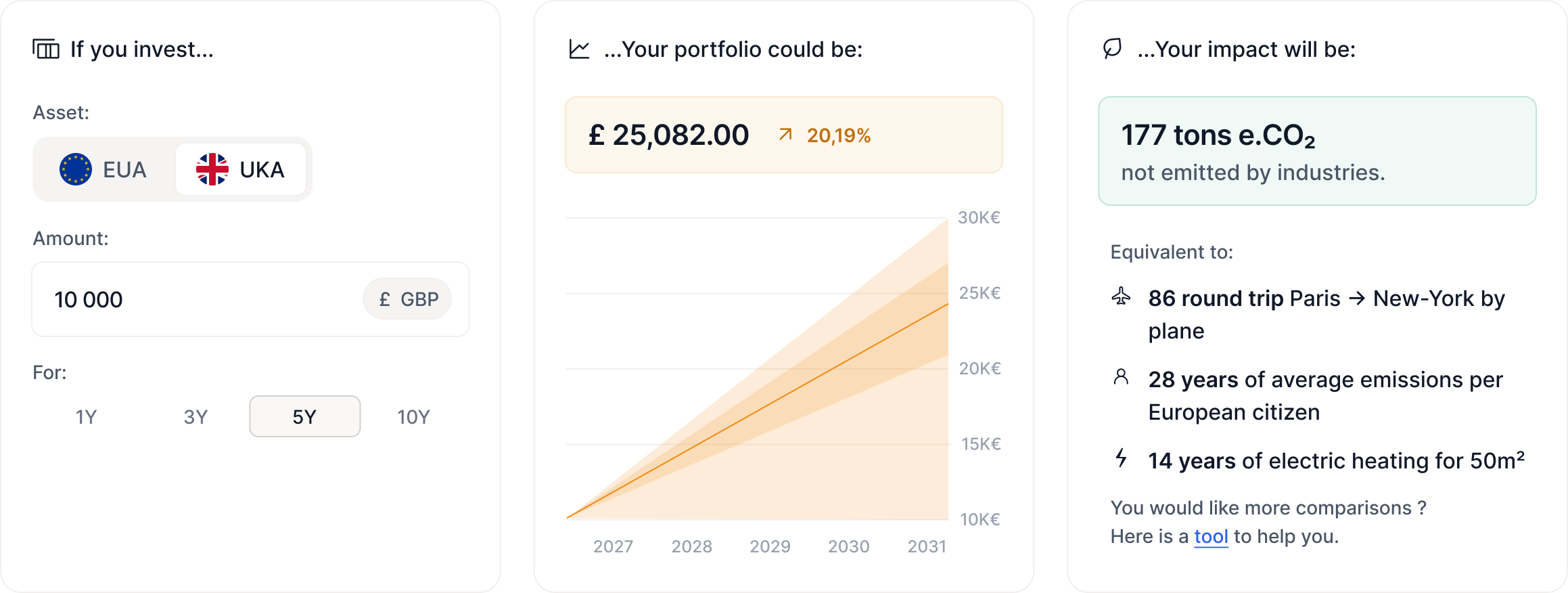
Until recently, this compliance market was reserved for industrials and institutional investors. As the first European platform to open access to the regulated carbon market for retail investors, we offer an opportunity to align ecological convictions and wealth strategy. By buying carbon allowances via our platform, each investor helps remove permits from circulation. This “impact physical holding” mechanism increases the scarcity of allowances available to polluters, putting upward pressure on the carbon price and making decarbonization investments even more profitable for industrials.
The EU’s path to carbon neutrality relies on a clear and rising price signal. By understanding how the carbon market works, it becomes possible not only to grasp the economic logic behind the energy transition, but also to take an active part in it.
Europe’s energy transition is therefore much more than a simple question of technology. It is a complex combination of public policies, market dynamics and geopolitical issues. The 2030 energy mix is taking shape today, at the intersection of renewable growth and the strengthening of regulatory tools such as the carbon market.
Europe has proven it can accelerate its transformation, particularly in the power sector. The challenge for the next decade will be to extend this transformation to the entire economy, especially transport and heavy industry, while ensuring security of supply and the competitiveness of its economy. The route is mapped out, but it will require massive investment and bold political choices.
Frequently asked questions (FAQ)
What is the difference between the energy mix and the electricity mix?
The energy mix represents all energy sources consumed by a country (transport, heating, industry, electricity). The electricity mix focuses only on the sources used to generate electricity. Oil dominates the former, while renewables, nuclear and gas dominate the latter.
What is the dominant energy source in the EU today?
For total energy consumption (energy mix), oil remains the dominant source at around 36%. For electricity generation alone (electricity mix), nuclear ranks first at around 23.4%, followed closely by fossil fuels as a whole and the wind-solar duo.
Are all European countries moving at the same pace in the transition?
No, there are very large disparities. Nordic countries like Sweden are very advanced in integrating renewables, while island countries like Malta or Cyprus remain extremely dependent on oil. The transition is happening at multiple speeds.
How does the carbon price influence the energy mix?
The carbon price, set by the EU ETS market, is a cost that industrials must pay for their CO2 emissions. A high price makes fossil fuels (especially coal) more expensive to use to generate electricity. This directly favors low-carbon sources like renewables and nuclear, thereby accelerating their deployment and the transformation of the electricity mix.
Go further: invest in the carbon market
Homaio gives you access to European carbon allowances (EUAs), an asset class that combines potential financial performance with direct climate impact. Diversify your wealth with an asset uncorrelated from traditional markets, accessible from €1,000.