Dividend ETFs 2026: a practical guide to understand and choose

An ETF (Exchange Traded Fund) is an investment fund that replicates the performance of a stock market index. The question of whether these funds pay dividends is central for many investors.
The answer is yes: equity ETFs receive the dividends paid by the companies they hold. However, how they pass them on to you depends on their distribution policy. They can either pay them to you directly in cash (distributing ETFs) or automatically reinvest them for you (accumulating ETFs).
This comprehensive guide explores how dividend ETFs work, their advantages, their limits, and the essential criteria for making an informed choice, without any personalized recommendation.
Dividend ETF: simple definition and how it works
A dividend ETF is a type of ETF that focuses on companies known for paying part of their profits to shareholders. These funds do not simply track a broad index like the CAC 40, but rather specific indices such as the "MSCI World High Dividend Yield", which selects global companies offering the best dividend yields.
Do ETFs pay dividends?
Yes. Because an ETF holds shares in hundreds, or even thousands, of companies, it receives the dividends paid by each of them. The management of this collected income is then done in two distinct ways, which define the very nature of the ETF.
Distribution or accumulation: what’s the difference?
The choice between a distributing ETF and an accumulating ETF is fundamental because it depends on your goal: generating supplemental income or aiming for long-term capital growth.
- Distributing ETF (Dist) : This type of ETF periodically (each quarter, half-year, or year) pays you the dividends it has received. This money arrives directly in your broker’s cash account. It is an option favored by investors seeking to create a source of passive income.
- Accumulating ETF (Acc) : This ETF pays you no dividends in cash. It automatically reinvests, with no additional fees, all dividends received by buying new shares within the fund. This mechanism takes advantage of compounding, which can accelerate the growth of your investment over the long term.
[image alt="Diagram explaining the difference between distributing ETFs (dividend payments) and accumulating ETFs (reinvestment)."]
Why look at a dividend ETF—and when to avoid it
Like any financial product, dividend-focused ETFs have characteristics that can be advantages for some profiles and drawbacks for others.
Advantages: simplicity, diversification, potential income
- Regular income : For distributing ETFs, the main benefit is receiving a regular cash flow, which can supplement a salary or a pension.
- Simplicity of access : Investing in a dividend ETF makes it possible to buy, in a single transaction, a diversified basket of dividend stocks, without having to analyze and select each company individually.
- Instant diversification : These funds provide exposure to many sectors and geographic areas, reducing the risk linked to the poor performance of a single company.
Limits: misleading yield, sector concentration, total return
- The high-yield trap : A dividend yield displayed as very high is not always a good sign. It may hide a steep drop in the share price or signal a company in trouble. Dividend sustainability is more important than its amount at a given point in time.
- Sometimes lower total return : Focusing only on dividends can lead you to exclude high-growth companies (like many tech firms) that prefer to reinvest profits rather than distribute them. A classic broad ETF (MSCI World for example) may therefore offer better total performance (capital gains + dividends).
- Sector concentration : Dividend indices are often overweight sectors such as financials, energy, or utilities, and underweight technology. This can increase the portfolio’s vulnerability to crises affecting those sectors.
Beware the mirage of high yield
Dividend yield is calculated by dividing the annual dividend by the share price. If the share price falls sharply, the yield increases mathematically, even if the company is unhealthy. Never base your choice solely on this number. Always analyze total return and the quality of the underlying index.
How to choose the best dividend ETF based on your objective
There is no universally “best” dividend ETF. The ideal product depends on your personal goals, your investment horizon, and your tax situation.
Key criteria: index, yield, fees, UCITS, assets under management, replication
To compare ETFs objectively, here is a factual analysis grid:
- Benchmark index : Which index is tracked? Is it well diversified (World, Europe)? What are its selection rules (does it favor dividend growth, yield, stability)?
- Dividend yield : As an indication, what is the historical yield? But do not forget that past performance is not indicative of future performance.
- Fees (TER) : The Total Expense Ratio (or ongoing charges) represents annual management fees. The lower it is, the better. Compare TERs for ETFs tracking similar indices.
- UCITS label : This is a European regulatory standard that guarantees a certain level of investor protection, notably in terms of diversification and transparency. Favor UCITS ETFs.
- Assets under management (AUM) : AUM reflects the size of the fund. High AUM (several hundred million euros) is often a sign of liquidity and stability.
- Replication method : Physical (the ETF actually holds the index’s shares) or synthetic (the ETF uses a derivative). Physical replication is generally simpler to understand for a beginner investor.
Why there is no universal best ETF
The optimal choice is a matter of personal context.
- Income objective : A retiree will look for a stable distributing ETF, potentially held in a compte-titres ordinaire (CTO).
- Growth objective : A young professional will prefer an accumulating ETF within a tax wrapper such as the PEA (French equity savings plan) to maximize the effects of compounding over the long term.
- Risk tolerance : A cautious investor will opt for a very diversified global dividend ETF, while another may choose an ETF more concentrated on a region or a sector.
The main categories of dividend ETFs people look for
Investor searches often focus on specific geographic areas, tax wrappers, or payout frequencies.
Global dividend ETF
These ETFs allow you to invest in a basket of shares of companies paying high dividends worldwide. They track indices such as the FTSE All-World High Dividend Yield or the MSCI World High Dividend Yield. Their main strength is maximum geographic diversification, reducing dependence on the economic health of a single country.
Dividend ETF PEA
The Plan d'Épargne en Actions (PEA) offers a very favorable tax framework. To be eligible for the PEA, an ETF must invest mainly in companies whose headquarters are located in the European Union. The choice of dividend ETFs is therefore more limited and focuses on European indices (e.g., EURO STOXX Select Dividend 30).
Monthly and quarterly dividend ETF
Payout frequency is an important criterion for those looking for regular income.
- Monthly dividend ETF : Very popular in the United States, they are much rarer in Europe in the UCITS format.
- Quarterly or semi-annual dividend ETF : This is the norm for the majority of European distributing ETFs.
To know the exact distribution policy, always consult the Key Investor Information Document (DICI or KIID) of the ETF.
[image alt="Comparison table of selection criteria for a dividend ETF: fees, index, AUM, UCITS."]
Taxation and investment wrappers: cto, pea, assurance-vie
The taxation of dividends received via a distributing ETF varies greatly depending on the investment wrapper chosen.
- Compte-Titres Ordinaire (CTO) : Dividends are, by default, subject to the Prélèvement Forfaitaire Unique (PFU) of 30 % (12,8 % income tax + 17,2 % social contributions). You can opt for the progressive income tax scale if it is more advantageous for you.
- Plan d'Épargne en Actions (PEA) : This is the most attractive framework. As long as dividends are paid and remain within the PEA, they are not subject to any taxation. After 5 years, withdrawals from the PEA are exempt from income tax (only the 17,2 % social contributions on gains are due).
- Assurance vie : It is possible to hold ETFs in an assurance-vie, but this wrapper is often better suited to accumulating ETFs to optimize the favorable tax treatment on withdrawals after 8 years. The handling of distributed dividends can be less transparent and more costly.
Choosing the wrapper is strategic
For an income objective via dividends, the PEA is tax-wise unbeatable for European ETFs. If you target global ETFs, the CTO will be necessary, but dividend taxation will be heavier. Consider the tax impact before choosing your ETF.
A quick method to compare several dividend ETFs
To make a factual decision, use a systematic approach. Create a simple table and compare the ETFs that interest you on the key criteria.
Table of criteria to check before investing
FAQ on dividend ETFs
What is the best dividend ETF?
There is no single answer. The “best” ETF is the one that matches your personal objectives (income or accumulation), your tax wrapper (PEA or CTO), and your diversification strategy (World, Europe). Use the comparison criteria (fees, AUM, index) to find the one best suited to your situation.
Do ETFs pay dividends?
Yes. All equity ETFs receive dividends from the companies held. They manage them in two ways: either by paying them out to investors (distributing ETFs) or by automatically reinvesting them within the fund (accumulating ETFs).
What is the best global dividend ETF?
The “best” depends on the index you want to track (e.g., FTSE or MSCI), the fees (TER), the size of the fund (AUM), and the asset manager (e.g., iShares, Vanguard, Xtrackers). Compare UCITS ETFs that follow global dividend strategies to find the one whose features (especially fees) are the most competitive.
What is the best monthly dividend ETF?
UCITS ETFs (the standard in Europe) paying monthly dividends are extremely rare. Most distributing ETFs in Europe pay dividends quarterly or semi-annually. It is essential to verify this information in the fund’s DICI before any investment.
Go further: invest in the carbon market
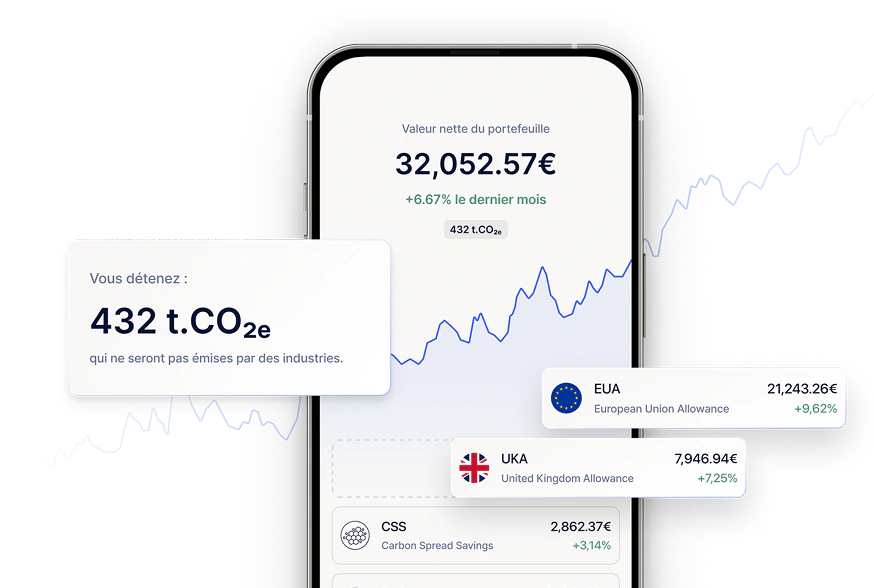
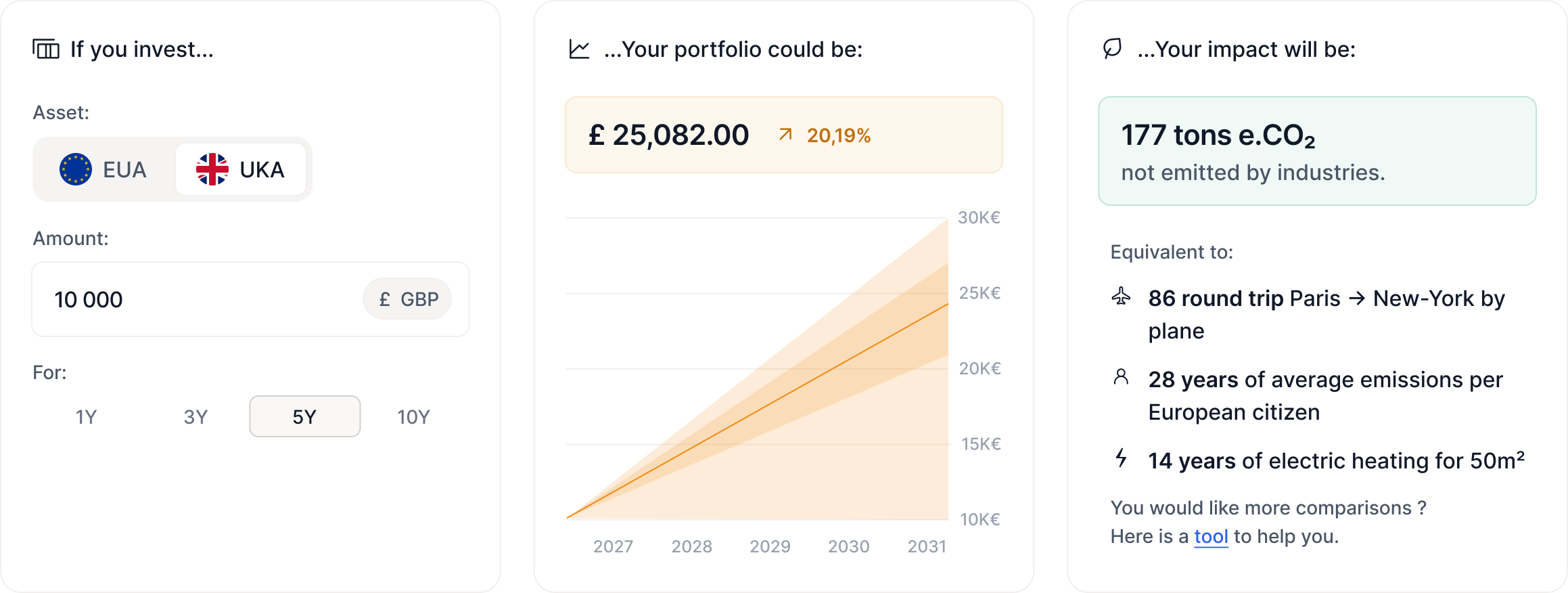
Homaio gives you access to European carbon allowances (EUAs), an asset class that combines potential financial performance with direct climate impact. Diversify your wealth with an asset uncorrelated from traditional markets, accessible from €1,000.