Budget management: how to create a simple, realistic monthly budget

Managing your budget can sometimes feel like an obstacle course. Between bills piling up, unexpected expenses, and the desire to set money aside, it’s easy to feel overwhelmed. Yet taking back control of your finances is within everyone’s reach.
Good budget management isn’t about restriction, but about clarity. It’s a powerful tool to understand where your money goes, reach your goals, and feel more at ease. This practical guide explains, step by step, how to create a simple monthly budget, choose the right tools, and adopt the habits that will make all the difference.
What is budget management and why is it so important?
Budget management is simply the act of planning and tracking your money coming in and going out over a given period, generally a month. Far from being a constraint, it’s a roadmap that helps you steer your personal finances in an informed way.
The concrete benefits are numerous:
- Full visibility: You know exactly where every euro goes, which helps identify unnecessary spending.
- Reaching goals: Buying a car, planning a trip, or building an emergency fund becomes possible by planning the required savings.
- Reduced financial stress: Anticipating big expenses and knowing you have the necessary funds provides invaluable peace of mind.
- Informed decision-making: Changing jobs? Moving? Your budget gives you the keys to assess the financial impact of your life choices.
In short, good expense and budget management gives you power over your money, instead of being at its mercy.
How to make a monthly budget in 5 simple steps
Creating your first budget can feel intimidating. The key is to proceed methodically, without aiming for perfection right away. Here is a 5-step method to get started today.
1. List all your monthly income
The first step is to review all your net income (after taxes and deductions). Be thorough:
- Salaries and bonuses
- Self-employed or micro-entrepreneur income
- Social benefits (allowances, pensions)
- Rental or investment income
- Other regular sources of income
Add up all these amounts to get your total monthly income. This is the starting point of your budget.
2. Identify your fixed costs and variable expenses
Now you need to list where your money goes. There are two main categories of expenses:
- Fixed costs (or non-discretionary): Recurring expenses whose amount changes little from one month to the next.
- Rent or mortgage payments
- Bills (electricity, gas, water, internet, phone)
- Insurance (home, car, health)
- Subscriptions (transport, streaming, gym)
- Taxes and duties
- Variable expenses (or discretionary): Their amount can fluctuate and you have more control over them.
- Food (groceries)
- Transport (fuel, occasional tickets)
- Leisure and outings (restaurants, cinema, shopping)
- Health (unreimbursed costs)
- Expenses for children or pets
3. Set your savings goals
The most common mistake is saving “what’s left at the end of the month”. The right approach is to treat savings like a fixed cost. This is the “pay yourself first” principle. As soon as you receive your income, transfer a set amount to a savings account.
This amount depends on your goals: an emergency fund, holidays, a down payment for a property project, or even an impact investment.
4. Track your spending as you go
Your budget is ready on paper—now it has to face reality. Throughout the month, record every expense. It may seem tedious, but it’s the most important step to understand your spending habits. Use the tool that suits you best: a notebook, an Excel sheet, or a dedicated app.
5. Review and adjust your budget
At the end of the month, compare what you planned with what you actually spent. Are there gaps? That’s completely normal.
- Did you overspend in the “restaurants” category? Maybe you need to increase that allocation or plan more meals at home next month.
- Did you spend less than expected on fuel? You can allocate that surplus to your savings.
A budget is a living tool that should evolve with you. What matters is consistency and awareness.
Our advice to get started
Don’t aim for immediate perfection. Your first month of budget tracking will mainly be used to observe your habits. Focus on identifying 2 or 3 variable spending items where you can easily make an effort, without depriving yourself of everything.
Example of a simple monthly budget (Net income: 2 000 €)
This balance of 50 € can be used for an unexpected treat, or added to savings to reach your goals faster.
The 50/30/20 rule: how to use it for your budget
For those looking for a simple allocation method, the 50/30/20 rule is an excellent starting point. It offers a clear structure for allocating your income.
What is the 50/30/20 rule?
It’s a budget management method that consists of splitting your monthly net income into three main categories: 50% for essential needs (fixed costs), 30% for wants (variable leisure spending), and 20% for savings and debt repayment (excluding a mortgage).
- 50% for Needs: Everything that’s essential to live. This includes rent, bills, insurance, commuting transport, and basic grocery shopping.
- 30% for Wants: The part of your budget dedicated to improving your quality of life: restaurants, shopping, holidays, hobbies, streaming subscriptions...
- 20% for Financial goals: This portion is dedicated to your future. It’s used to fund your savings (emergency fund, projects) and to actively repay your loans (consumer, student).
This rule is a guide, not an unchangeable law. If your rent represents 45% of your income, you may need to reduce the “Wants” share to keep an ambitious savings target. The important thing is to find the balance that fits your situation and priorities.
What is the best tool to manage your budget?
There’s no universally perfect tool, but there is a perfect tool for you. The best one is the one you’ll use regularly. Here’s a comparison to help you choose.
The choice depends on your personality. If the idea of filling in an Excel table puts you off, a simple app will be more effective. If you’re wary of bank synchronization, a good old notebook will do the job perfectly. The important thing is to start.
Common mistakes and best practices in budget management
Getting started with money management is a marathon, not a sprint. Knowing the common pitfalls will help you avoid them.
The 3 mistakes to avoid:
- Creating a budget that’s too strict: Trying to cut all “fun” spending is the best way to give up after three weeks. Be realistic and leave yourself some room to maneuver.
- Forgetting annual expenses: Property tax, car maintenance costs, Christmas gifts... These big expenses can derail a budget if they aren’t anticipated. Smooth them over the year by setting aside a small amount each month.
- Getting discouraged at the first slip-up: You went over budget this month? That’s not a failure. Analyze why and adjust for the following month. The key is perseverance.
Beware the complexity trap
Many people abandon their budget because they make it too complicated, with dozens of categories and subcategories. At the beginning, stick to the big buckets (housing, transport, food, leisure, savings). You can refine later if you feel the need.
Budget management FAQ
What are the 4 main types of personal budget?
There are several methods for organizing your finances. The four most common approaches for a personal budget are:
- Zero-based budget: Every euro of income is allocated to a spending, savings, or debt repayment category. The final balance must be 0. It’s a very precise but demanding method.
- Proportional budget (or 50/30/20): It consists of allocating fixed percentages of your income to broad categories (needs, wants, savings). It’s more flexible and easier to set up.
- Envelope budgeting: This method, often done with cash, consists of assigning a physical envelope to each variable spending item (groceries, leisure...). Once the envelope is empty, spending stops.
- “Pay yourself first” budget: The focus is on saving. As soon as the salary is received, a transfer is made to savings or investment accounts. The rest of the income is used for living expenses.
What are the 5 principles of a good budget?
An effective, sustainable budget is built on five key principles:
- Realism: It should be based on your real income and expenses, not idealized numbers.
- Clarity: It should be easy to read and understand at a glance.
- Flexibility: It should be able to adapt to unexpected events and changes in your life (raise, new expense).
- Consistency: Tracking should be done steadily (weekly or monthly) to remain relevant.
- Comprehensiveness: It should include all your sources of income and all your expenses, even the smallest ones.
Disclaimer: This article provides general information on personal budget management. It does not in any way constitute personalized financial advice. The examples and methods presented are for educational purposes and must be adapted to each reader’s situation, goals, and risk tolerance.
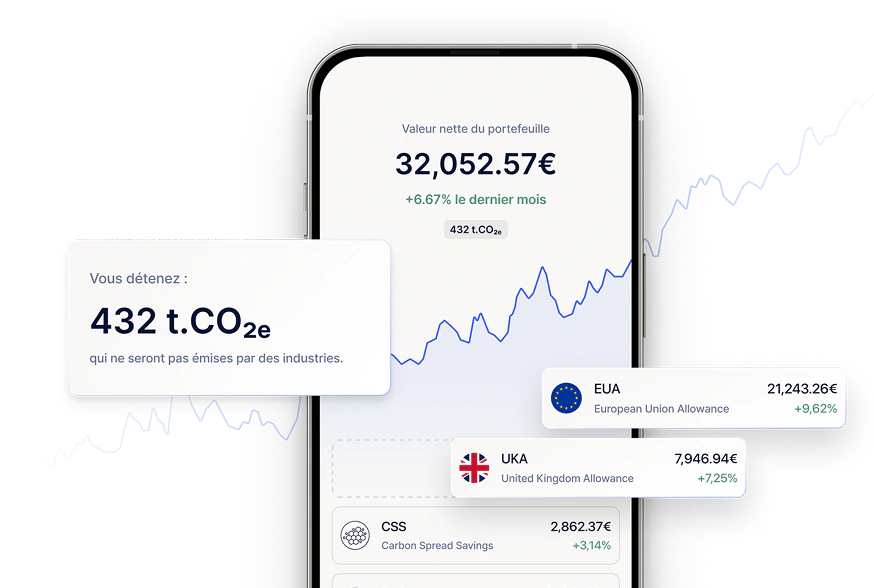
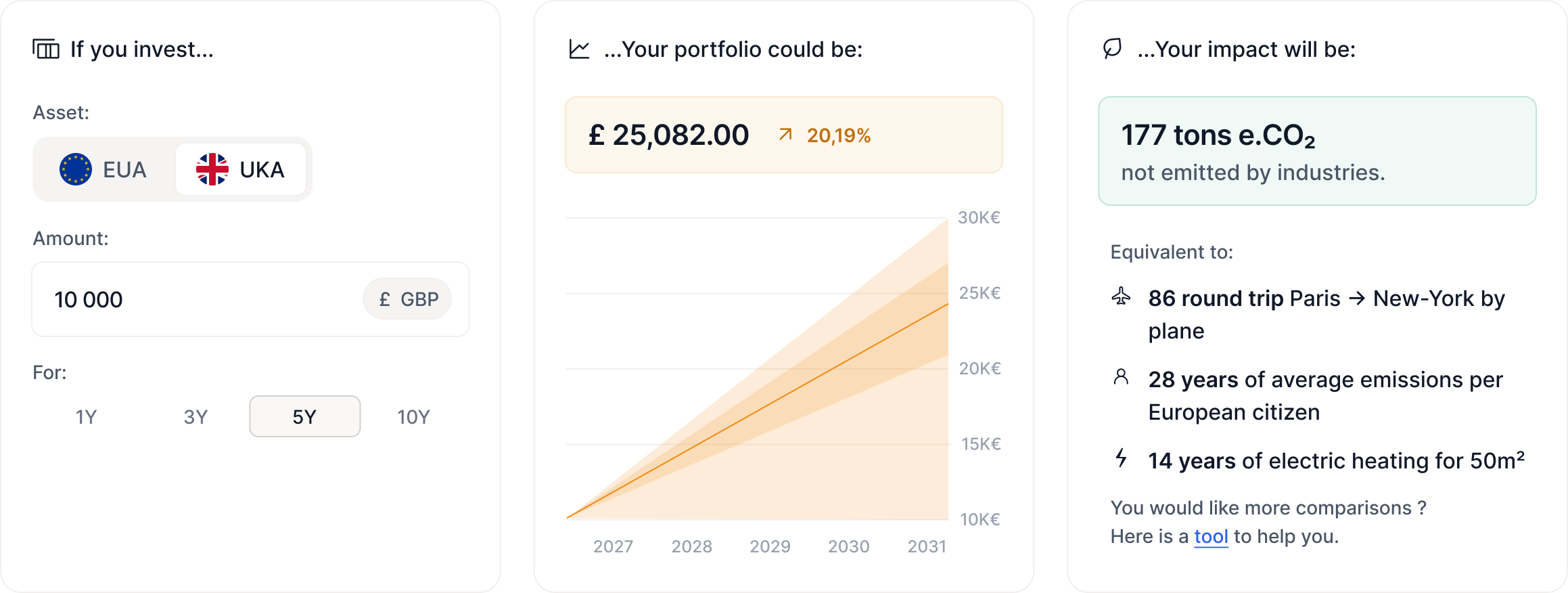
Go further: invest in the carbon market
Homaio gives you access to European carbon allowances (EUAs), an asset class that combines potential financial performance with direct climate impact. Diversify your wealth with an asset uncorrelated from traditional markets, accessible from €1,000.