Our top articles

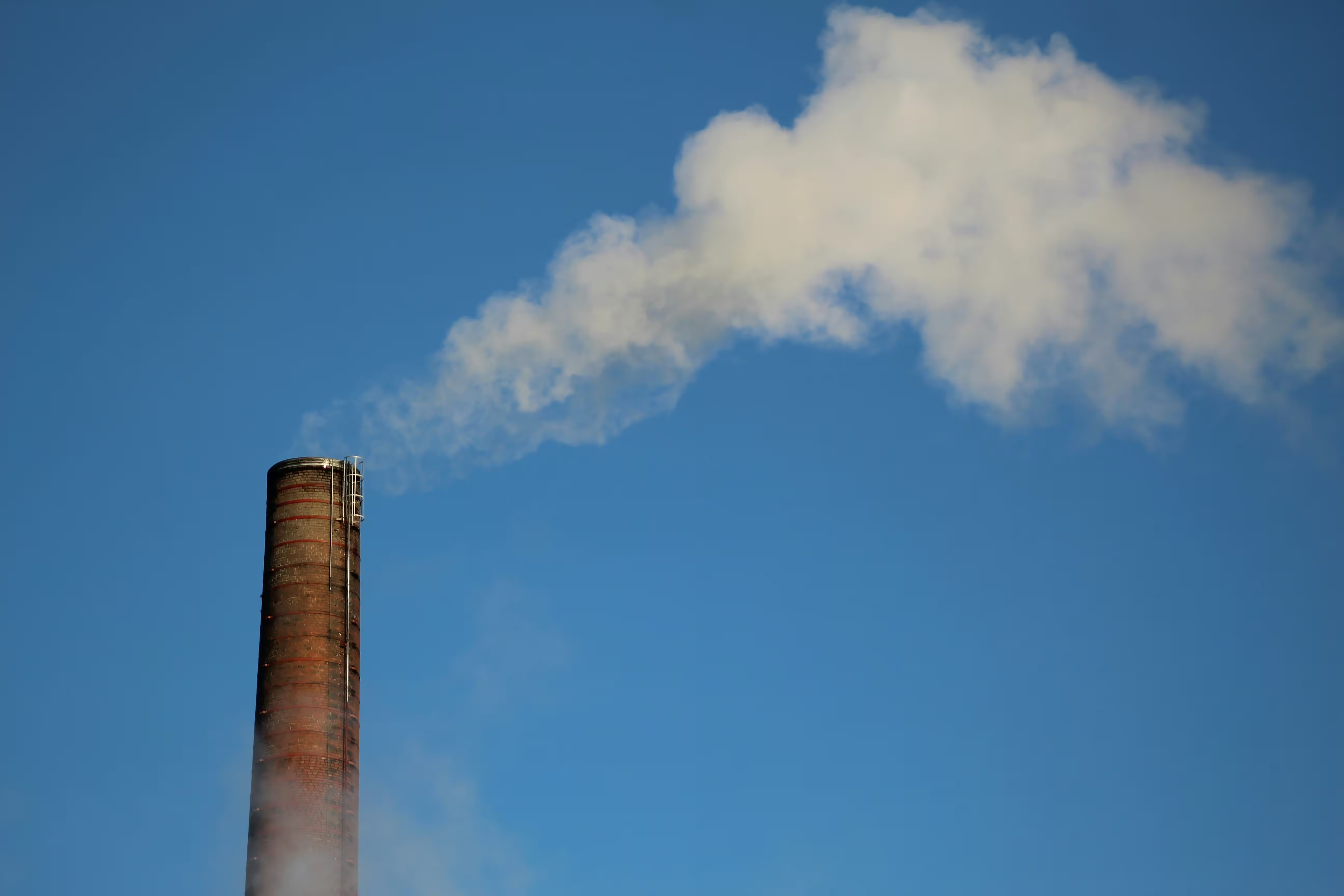
The Carbon Market Under Political Stress: Temporary Volatility or Paradigm Shift?
As European Union Allowance (EUA) prices recently tested a floor around €70, the market appears to be factoring in an unprecedented "political risk premium." Between Italy’s calls for suspension and Germany’s budgetary debates, are the fundamentals of the world's largest carbon market truly under threat? An analysis of the forces at play as the 2026 legislative review approaches.
June 18, 2026

Last news

What sectors are covered by the EU ETS?
The EU Emissions Trading Scheme (EU ETS) is expanding beyond power and industry to include aviation (intra-EEA flights), maritime shipping (since 2024), and potentially buildings, road transportation, and agriculture to achieve carbon neutrality; this also includes buying carbon allowances in the European carbon market. This sustainable investment and climate finance effort aims for responsible investing and impact investment in areas like renewable energy through mechanisms like carbon tax and green bonds.
February 6, 2026

What are the climate promises at the origin of the EU ETS?
The EU Emissions Trading Scheme (EU ETS) is a key tool in Europe's commitment to decarbonization and achieving carbon neutrality by 2050. Building upon global agreements, the EU has set ambitious targets, including a 55% reduction in greenhouse gas emissions by 2030, and continues to refine its approach with schemes like Fit for 55 and a proposed 90% emission reduction by 2040. Europe uses responsible investing in its path to net zero.
October 15, 2025

What is the pace of the EU ETS supply decrease?
The European Emissions Trading Scheme (EU ETS) combats climate change through a steadily decreasing cap on carbon allowances, incentivizing emission reductions. The cap's annual reduction rate has accelerated over time, with further increases planned, leading to scarcer allowances and potentially higher carbon prices, promoting responsible investing and accelerating the transition to green finance and a green portfolio. This mechanism supports the EU's climate goals by encouraging ethical investments and the adoption of sustainable finance practices.
October 15, 2025

What are the main characteristics of the EU ETS?
The EU Emissions Trading System (ETS) is a cornerstone of European green finance and climate policies, using a carbon market to reduce greenhouse gas emissions from key sectors. It has evolved through phases, expanded its scope (including aviation and maritime), and contributed to a significant reduction in emissions, and revisions are coming to make the EU ETS even more effective for decarbonization as Europe pursues carbon neutrality by 2050. The EU ETS allows companies to buy carbon allowances, incentivizing them to lower their emissions.
October 15, 2025

What is the social cost of carbon?
The social cost of carbon (SCC) estimates the monetary damages caused by CO2 emissions, influenced by human activity and political considerations. Diverse estimates exist, but current carbon prices may not reflect the high end of SCC estimates. Investing in sustainable development and responsible investing is therefore essential to mitigate environmental damage and promote ethical investments.
October 15, 2025

Are carbon allowances the same as carbon credits?
Carbon allowances in the EU ETS are regulated instruments for capping emissions, while carbon credits are voluntary offsets from various projects. The EU ETS is a much larger market with unique, standardized allowances, whereas carbon credits vary in price and verification. Both contribute to carbon accounting and emissions reduction, but operate under different frameworks.
February 6, 2026

Are carbon allowances permits to pollute?
EU Allowances (EUAs) are not permits to pollute but a cap-and-trade system that incentivizes decarbonization by setting a decreasing limit on overall carbon emissions. This system differs from carbon taxes and voluntary carbon markets, which allow ongoing emissions for a fee, by enforcing a single, declining CO2 budget for the entire economy. Investing in the stock market, including green finance and sustainable investment, is crucial for companies to adopt sustainable practices and reduce emissions within this framework.
October 15, 2025

How does a cap-and-trade scheme work?
Cap and trade schemes incentivize industries to cut carbon emissions through market mechanisms, establishing a carbon budget and issuing tradable carbon allowances. This system creates a financial incentive for reducing emissions and decarbonizing, with the price of allowances determined by supply and demand, encouraging investment in cleaner technologies.
October 15, 2025

Why do we need to put a price on carbon emissions?
To address climate change and its associated costs, governments must implement carbon pricing mechanisms like carbon taxes and emissions trading schemes to hold polluters accountable for their emissions and fund future climate solutions; this promotes responsible investing and incentivizes a transition to green finance and renewable energy. Without carbon pricing, society bears the burden of pollution's heavy price tag.
October 15, 2025