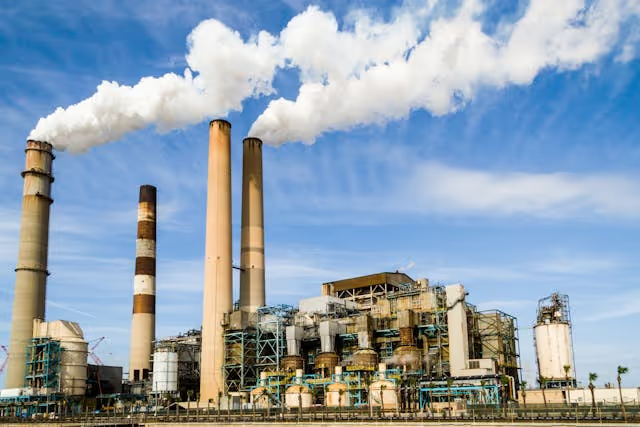
Il sistema EU ETS

Il sistema per lo scambio di quote di emissione dell’Unione europea (EU ETS) è il meccanismo di scambio di emissioni di gas a effetto serra più grande ed efficace al mondo. Istituito nel 2005, oggi copre il 38% delle emissioni di gas a effetto serra dell’UE, prodotte da oltre 10.000 impianti. Comprende le emissioni dell’industria, della produzione di energia elettrica, dell’aviazione e del trasporto marittimo.

Lo scopo del sistema è semplice: servire da strumento concreto per rispettare gli impegni sul clima. L’Europa raggiungerà la neutralità carbonica entro il 2050 e ridurrà del 55% la propria impronta di carbonio entro il 2030. L’EU ETS permette ai regolatori di tenere sotto controllo le emissioni e di assicurarsi che l’Unione resti in linea con questi obiettivi.

Dalla sua nascita a oggi, l’EU ETS è diventato sempre più solido e sofisticato. Gli aggiustamenti normativi hanno corretto gli squilibri nella struttura del mercato, e l’estensione a nuovi settori ha incluso via via più gas a effetto serra. Di conseguenza cresce il numero di partecipanti che credono e operano nel mercato del carbonio e prendono decisioni di medio e lungo periodo in base al funzionamento del sistema.

Il mercato europeo del carbonio è al tempo stesso uno strumento di politica climatica e una piazza di scambio: la carta migliore che abbiamo per combattere insieme il cambiamento climatico.

Contenuti correlati

What are the main characteristics of the EU ETS?

What are the main characteristics of the EU ETS?

The EU Emissions Trading System (ETS) is a cornerstone of European green finance and climate policies, using a carbon market to reduce greenhouse gas emissions from key sectors. It has evolved through phases, expanded its scope (including aviation and maritime), and contributed to a significant reduction in emissions, and revisions are coming to make the EU ETS even more effective for decarbonization as Europe pursues carbon neutrality by 2050. The EU ETS allows companies to buy carbon allowances, incentivizing them to lower their emissions.
What is the pace of the EU ETS supply decrease?

What is the pace of the EU ETS supply decrease?

The European Emissions Trading Scheme (EU ETS) combats climate change through a steadily decreasing cap on carbon allowances, incentivizing emission reductions. The cap's annual reduction rate has accelerated over time, with further increases planned, leading to scarcer allowances and potentially higher carbon prices, promoting responsible investing and accelerating the transition to green finance and a green portfolio. This mechanism supports the EU's climate goals by encouraging ethical investments and the adoption of sustainable finance practices.
What is the EUA Primary Market?

What is the EUA Primary Market?

The European Union Emissions Trading Scheme (EU ETS) controls emissions by issuing European Union Allowances (EUAs) through free allocation and daily auctions. As climate ambition increases, fewer free allowances will be issued, and the emissions cap will reduce, promoting decarbonization while maintaining socio-economic stability. This system facilitates buying carbon allowances and investing in carbon exchanges within the European carbon market.
Is the EU ETS threatened by major political changes in the EU ?

Is the EU ETS threatened by major political changes in the EU ?

Despite potential political risks and temporary market impacts, a complete reversal of the EU Emissions Trading Scheme (EU ETS) and its carbon pricing is very unlikely due to its robust structure, extensive history, and the complex legal process required for significant changes. The EU-wide directives driving the EU ETS make it unlikely that national policies can cause drastic shifts, reinforcing its role in EU climate policy and providing opportunities for responsible investment and green finance.
What is the EU ETS 2?

What is the EU ETS 2?

The EU is introducing EU ETS 2, a new emissions trading scheme to include the building and transport sectors, aiming for carbon neutrality while protecting lower-income households through redistribution mechanisms and price stabilization. This initiative expands carbon pricing to sectors previously excluded due to socio-economic concerns, promoting responsible investing and green finance within the European carbon market.
What are the climate promises at the origin of the EU ETS?

What are the climate promises at the origin of the EU ETS?

The EU Emissions Trading Scheme (EU ETS) is a key tool in Europe's commitment to decarbonization and achieving carbon neutrality by 2050. Building upon global agreements, the EU has set ambitious targets, including a 55% reduction in greenhouse gas emissions by 2030, and continues to refine its approach with schemes like Fit for 55 and a proposed 90% emission reduction by 2040. Europe uses responsible investing in its path to net zero.
Why are there free EUAs in the EU ETS?

Why are there free EUAs in the EU ETS?

The EU Emissions Trading System (ETS) initially used free carbon allowances to educate stakeholders, protect industrial competitiveness, and ensure macroeconomic stability. As the Carbon Border Adjustment Mechanism (CBAM) is introduced, the EU ETS is transitioning to a market-based approach, reducing the need for free allowances. This shift reflects a move towards a more global and environmentally driven system within green finance.
What sectors are covered by the EU ETS?

What sectors are covered by the EU ETS?

The EU Emissions Trading Scheme (EU ETS) is expanding beyond power and industry to include aviation (intra-EEA flights), maritime shipping (since 2024), and potentially buildings, road transportation, and agriculture to achieve carbon neutrality; this also includes buying carbon allowances in the European carbon market. This sustainable investment and climate finance effort aims for responsible investing and impact investment in areas like renewable energy through mechanisms like carbon tax and green bonds.
What is the Market Stability Reserve of the EU ETS?

What is the Market Stability Reserve of the EU ETS?

The Market Stability Reserve (MSR) balances carbon allowances in the EU Emissions Trading Scheme (EU ETS) to prevent extreme price fluctuations and promote decarbonization. It absorbs or releases allowances based on predefined thresholds, and its implementation has successfully raised EUA prices by adjusting supply and demand and improving market sentiment. This is an example of green finance and impact investing.
What is the Fit-for-55?

What is the Fit-for-55?

The EU’s Fit for 55 package translates the Green Deal into law, targeting a 55% reduction in emissions by 2030. Key points: Reform of EU ETS and creation of ETS2 for buildings & transport Introduction of CBAM to prevent carbon leakage Incentives for renewables, energy efficiency, and sustainable mobility Impacts on companies, households, and investors Investment opportunities in decarbonization technologies

Registrati sulla piattaforma per leggere le nostre analisi approfondite.