Our top articles

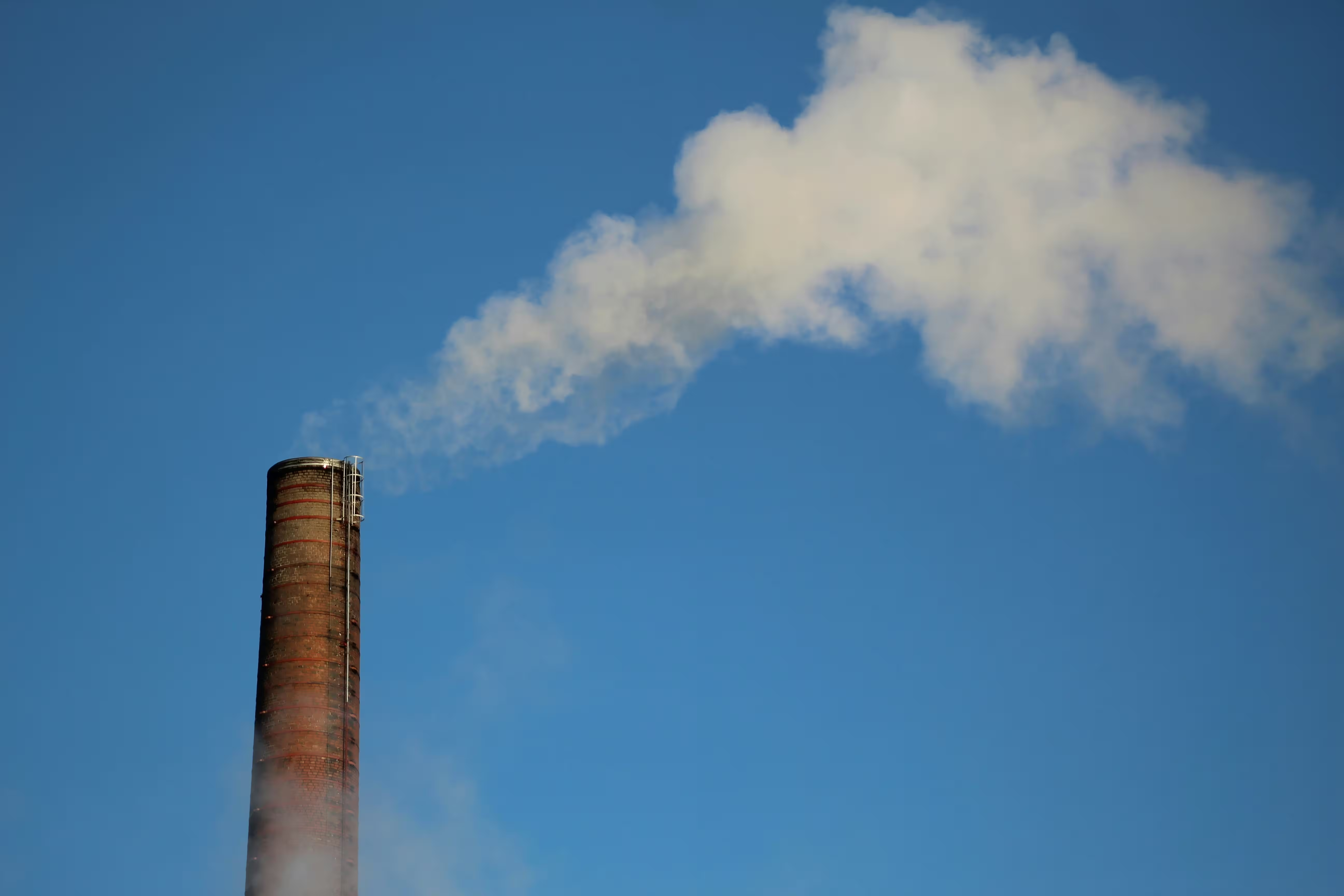
The Carbon Market Under Political Stress: Temporary Volatility or Paradigm Shift?
As European Union Allowance (EUA) prices recently tested a floor around €70, the market appears to be factoring in an unprecedented "political risk premium." Between Italy’s calls for suspension and Germany’s budgetary debates, are the fundamentals of the world's largest carbon market truly under threat? An analysis of the forces at play as the 2026 legislative review approaches.
June 18, 2026

Last news


Everything you need to know about the Carbon Border Adjustment Mechanism (CBAM)
The Carbon Border Adjustment Mechanism (CBAM) is the European Union's new tool to level the playing field between European and foreign producers by applying a carbon price to imported goods. It targets emissions-intensive sectors (steel, cement, aluminum, fertilizers, etc.) and aims to prevent carbon leakage while accelerating global carbon pricing. Its gradual implementation began with a reporting phase (2023–2025), ahead of the mandatory purchase of certificates starting in 2026. CBAM is already influencing European carbon allowance prices through "proxy hedging" strategies.
January 30, 2026

Responsible Savings Barometer: The French and Responsible Investment
This article analyzes the findings of the Responsible Savings Barometer in France, highlighting the increasing awareness of environmental and social issues among the French regarding their savings. It reveals a gap between this interest and actual understanding of responsible investment products, while also exploring emerging solutions like carbon allowance purchases as a direct way to impact climate change. The piece emphasizes the need for greater transparency, education, and clearer regulations to foster the growth of truly transformative responsible savings.
October 3, 2025

Climate Tech: Definition, Key Innovations, and Investment Perspectives
This blog post provides a comprehensive overview of Climate Tech, tracing its roots back to the Cleantech boom of the 2000s and analyzing the reasons for its subsequent decline. It highlights the key differences between Cleantech and the modern Climate Tech movement, emphasizing a more focused approach on measurable climate impact, patient capital, and stronger alignment with markets and policies. The article details the emergence of a new ecosystem supporting Climate Tech, including specialized funds, corporate investments, and supportive government policies. However, it also sounds a note of caution, pointing to recent challenges like the Northvolt bankruptcy, shifts in political support, and a potential investor pivot towards AI. Ultimately, the article underscores that while Climate Tech holds immense promise for driving a sustainable economy, its future success hinges on the continued alignment of capital, government, and industry to overcome emerging hurdles.
February 6, 2026

ESG and SRI: Understanding the Differences and Adopting a Responsible Investment Strategy
The article distinguishes between ESG (Environmental, Social, Governance) criteria, a broad and somewhat unstandardized framework for assessing non-financial factors in investments, and SRI (Socially Responsible Investment), specifically the French SRI Label. While ESG aims to evaluate long-term risks and opportunities, its lack of uniformity can lead to confusion. The SRI Label was created to standardize ESG integration but faced criticism for weak requirements. A 2025 reform strengthened it with stricter exclusions and demands. The article suggests that traditional ESG approaches lack quantifiable real-world impact, particularly on climate change, and introduces Homaio's alternative: investing directly in European emission allowances for a more tangible environmental effect.
January 30, 2026
.avif)
Carbon Credits: Understanding, Analyzing, Acting
Understand carbon credits and their role in offsetting emissions. Learn the difference between credits and allowances, how they work, and key considerations for ethical purchasing. Explore the challenges and limitations of the voluntary carbon market
October 28, 2025

Decrypting Trump’s impact on Climate - Part 2
Trump's climate action reversal shifts the global landscape, empowering China in green tech and challenging Europe's climate leadership and industrial competitiveness, while emerging markets face financing and policy uncertainty for sustainable investment and responsible investing. This impacts markets, repricing climate risk and creating volatility, requiring European investors to focus on technological sovereignty, socially responsible investments (SRI), green finance and ethical investments.
October 3, 2025
.avif)
Recent Changes to the CBAM: What Impact for Investors?
The EU's Carbon Border Adjustment Mechanism (CBAM) aims to prevent carbon leakage by applying a carbon price to imported goods, but faces criticisms regarding protectionism, implementation complexity, and revenue allocation. Iterative improvements, similar to the EU Emissions Trading System (EU ETS), are crucial for addressing these shortcomings and ensuring the CBAM effectively promotes green finance and responsible investment. This green finance initiative presents both opportunities and challenges for investors navigating regulatory uncertainties in the European carbon market.
October 3, 2025