Top articles
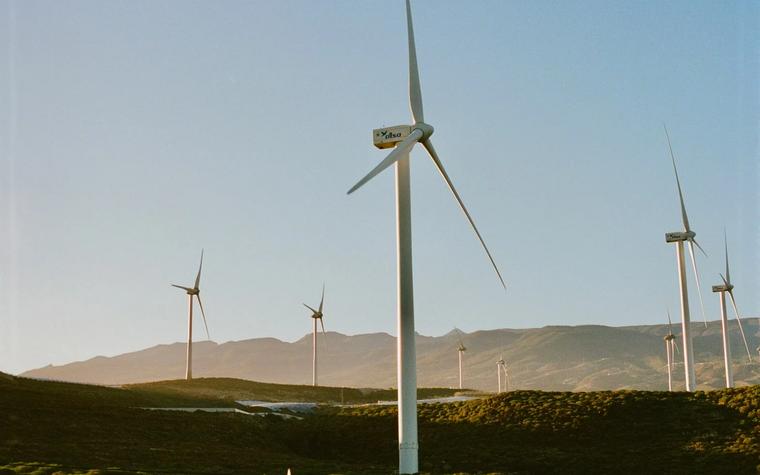
Can EUAs disappear? 5 reasons the carbon market is here to stay
We are often asked: what if Europe decided to stop the carbon market? Here are 5 reasons why this scenario, while theoretically possible, is in practice highly unlikely.
May 7, 2026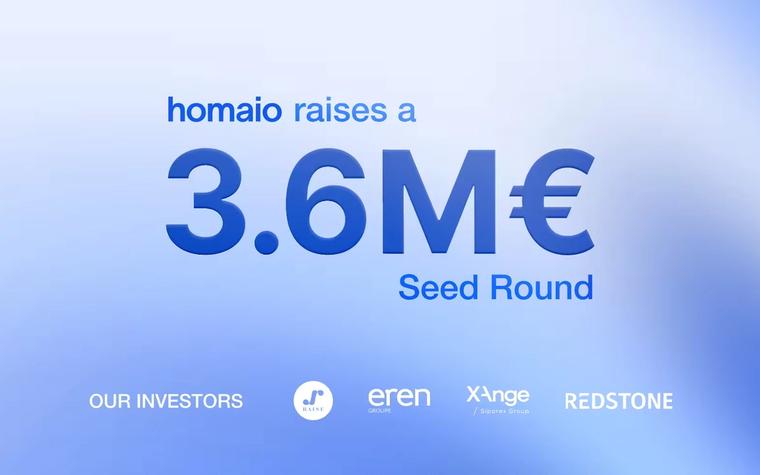
Homaio raises €3.6M in Seed
Homaio raises €3.6M to open the markets driving the energy transition to private investors.
March 18, 2026
The Carbon Market Under Political Stress: Temporary Volatility or Paradigm Shift?
As European Union Allowance (EUA) prices recently tested a floor around €70, the market appears to be factoring in an unprecedented "political risk premium." Between Italy’s calls for suspension and Germany’s budgetary debates, are the fundamentals of the world's largest carbon market truly under threat? An analysis of the forces at play as the 2026 legislative review approaches.
March 10, 2026Latest news

How to invest in the stock market in 2026: a clear guide for beginners
Getting started in the stock market in 2026: a step-by-step guide. Getting started in the stock market can feel intimidating. Between the technical jargon and the fear of losing your money, many savers hesitate to take the plunge.…
December 4, 2026
EU Carbon Market Reform: The Summer's Big Overhaul
On 17 July, the European Commission unveiled its proposal to reform the EU Emissions Trading System (ETS), the cornerstone of its climate policy for the post-2030 period. Between a relaxed timeline, extended free allocation, and new offsetting mechanisms, Homaio breaks down the key measures and what they mean for the carbon price.
July 20, 2026
Investing €3,000 in 2026: a simple and safe plan
You have €3,000 set aside and you’re wondering how to grow it intelligently in 2026? With persistent inflation eroding the value of idle savings, leaving that money in a current account is a guaranteed loss.
July 7, 2026
What is a UKA? A Complete Guide to UK Carbon Allowances
UKAs (United Kingdom Allowances) are the carbon allowances of the UK Emissions Trading Scheme (UK ETS). Each UKA represents the right to emit one tonne of CO₂ and works on a Cap-and-Trade principle: a government-set ceiling that shrinks every year. Today, UKAs trade at roughly a 20% discount to European allowances (EUAs), making them one of the most-watched assets in the carbon market, what carbon desks call a convergence trade, and what we at Homaio call the Convergence Play.
July 7, 2026
What Performance Can You Expect from UKAs? The 3 Drivers of UK Carbon Allowance Returns
UKA performance rests on three clear drivers: catch-up of the spread with European allowances (~+40% mechanical upside), engineered scarcity of an asset whose supply shrinks every year, and the 2050 Net Zero trajectory that anchors durable demand. Reference analysts (BloombergNEF, ICIS, Veyt, Redshaw) converge on forecasts above £100 by the end of the decade. Carbon desks call this kind of setup a convergence trade. At Homaio, we call it the Convergence Play: a macro-political bet that is both readable and measurable.
July 6, 2026
The UKA-EUA Convergence Play: Anatomy of a Catch-Up in Motion
May 2025, London summit: Keir Starmer and Ursula von der Leyen formally state their intention to link the UK ETS to the European system. A new term has been circulating among carbon analysts ever since: the Convergence Play. The mechanic is simple: UKAs trade today around 20% below EUAs, a discount that has already partially closed since May 2025. The residual mechanical upside is around +20 to +25%. Here's how it works, why it's happening now, and what the Swiss-EU precedent teaches us.
July 5, 2026
What is the Climate Impact of a UKA? One Tonne of CO₂ Pulled Off the Market, Measured and Verifiable
Holding a UKA does something simple and radical: it takes one right-to-emit tonne of CO₂ off the UK market. Not an offset, not a voluntary credit, not a tree-planting promise. A regulated allowance, accounted for by the State, that exits the system the moment a non-compliance investor holds it. It's what we call an additional climate action: measurable, verifiable, legally framed. Here's how it works, and why this impact is one of the most robust in today's climate-finance landscape.
July 4, 2026
UKAs and EUAs: Why Hold Both When You're Already Invested in European Carbon
If you're already invested in European EUAs, do you need to bother with UK UKAs? Short answer: yes. Long answer: the two markets are correlated at around 80% over time, but that correlation hides distinct dynamics (political, industrial, calendar-based) that make UKAs both linked and differentiated from EUAs. That's precisely what makes the combination interesting: an EUA core for liquidity and depth, a UKA satellite for political catch-up and the associated risk premium. Here's why.
July 3, 2026
2030 EUA Price Predictions: Expert Analysis of 3 Scenarios
2026 is a pivotal year for the EUA market: CBAM is now live with a first official price of €75.36/tCO2, the Brussels Summit reaffirmed the central role of the EU ETS, and major financial institutions are forecasting significant price increases through 2030. These forecasts remain conditional on the outcome of the regulatory review expected in Q3 2026. Three scenarios, one shared bullish conclusion.
April 9, 2026